

A refusal does not always end a family sponsorship case. But appeals of refused spousal sponsorship applications move on strict deadlines, and not every refusal has an appeal right.
I take a hard position here. Do not rush into a new filing the same day. First read the refusal letter, confirm whether the case was inland or outland, and check whether the sponsor has a right to start an IAD sponsorship appeal.
Deadline warning: Sponsorship appeal deadlines are strict, but the exact filing deadline and how receipt is counted must be confirmed from the current refusal letter, the Immigration Appeal Division rules, or legal advice. The refusal letter often states the appeal rights and timing in direct wording.
Refused Spousal Sponsorship? Start Here in the First 24 Hours
Some refusals can be appealed, some cannot, and the first mistake is losing time on panic. Save the refusal letter exactly as received, including the email header or envelope date, because the written refusal and date of receipt control your next step.
Your first 24-hour checklist is simple and practical:
- Save the refusal letter in PDF and print it.
- Record the date and method you received it.
- Identify whether the case was outland family class or inland spouse or partner in Canada class.
- Check whether the letter mentions appeal rights.
- Do not file a rushed new application before strategy review.
- Preserve all relationship evidence in one folder.
- Request legal help quickly if the deadline is close.
- Consider requesting GCMS notes to see the officer’s reasoning.
- Write a short chronology of the relationship while memories are fresh.
- Confirm whether the file was refused or merely returned.
A returned application is not the same as a spousal sponsorship refusal. A return usually means IRCC treated the package as incomplete and sent it back without deciding the merits, while a refusal means an officer made a negative decision on the case itself.
If you want a calm review of the refusal letter and your next best option, a free assessment can help you sort appeal, reapplication, or judicial review before time is lost.
Can You Appeal the Refusal? Eligibility, Ineligibility, and Inland vs Outland
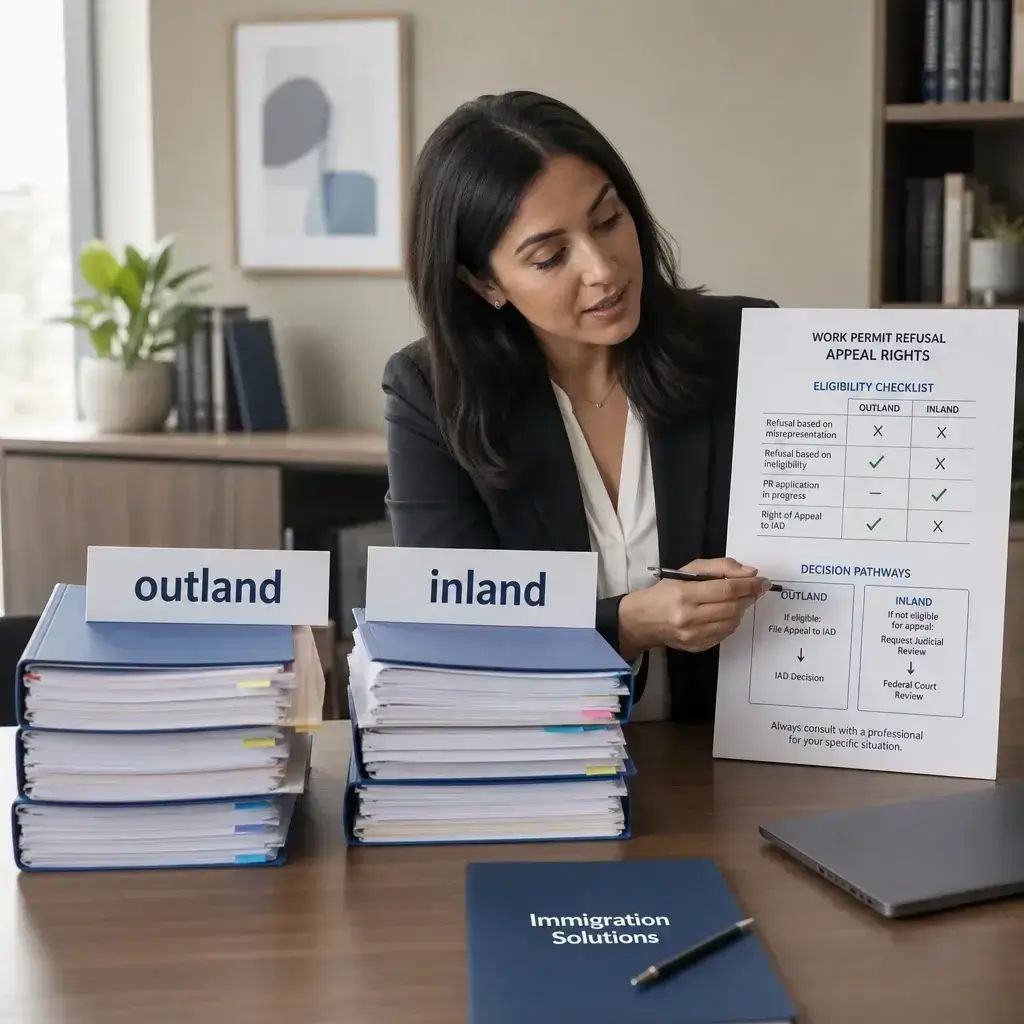
The sponsor usually files the appeal, not the sponsored spouse. In a family sponsorship appeal, the person in Canada who signed the sponsorship is generally the appellant before the Immigration Appeal Division.
Outland spousal cases often have appeal rights that inland cases do not. An outland spousal sponsorship appeal is commonly the path people mean when they talk about an IRB sponsorship appeal after a refusal.
An inland spousal sponsorship refusal is different because the appeal route is often not the IAD. In many inland spouse or partner in Canada class refusals, the better analysis is reapplication, judicial review, or another status strategy rather than an IAD sponsorship appeal.
Some refusals also lose appeal rights because of the legal ground involved. Inadmissibility findings such as serious criminality, security concerns, or some misrepresentation findings can change or remove the right to bring an IAD sponsorship appeal, so the refusal reason matters as much as the family class used.
Parents, children, and some other family class cases may also involve a family sponsorship appeal. The same first question still applies: which class was used, who was refused, and does the law give the sponsor an appeal right in that category.
Eligibility matrix: who likely can appeal
| Case type | Likely IAD appeal right | Common limits | Better alternative if no appeal right |
|---|---|---|---|
| Outland spouse/common-law/partner refusal | Often yes | Some inadmissibility grounds may block appeal | Reapply or judicial review, depending on facts |
| Inland spouse or partner in Canada refusal | Often no | Class itself may not carry IAD appeal right | Reapply or judicial review |
| Dependent child family class refusal | Often possible | Ground of refusal still matters | Reapply or judicial review |
| Parent/grandparent family class refusal | Often possible | Eligibility and inadmissibility issues can narrow options | Reapply or judicial review |
| Returned application | No appeal from a merits refusal because there was no merits refusal | Completeness issue | Correct and resubmit quickly |
What the Immigration Appeal Division Is and What It Can Do
The Immigration Appeal Division is part of the Immigration and Refugee Board, not IRCC. IRCC makes many sponsorship decisions, while the IAD is the tribunal that hears eligible sponsorship appeals.
The IAD reviews whether the refusal should stand or be set aside. In plain English, it looks at the officer’s decision, the evidence, the testimony, and in some cases new evidence that was not in the original application.
The IAD process is not the same as asking IRCC to reconsider. Reconsideration is an informal request to the decision-maker, while an IAD sponsorship appeal is a formal tribunal process with its own rules, filings, disclosure, and hearing steps.
Judicial review is also different from an IAD sponsorship appeal. Federal Court usually looks at whether the decision was legally reasonable and procedurally fair, while the IAD process can examine the factual record more broadly in eligible family class cases.
If the appeal is allowed, the case usually goes back for continued processing rather than instant permanent residence issuance. If the appeal is dismissed, the sponsor usually needs to consider reapplication, judicial review, or another immigration strategy based on the written reasons.
How to File the Appeal: Notice of Appeal, Required Documents, and Early Mistakes to Avoid

You start a refused spousal sponsorship appeal with a formal Notice of Appeal filed with the proper IAD registry. A sponsorship appeal letter by itself is not a safe substitute unless the current tribunal rules expressly allow it, so use the official process and current instructions.
The core starting documents are usually the refusal letter, the notice of appeal sponsorship appeal form or current IAD notice document, and any representative authorization if a lawyer or licensed representative acts for you. The exact form name, filing method, and any proof-of-service requirement should be checked on the current IRB source page because these instructions can change.
The filing package must match the refusal exactly. Use the correct names, file number, contact details, and refusal date, because a wrong client identifier or missing refusal letter can delay or derail opening the appeal record.
Document checklist to start the appeal
- Refusal letter
- Notice of Appeal or current IAD appeal-starting form
- Contact details for the sponsor
- Representative form if counsel is retained
- Any delivery confirmation required by the current filing method
- Interpreter request details, if needed
Common filing mistakes that hurt sponsorship appeal cases
- Filing late
- Sending the package to the wrong office
- Naming the wrong party as appellant
- Forgetting the signature
- Omitting the refusal letter
- Assuming a new IRCC application preserves appeal rights
- Failing to update an address or email
- Treating an IRCC appeal form and an IAD filing as the same thing without checking current instructions
What Happens After You File: Appeal Record, GCMS Notes, Disclosure, and Timeline
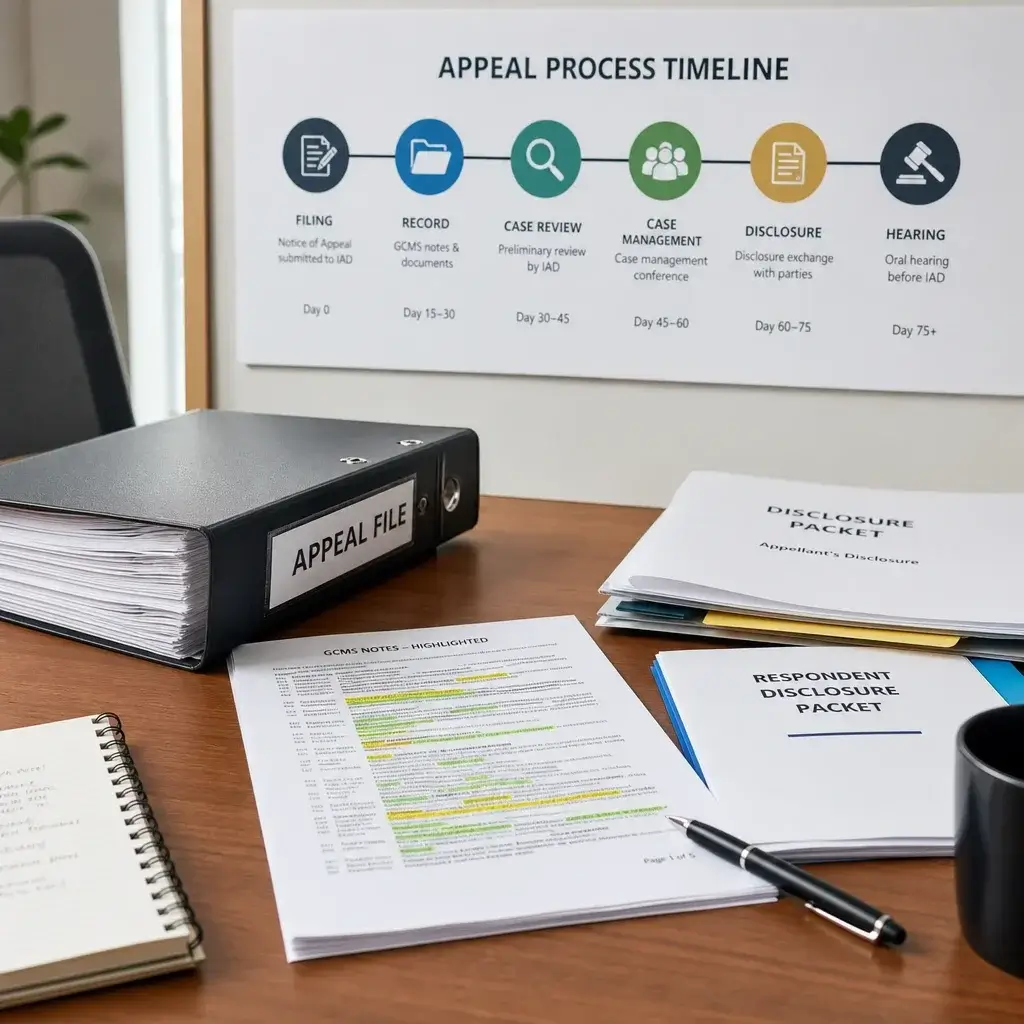
After filing, the case usually moves through acknowledgment, record production, disclosure, possible ADR, and then a hearing if it does not settle earlier. The exact timeline varies by registry location, case complexity, interpreter needs, document volume, and backlog.
The appeal record, sometimes called the appellant’s record in practice discussions, is the file that shows why the officer refused the case. It usually contains the refusal reasons, application materials, interview notes or summaries if relevant, and other internal material that lets you see the real concerns instead of guessing at them.
GCMS notes are the internal electronic case notes used in IRCC processing. They can show interview impressions, credibility concerns, missing-document comments, factual misunderstandings, and internal reasoning that may not be fully spelled out in the refusal letter.
Good disclosure is organized, not dumped. The strongest packages sort evidence by timeline and issue, label each exhibit clearly, and add certified translations for non-English documents where required by the tribunal process.
Timeline table: what to expect
| Stage | What happens | Timing |
|---|---|---|
| Appeal filed | Sponsor starts the IAD process | Strict deadline applies; verify current rule |
| Acknowledgment | Registry opens and tracks the file | Variable by registry |
| Appeal record | Refusal materials are produced | Variable by registry |
| Disclosure | Appellant sends supporting evidence | Set by rules, directions, or scheduling order |
| ADR | Shorter conference for some cases | Only in selected cases |
| Full hearing | Tribunal hears testimony and argument | Variable; often longer for complex cases |
I will not invent exact time ranges here because they move. Check the current IAD practice materials or get advice based on your registry.
Appeal, Reapply, or Seek Judicial Review? Use a Decision Framework

An appeal is often strongest when the refusal turned on credibility, interview concerns, or a misunderstanding that better evidence can fix. A refused spousal sponsorship appeal can work well when the officer doubted the relationship, read facts out of context, or missed cultural and family evidence that now can be presented clearly.
Reapplication is often stronger when the original package was weak on documents rather than blocked by a deep credibility finding. If forms were incomplete, civil documents were missing, timelines were poorly explained, or the relationship evidence was thin but fixable, a fresh application may be faster and cleaner than a long appeal.
Judicial review is often the better tool when there is no IAD appeal right or when the main issue is legal unfairness. That includes cases where the process itself may have been unreasonable, key evidence was ignored in a legally significant way, or the wrong legal test appears to have been applied.
Filing the wrong remedy first can waste months. A rushed reapplication may not preserve appeal rights, and a court strategy must be timed under Federal Court rules that need current confirmation.
Decision tree
Refusal received
│
├── Was the application refused on the merits?
│   ├── No, it was returned → Correct the package and resubmit.
│   └── Yes → Continue.
│
├── Was it an outland family class sponsorship?
│   ├── Yes → Check if the sponsor has an IAD appeal right.
│   └── No → Inland and some other categories may need reapplication or judicial review.
│
├── Is there a bar to appeal because of the refusal ground?
│   ├── Yes → Analyze judicial review or reapplication.
│   └── No → Consider IAD appeal.
│
├── Is the refusal mainly about missing documents or weak packaging?
│   ├── Yes → Reapplication may be stronger.
│   └── No → Appeal may be stronger, especially after interview or credibility refusal.
│
└── Is there a fairness or legal error issue with urgency?
    ├── Yes → Judicial review may be the better route.
    └── No → Appeal or reapply based on evidence strength.
Common Reasons for Spousal Sponsorship Refusal and How Strategy Changes
The most common refusal issue is that the officer did not accept the relationship as genuine. In these reasons for spousal sponsorship refusal, the real dispute is usually not one photo or one chat log but the overall coherence of the relationship story.
Marriage-of-convenience concerns need different proof than a simple missing-document problem. The officer may focus on motive, immigration benefit, short courtship, inconsistent histories, or limited knowledge between partners, and the response must answer those exact concerns rather than flood the file with duplicate messages.
Interview refusals usually turn on contradictions, omissions, or weak explanations under pressure. If the refusal followed an interview, the strategy should compare each disputed answer with the forms, messages, travel records, and cultural context to show whether the issue was real inconsistency, misunderstanding, interpretation trouble, or nerves.
Missing or insufficient documents often support reapplication more than appeal. If the refusal happened because the package lacked civil records, translations, signatures, or key relationship proof, the cleaner fix may be a new complete filing unless there is also a strong legal or factual error worth appealing.
Sponsor ineligibility raises a different problem from relationship genuineness. If the sponsor did not meet a legal sponsorship condition, the case may require curing that eligibility issue first instead of trying to win on relationship evidence alone.
Misrepresentation allegations are more serious than ordinary inconsistency. A misrepresentation finding usually means the officer believed false information or withheld facts in a way that mattered to the decision, and that can affect both appeal rights and future immigration strategy.
Medical, criminal, security, or other inadmissibility findings must be analyzed separately from the relationship itself. A genuine marriage does not automatically overcome an inadmissibility barrier, so cases with inadmissibility need a two-track analysis: appeal right first, remedy second.
How to Prove the Relationship Is Genuine: Evidence That Actually Persuades

Persuasive evidence answers the refusal reason directly and shows a relationship developing over time. The best packages connect each exhibit to a disputed point, such as how you met, how contact continued, how families were involved, when visits happened, and what future plans were made.
Quality beats volume in spousal sponsorship appeal cases. Fifty well-labeled exhibits with dates, names, and short explanations usually carry more weight than a giant file of screenshots with no context.
Communication records matter most when they show pattern and continuity. Select samples from different months, show both ordinary life and serious planning, and explain any gaps with concrete reasons such as work rotations, military conditions, caregiving duties, or travel restrictions.
Financial evidence helps when it proves interdependence rather than staged transfers. Shared expenses, rent support, travel bookings, insurance beneficiaries, money transfers tied to real needs, and family-event spending all become stronger when matched to dates and the relationship timeline.
Third-party evidence works best when it is specific. Letters from relatives or friends should state how the writer knows both partners, what they personally observed, and when they observed it, rather than repeating a generic statement that the couple is in love.
Complex facts do not kill a case by themselves. Age gaps, arranged marriages, prior divorces, long-distance relationships, short courtships, cultural differences, and periods of separation all can be explained if the evidence shows a credible real-life pattern.
Evidence checklist for relationship genuineness
- Relationship timeline with key dates
- Photos tied to dates, places, and people present
- Travel records and boarding passes
- Passport stamps and visas
- Call logs and selected message samples
- Money transfers with explanation
- Wedding and family event records
- Lease, bills, or cohabitation proof where available
- Proof of future plans
- Affidavits or letters from people with firsthand knowledge
- Explanations for unusual facts or document gaps
- Certified translations where required
Scenario table: difficult fact patterns and the evidence approach
| Scenario | Typical concern | Better evidence approach |
|---|---|---|
| Prior marriages | Relationship may be seen as rushed or opportunistic | Divorce timeline, emotional history, family knowledge, overlap explained clearly |
| Arranged marriage | Officer may assume low personal knowledge | Courtship chronology, family role explained, post-marriage communication pattern |
| Long-distance relationship | Limited cohabitation may look weak | Travel records, daily communication pattern, future cohabitation plans |
| Cultural or age difference | Officer may infer mismatch or immigration motive | Family acceptance, shared plans, detailed knowledge of each other |
| Periods of separation | Gap may look like weak commitment | Work, visa, caregiving, or safety reasons tied to documents |
| Children from prior relationships | Blended family facts may be underexplained | Parenting history, support, contact with children, consent documents where relevant |
Building the Appeal Theory: How to Structure Your Arguments
A strong appeal theory does three jobs at once. It identifies what the officer got wrong, shows what evidence fixes the problem, and explains why the refused spousal sponsorship appeal should succeed on the actual facts.
The cleanest structure is issue, refusal finding, answer, supporting evidence, and outcome sought. That keeps the file focused and stops you from arguing around the edges while ignoring the one point that really caused the refusal.
Consistency matters more than dramatic language. If the forms, testimony, messages, travel history, and witness statements tell one coherent story, the argument gains weight without overstatement.
Explanations for inconsistencies should be specific and disciplined. If dates were mixed up, explain why and point to the correcting documents; if translation errors happened, identify the error and file the proper translated material; if an interview answer sounded weak because of nerves or misunderstanding, connect that claim to the interview context and later consistent evidence.
A sponsorship appeal letter can help organize facts, but it should not replace proper evidence or formal submissions where those are required. The role of any narrative letter is to guide the reader through the chronology, not to make unsupported claims.
ADR vs Full Hearing: What Happens and How to Prepare
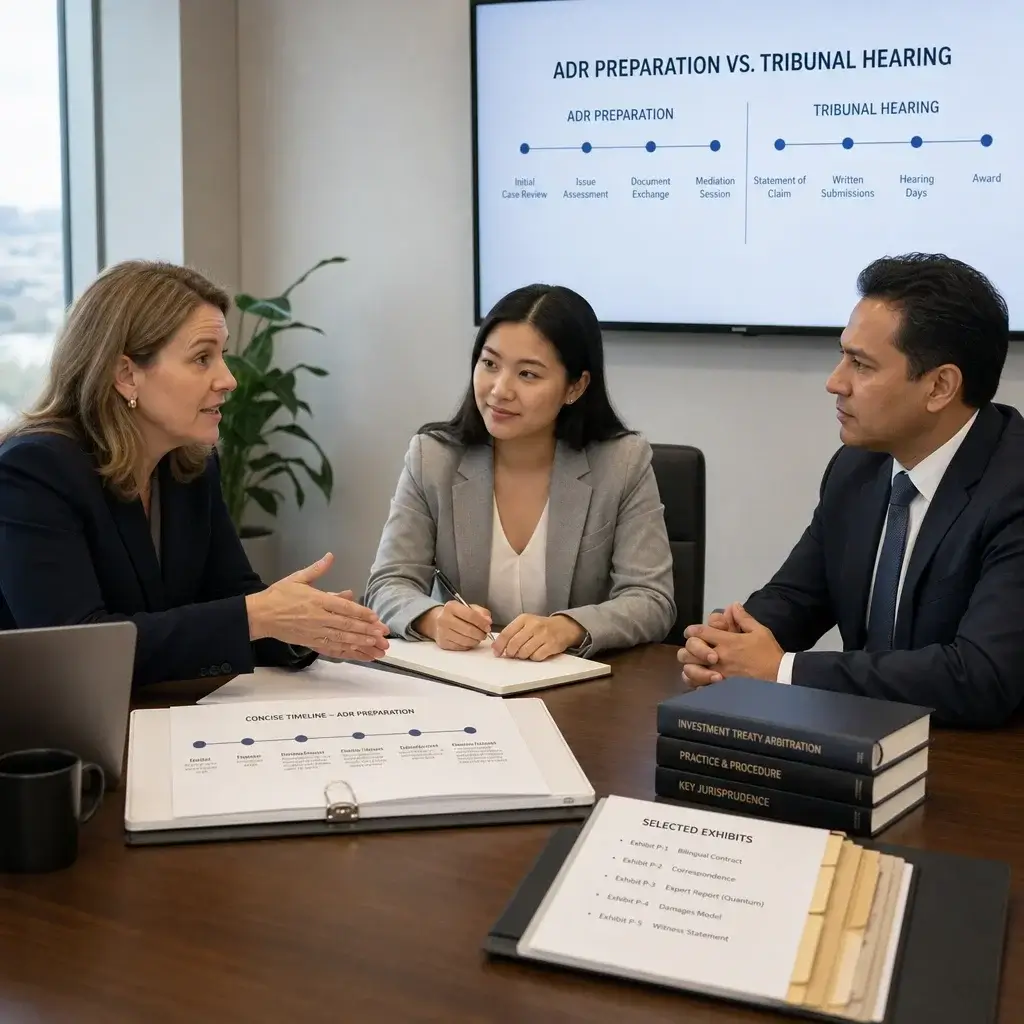
ADR is a shorter conference used in some IAD sponsorship appeal files where the issues may be narrowed or resolved without a full hearing. It is usually worth taking seriously because focused preparation can sometimes lead to consent or a practical resolution before the longer hearing stage.
The people at ADR usually include the sponsor, counsel if there is counsel, the Minister’s counsel, an interpreter if needed, and the decision-maker or conference official handling the process. Attendance format can vary, including in-person, video, or other approved arrangements depending on current practice and the registry.
The best ADR preparation is narrow, not sprawling. Bring a concise timeline, identify the single strongest answer to the refusal concern, disclose targeted exhibits, and explain contradictions before the other side has to pull them out of you.
A full IAD hearing is more formal than ADR and usually follows a set sequence. There are introductions, issue clarification, witness testimony, questions from counsel and the tribunal member, documentary evidence review, and final submissions, with the decision either given later in writing or delivered after the hearing if appropriate.
The sponsor usually speaks early because the sponsor is the appellant. In many hearings, the sponsor’s testimony anchors the chronology, after which the sponsored spouse and other witnesses may testify if the format and scheduling allow.
Questions at a hearing often test credibility through detail and consistency. Expect questions about first contact, important dates, prior relationships, family knowledge, finances, visits, daily routine, future plans, children, interview answers, and any gap or contradiction already flagged in the refusal.
Direct answers are safer than speeches. If you do not remember a date, say that honestly and tie it to a record if one exists, because overconfident wrong details damage credibility more than a careful, limited answer.
Self-representation is possible, but it is harder in cases with interview refusals, misrepresentation, inadmissibility, interpretation issues, or heavy contradictions. Those files need strategy on evidence, witness order, objections, and how to answer the real concern rather than the surface wording.
Special Situations: Misrepresentation, Inadmissibility, Interview Refusals, Children, and Returned Applications
Misrepresentation means more than a simple mistake on a stressful form. It usually involves false information or omitted facts that could affect the decision, and that can change both appeal rights and future admissibility consequences.
An inconsistency is not automatically misrepresentation. Dates mixed up by memory, translation errors, or incomplete explanations may still be serious, but they need to be separated from deliberate deception and analyzed with the actual documents and interview context.
Inadmissibility findings need their own strategy. Criminal, medical, security, and other inadmissibility issues can block or reshape the remedy even if the relationship itself is genuine.
Interview refusals can sometimes be repaired with disciplined evidence review. Compare the interview concerns to the application forms, identify exact contradictions, check interpreter quality if language was a problem, and explain cultural or practical context only where it truly answers the refusal.
Cases involving children need fuller evidence than many applicants expect. Parenting history, school records, family contact, custody or consent documents, financial support, and the role of the sponsored spouse in the children’s lives can all affect how genuineness is assessed.
A returned application should not be treated like a merits refusal. If IRCC returned the package as incomplete, the usual answer is to correct the defect and resubmit, while also checking any parallel status issue if the applicant was inside Canada.
Are IAD Hearings Public? Privacy and Confidentiality
IAD hearings are generally tribunal proceedings, which means privacy cannot be assumed. That matters in sponsorship cases because the evidence often includes intimate messages, family conflict, health information, financial records, or children’s details.
Confidentiality requests may be possible in sensitive cases, but they are not automatic. If abuse, safety concerns, children, or highly private evidence are involved, ask early about whether a confidentiality order or publication restriction can be requested under the current tribunal process.
Good privacy practice starts before the hearing. Redact unnecessary personal identifiers where permitted, organize intimate evidence in a separate marked section, and avoid filing irrelevant private material just because it feels dramatic.
What Happens If the Appeal Is Allowed or Dismissed
If the appeal is allowed, the file usually goes back for continued processing rather than immediate visa issuance. IRCC may still need updated forms, medicals, police certificates, background checks, or other current documents before permanent residence is finalized.
A successful IAD sponsorship appeal does not guarantee permanent residence on the same day. It means the refusal has been overturned or set aside through the appeal process and the application returns to the processing stream for the next required steps.
If the appeal is dismissed, read the written reasons quickly and decide the next move fast. The usual options are a fresh application with a stronger record, judicial review if legally available and timely, or another immigration pathway if family sponsorship is no longer the best route.
Post-decision checklist
If your appeal is allowed:
- Save the written decision
- Watch for IRCC follow-up requests
- Update passports, police certificates, or other expired documents
- Keep contact information current
- Continue preserving relationship evidence until landing is complete
If your appeal is dismissed:
- Read the reasons carefully
- Identify whether the problem was factual, legal, or procedural
- Check whether judicial review timing applies
- Assess whether a stronger reapplication is realistic
- Get advice before filing a rushed new package
FAQ
Can I appeal a refused spousal sponsorship application in Canada?
Sometimes, yes. The key facts are the sponsorship class, the refusal ground, and whether the sponsor has an IAD appeal right.
How many days do I have to file a sponsorship appeal?
The deadline is strict, but you should confirm the exact number and counting method from the refusal letter, current IAD rules, or legal advice before relying on any online summary.
Can an inland spousal sponsorship refusal be appealed to the IAD?
Often no. Inland spousal sponsorship refusal cases commonly need reapplication or judicial review analysis instead.
Can an outland spousal sponsorship refusal be appealed?
Often yes, if the sponsor has an appeal right and no legal bar blocks the IAD route.
Who files the appeal: the sponsor or the sponsored spouse?
Usually the sponsor files it as the appellant in a family sponsorship appeal.
What is the Notice of Appeal for a sponsorship appeal?
It is the formal document used to start the IAD process after an eligible refusal. Use the current official instructions, not an informal letter alone.
What documents do I need to start a sponsorship appeal?
Usually the refusal letter, the notice of appeal sponsorship appeal form or current appeal-starting document, contact details, and any representative authorization.
What are GCMS notes and should I request them?
They are IRCC’s internal case notes. They are often useful because they reveal concerns not fully explained in the refusal letter.
How long does an IAD sponsorship appeal usually take?
It varies by registry, complexity, scheduling pressure, and whether the matter goes to ADR or a full hearing.
What is ADR in a sponsorship appeal?
ADR is an alternative dispute resolution conference used in some appeals to test whether the matter can be resolved without a full hearing.
What happens at a full IAD hearing?
Witnesses testify, documents are reviewed, the member asks questions, counsel make submissions, and the decision may come later in writing.
Can I submit new evidence after the refusal?
Often yes in an eligible IAD sponsorship appeal, but the evidence should be organized, relevant, and disclosed properly under the current directions and rules.
Should I appeal or reapply after spousal sponsorship refusal?
Appeal is often stronger for credibility and interview refusals. Reapplication is often stronger for technical gaps and weak packaging.
When is judicial review better than an IAD appeal?
Usually when there is no appeal right or when the main issue is legal or procedural unfairness rather than fact-finding alone.
What if my sponsorship application was returned instead of refused?
A return usually means no merits decision was made. The usual response is to correct the problem and resubmit.
What evidence best proves a genuine marriage or common-law relationship?
Chronological, specific, corroborated evidence works best: travel, communication, finances, family involvement, and future plans tied to the exact refusal concerns.
What happens after a successful sponsorship appeal?
The file usually goes back for further IRCC processing, and updated checks or documents may still be required.
Can I represent myself in a sponsorship appeal?
Yes, but complex cases become harder quickly. Interview refusals, misrepresentation, inadmissibility, and credibility-heavy files are where representation often adds real value.
When to Get Legal Help
Legal help matters most when the refusal involves credibility, misrepresentation, inadmissibility, an interview, a possible no-appeal-right issue, or a deadline that is already close. Those are the files where one wrong step at the start can shape the whole case.
A good legal review should do three things fast. It should confirm whether you actually have an appeal right, identify whether appeal, reapplication, or judicial review makes more sense, and map the evidence needed to support that choice.
If you are in Toronto or the GTA and you need help with appeals of refused spousal sponsorship applications, an immigration lawyer Toronto families trust can review the refusal letter, explain the next step in plain English, and help you move before the deadline closes. If you want, book a free assessment and bring the refusal letter first. That is the cleanest place to start.