
A lot of people read U.S. immigration content and panic. Permanent residence after divorce in Canada usually works very differently: if you already became a Canadian permanent resident through a genuine relationship, separation or divorce does not automatically cancel your PR.
Key answer first: what divorce usually does and does not do to Canadian permanent residence
Divorce does not automatically take away valid Canadian permanent resident status. The real issue is timing: whether you are already landed as a PR, still waiting on a sponsorship application, approved but not yet landed, or facing allegations of misrepresentation.
A sponsor cannot simply call IRCC and cancel a former spouse’s valid PR after the fact. A breakup alone is not the legal mechanism that removes permanent residence, although IRCC can still examine whether the original relationship was genuine and whether any false information was given in the application.
Canadian rules here are not the same as U.S. green card rules. If you are searching phrases like “does divorce affect permanent resident status in Canada” or “what happens to PR status after divorce,” stay with Canada-only guidance because mixed-jurisdiction advice causes real mistakes.
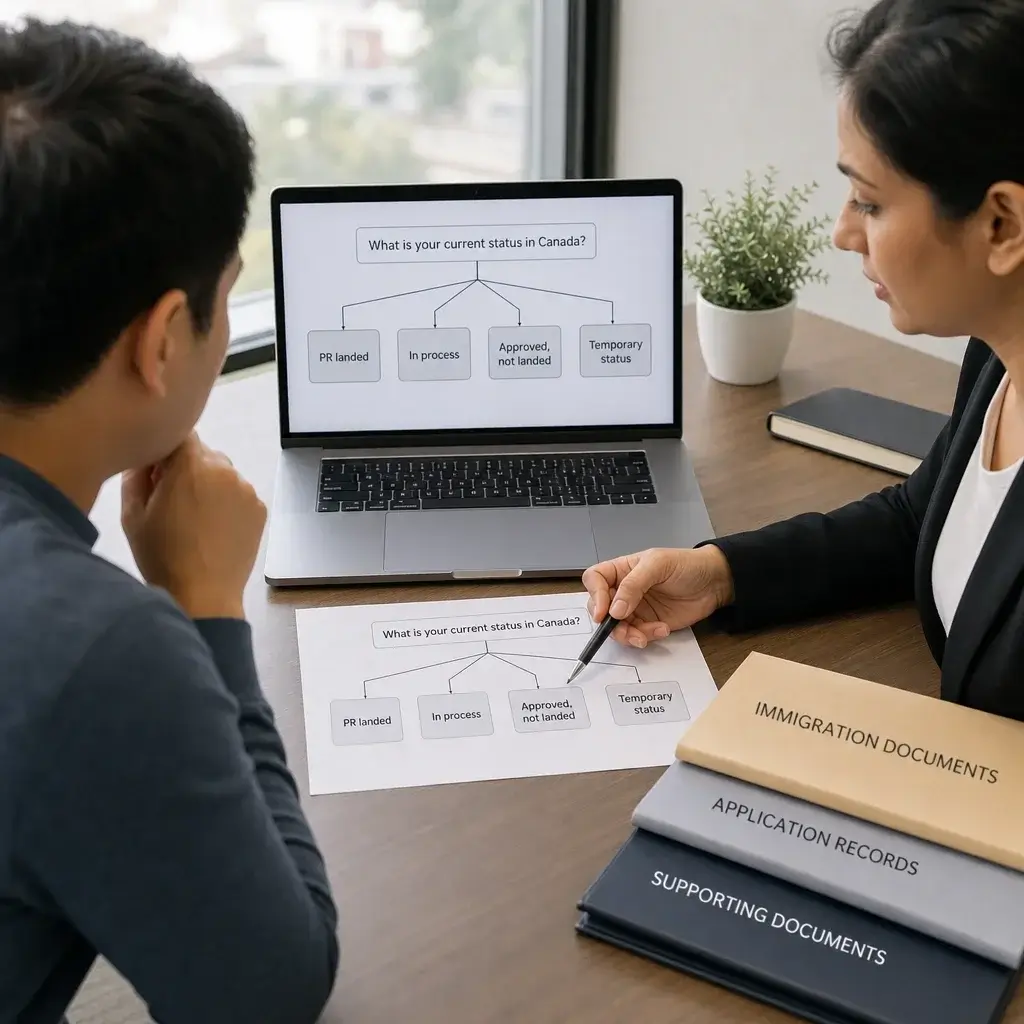
A quick decision tree: your outcome depends on your status today
If you already landed as a permanent resident, divorce after spousal sponsorship usually does not cancel that status by itself. Your next step is to keep your records, protect evidence that the relationship was genuine, and get advice quickly if someone is threatening to report you for fraud.
If your sponsorship or PR application is still in process, a separation can directly affect eligibility because spousal and common-law sponsorship depends on a qualifying relationship continuing until permanent residence is granted. Your next step is to review the exact stage of the file and prepare to update IRCC with accurate information.
If you were approved but have not yet landed, the risk is still active because “before landing” means before you officially become a permanent resident. Your next step is not to proceed on old facts if the relationship has ended.
If your status in Canada is temporary, not permanent, the analysis changes. Work permits, study permits, visitor status, and dependent pathways can be affected by the breakdown depending on the category and the basis on which the document was issued.
If you are the sponsor rather than the applicant, the key issue is usually the sponsorship undertaking, not the former partner’s ability to keep valid PR. If support, children, or allegations of misrepresentation are involved, get tailored advice before sending statements drafted by the other side.
If there is abuse, coercion, housing instability, or a deadline close to expiry, handle safety and status together. You can request a free assessment to confirm whether IRCC needs an update and what evidence to preserve.
Separation vs divorce in Canada: why the difference matters
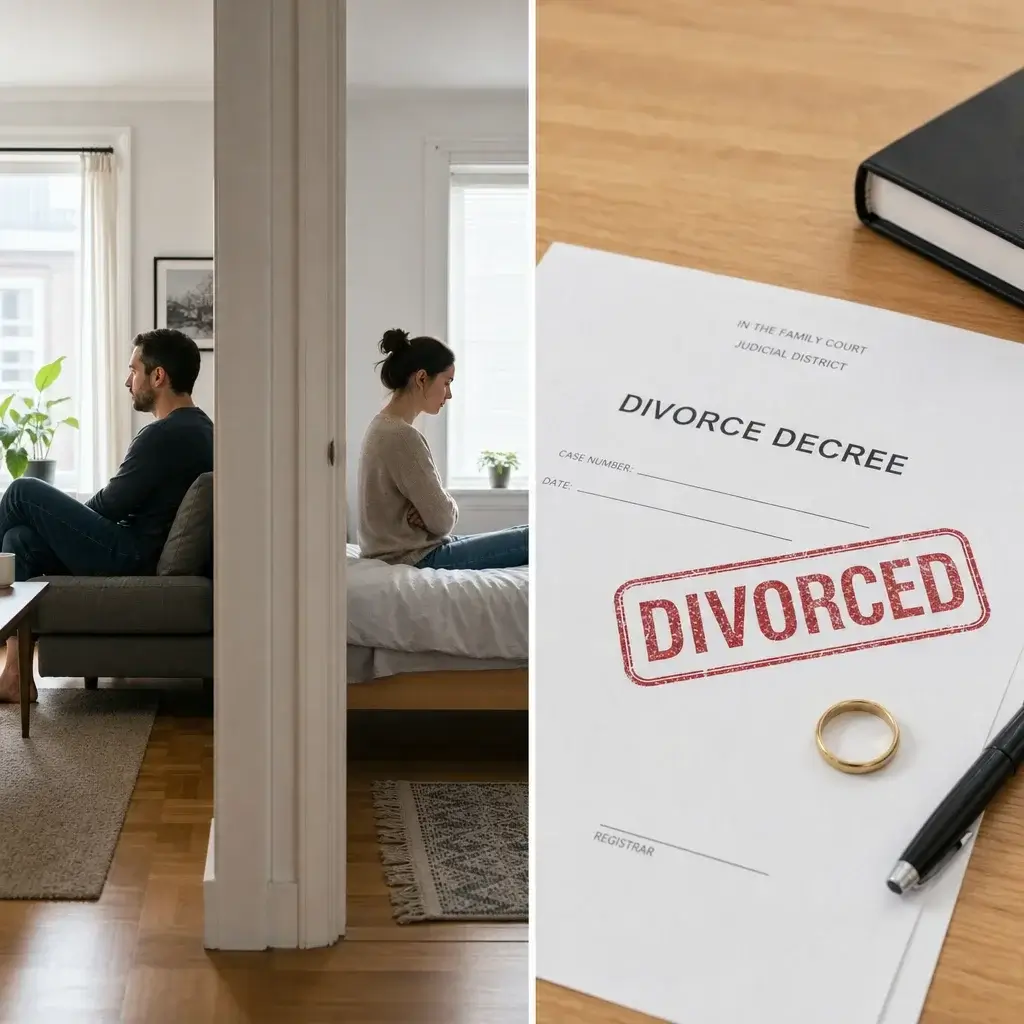
Separation means the relationship has ended and the couple is living apart, but a married couple remains legally married until a court grants a divorce. Divorce is the legal end of a marriage, while common-law partners do not divorce at all; they separate.
There is no automatic divorce just because people have been apart for a long time. In Canada, spouses commonly rely on living separate and apart for at least 1 year before obtaining a no-fault divorce.
IRCC usually cares more about the relationship status change than the label alone. If the relationship ended during a sponsorship or PR process, the fact of separation itself can matter even before a divorce judgment is issued.
Family-law consequences can vary by province, but immigration consequences are federal. For Toronto and GTA readers, that means Ontario family-law paperwork may matter factually, but IRCC still applies federal immigration rules.
If you already have permanent residence after spousal sponsorship
If you already landed as a permanent resident through a genuine marriage or common-law relationship, a later breakup is not the same thing as marriage fraud. People can separate for completely real reasons, including conflict, finances, parenting stress, or abuse, and that later failure does not by itself erase valid PR.
A former sponsor usually cannot revoke your PR just by reporting the breakup. I would treat those threats as emotional pressure unless there is a real issue about false documents, fake cohabitation, inconsistent timelines, or other misrepresentation concerns.
The legal risk after landing is usually not divorce itself but a later finding that the relationship was never genuine or that important facts were hidden from IRCC. Misrepresentation can lead to serious immigration consequences, including a 5-year inadmissibility period in many cases.
Your marital status also does not replace normal PR obligations. Permanent residents still need to meet residency obligations, keep status documents current, and respond properly if IRCC asks for information later.
If the relationship ends before PR is finalized or before landing
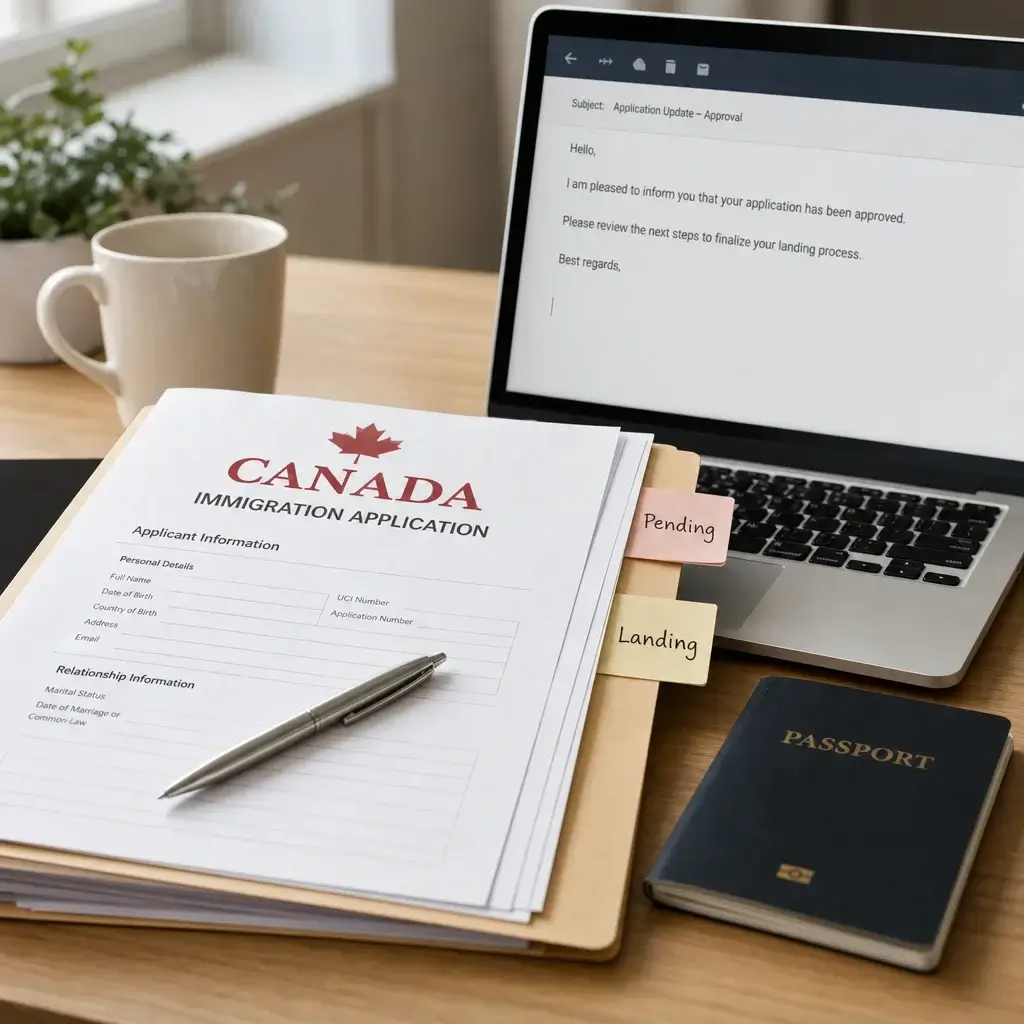
If the qualifying spousal or common-law relationship ends before permanent residence is granted, the sponsorship-based case may no longer meet the core eligibility requirement. That can lead to refusal, not just delay, depending on the stage and the facts.
Before approval, separation usually means the basis for the application has changed in a material way. The safest step is to update IRCC promptly rather than let the file continue on facts that are no longer true.
After approval but before landing, the file is still vulnerable because you are not yet a permanent resident until landing is complete. That stage causes confusion, and I see people assume approval equals PR when it does not.
After landing, the analysis shifts back to the earlier rule: divorce does not automatically cancel valid PR, but misrepresentation concerns can still matter if the original application was not truthful.
Inland vs outland spousal sponsorship after separation
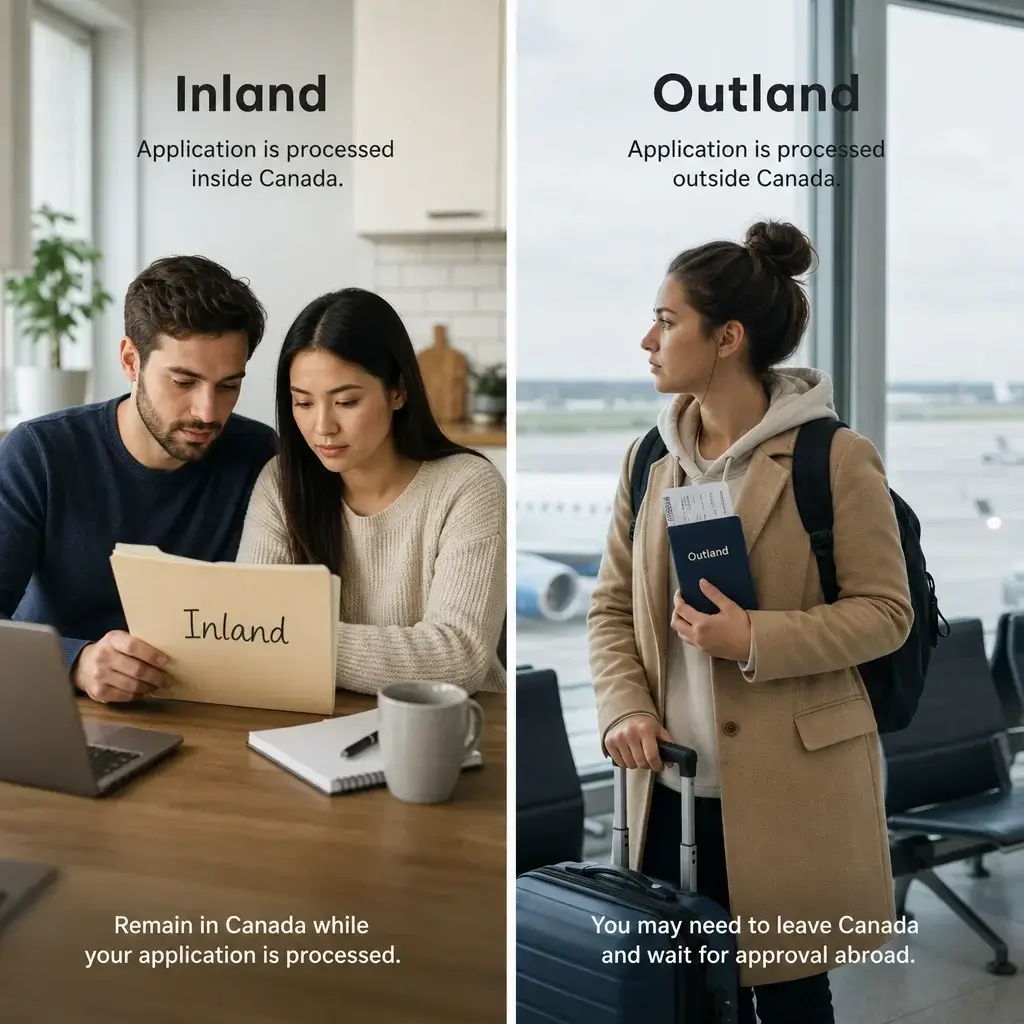
Inland sponsorship generally means the applicant is applying from inside Canada with the couple living together in Canada, while outland sponsorship generally means processing through the family-class stream often used when the applicant lives outside Canada or needs more travel flexibility. The labels are practical shorthand, even though IRCC program language can change over time.
The core immigration problem after separation is similar in both streams because the relationship itself is the qualifying basis. If that relationship ends before PR is granted, both inland and outland files can be affected.
The practical fallout can be different for inland applicants because they may also be relying on related temporary status or work authorization inside Canada. That is why divorce during a PR application in Canada can be both an eligibility issue and a status-management issue at the same time.
Outland applicants may face fewer immediate in-Canada status questions, but travel, reapplication planning, and document strategy can still change fast after a breakup. Your actual path depends on the file posture and any other status options available.
Common-law partners vs married spouses: what changes after a breakup
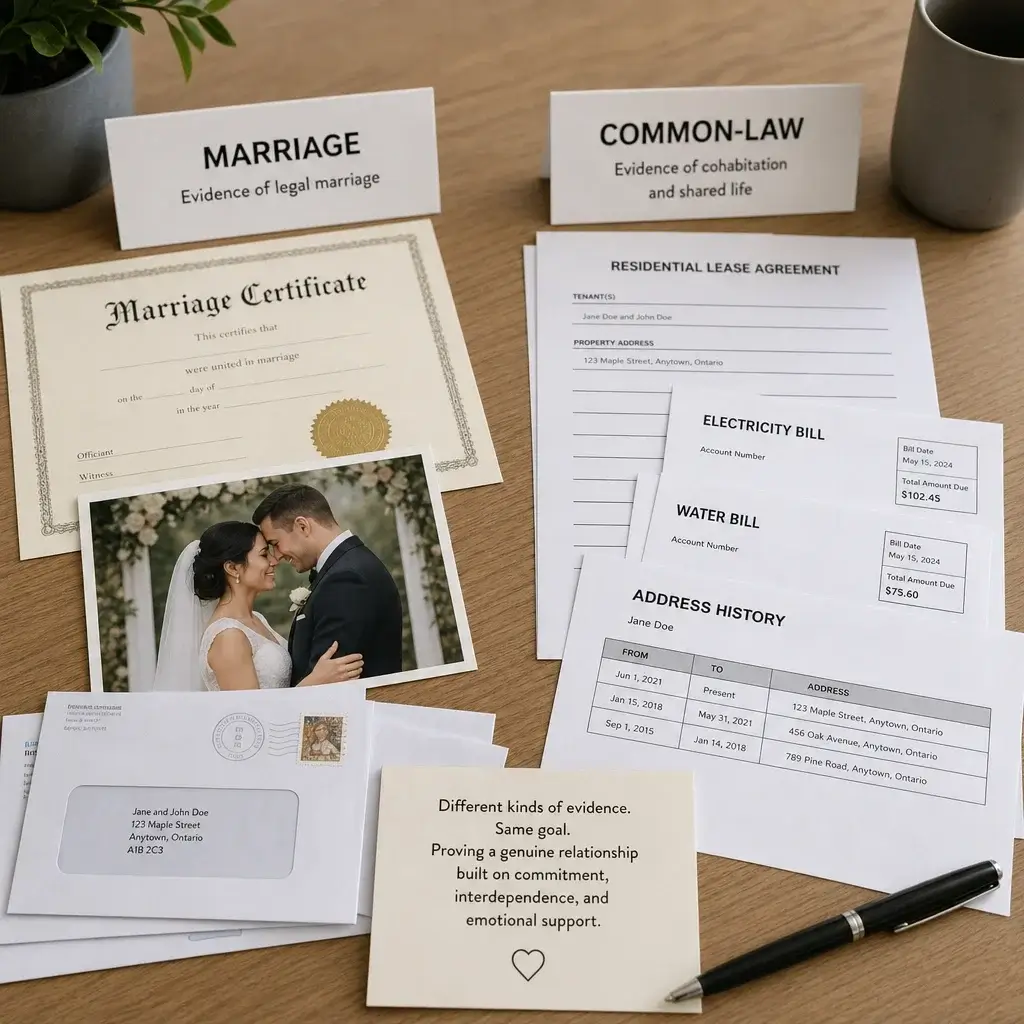
Common-law partners separate rather than divorce, but the immigration question is still when the relationship ended and whether it was genuine while it existed. For IRCC purposes, common-law status generally requires at least 12 consecutive months of cohabitation.
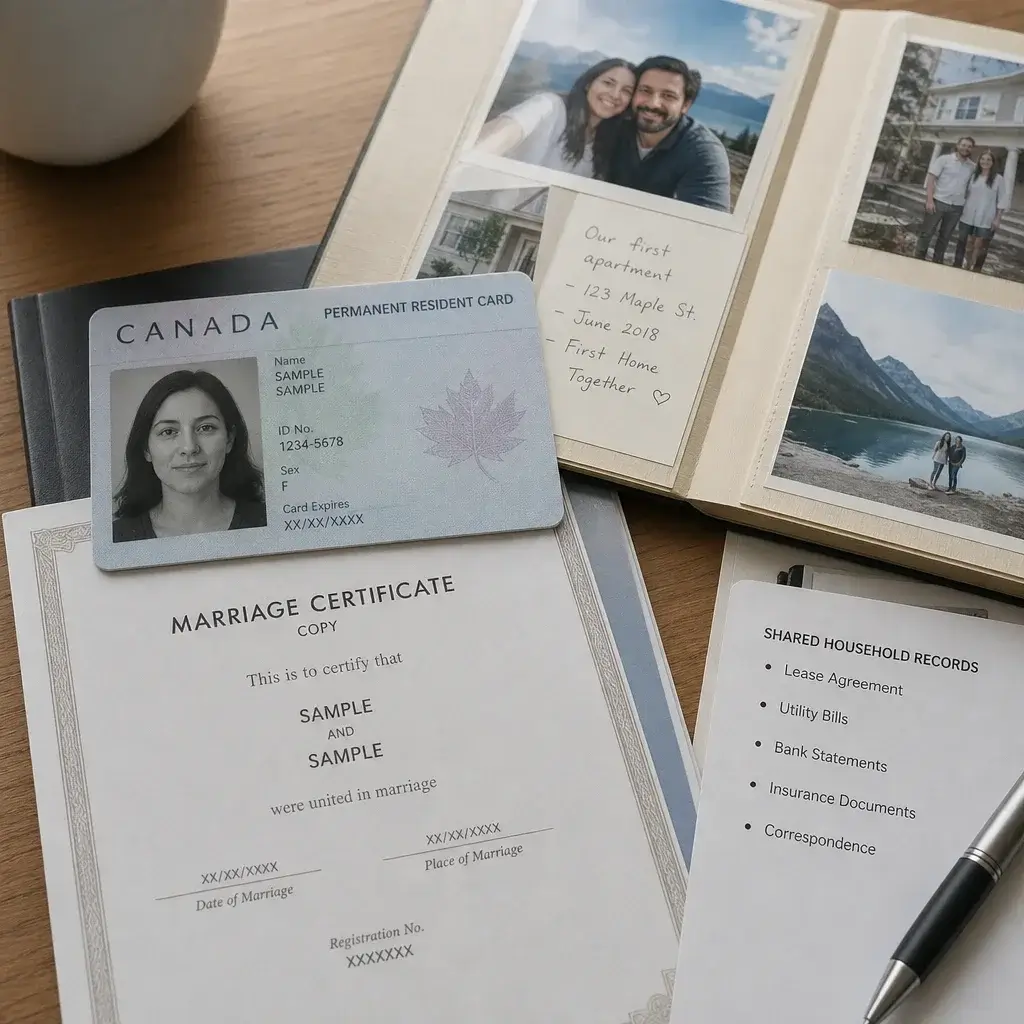
Because common-law cases rely so heavily on shared living evidence, proof often turns on leases, bills, mail, insurance, and address history rather than just a marriage certificate. That makes record-keeping especially important if IRCC later asks questions after a separation.
Married spouses usually prove the legal relationship more easily because the marriage certificate exists, but they still need to show the marriage was genuine and not entered into primarily for immigration. A marriage certificate alone has never been enough.
When divorce can trigger concerns about marriage fraud or misrepresentation
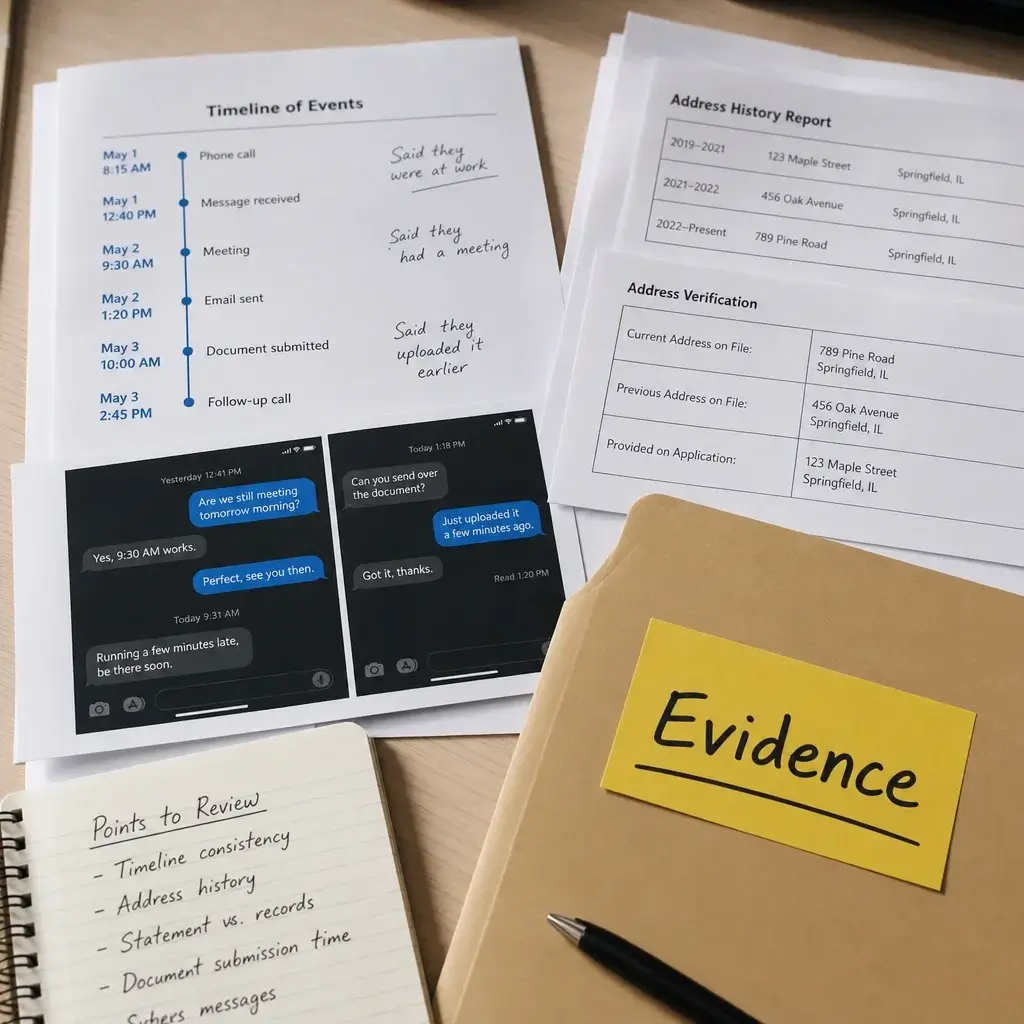
Divorce itself does not prove fraud. Even a short marriage can have been genuine, and even a long marriage can contain false evidence if the application was dishonest.
The real red flags are factual problems such as contradictory addresses, staged cohabitation, altered messages, coached letters, fake financial records, or admissions that the relationship was entered into mainly for status. Those facts matter much more than the date the relationship ended.
If IRCC later examines the file, contemporaneous evidence usually helps more than polished explanations created after the breakup. I would never tell someone to recreate chats, backdate leases, or submit cleaned-up stories that do not match the record.
Misrepresentation findings can carry consequences far beyond one sponsorship file. Because that area is accuracy-sensitive and fact-specific, speak to a lawyer on your own record before answering fraud allegations or signing statements prepared by the other party.
Documents to keep if IRCC later asks whether the relationship was genuine
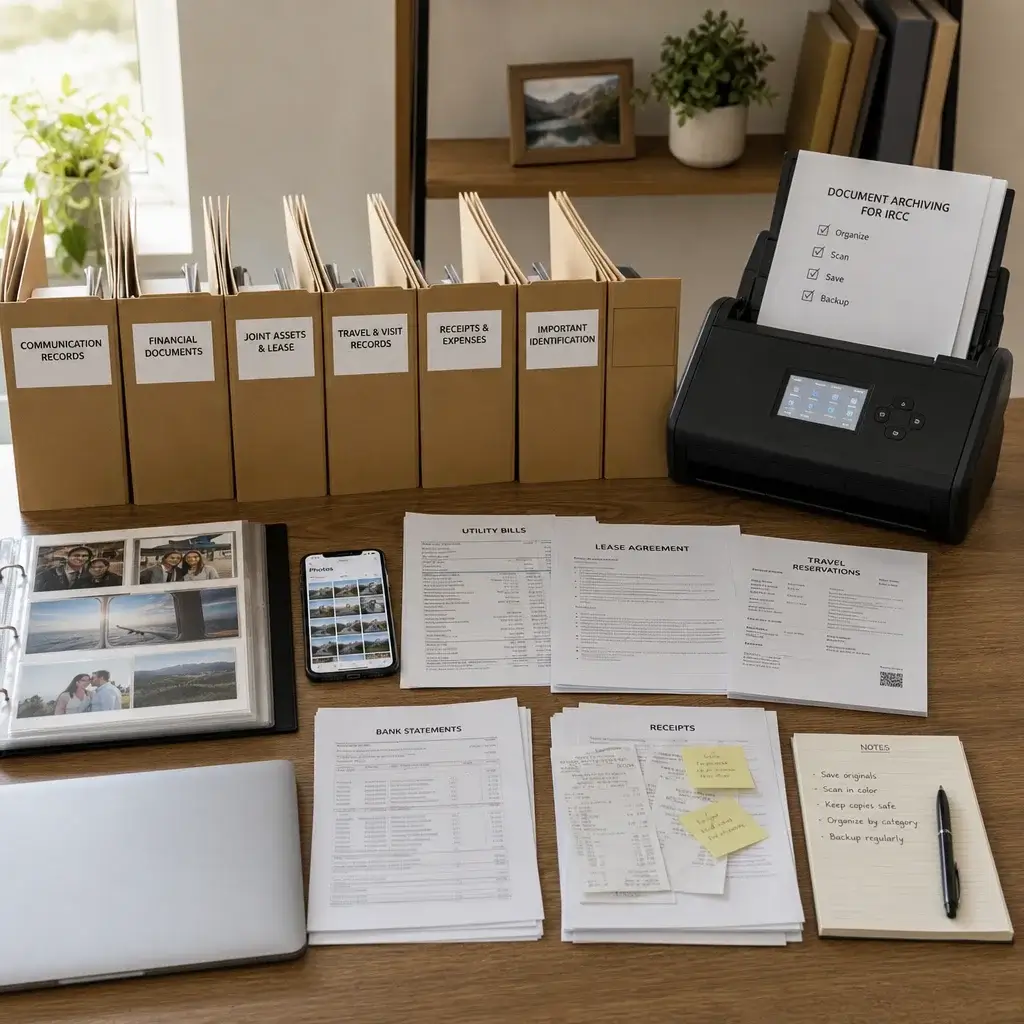
Keep documents that show the real history of the relationship over time, not just documents collected for the original application. Strong examples include lease or mortgage records, joint bills, joint bank evidence if it exists, photos over time, travel records, correspondence, insurance designations, tax or address history, and children’s records where relevant.
Store both digital and paper copies safely. In abuse situations, safe storage matters as much as the evidence itself because a controlling spouse may cut off access to phones, email, banking, or the home.
The best document mix depends on the relationship type and the stage of the immigration file. Common-law cases usually need stronger cohabitation evidence, while married cases often still need proof of shared life decisions and ongoing contact.
Affidavits can help in the right case, but they are usually supporting evidence, not a substitute for records created during the relationship itself. The closer the records are to the actual events, the more weight they usually carry.
Updating IRCC after separation or divorce: what to do at each stage
If your marital status changes during an active immigration file, review every open application that could be affected and prepare to update IRCC with accurate information. That usually includes the sponsorship file, any linked temporary-status files, and sometimes later citizenship-related disclosures if a question directly asks for prior marital history.
Before contacting IRCC, gather your application number, UCI, identity documents, current address, contact details, a short separation timeline, and copies of any status documents with expiry dates. Having the file organized reduces inconsistent reporting.
If the application was submitted and is still in process, report the material change through the current IRCC reporting channel for case updates rather than assuming the officer will learn it elsewhere. I cannot promise one single reporting path for every file because IRCC processes can change.
If additional documents were requested, answer truthfully and make sure the response matches the new reality. Sending outdated forms or silence after a separation can create a larger credibility problem than the breakup itself.
If you are in final stages or before landing, act quickly because that is the stage where people most often confuse approval with completed permanent residence. This is general information, not legal advice for your own file.
Sponsor obligations after divorce: financial responsibility and the undertaking

The sponsorship undertaking is a legal promise by the sponsor to support the sponsored spouse or partner for a set period, and divorce does not automatically end that promise. For a spouse, common-law partner, or conjugal partner, the undertaking is generally 3 years from the day the person becomes a permanent resident.
That means a sponsor may still have financial responsibility after separation or divorce. The relationship can end, but the undertaking can continue.
If the sponsored person receives social assistance during the undertaking period, the government may seek recovery from the sponsor depending on the program and province. That issue is separate from whether the sponsored person keeps valid PR status.
If you are the sponsored person and support stops, separate the immigration issue from the family-support issue. Immigration status, social assistance exposure, spousal support, and child support are not the same legal question.
What if the sponsor stops support before the undertaking ends?
If support stops, preserve records right away. Keep texts, emails, bank records, housing records, and any threats about immigration status because those documents can matter in both immigration and family-law contexts.
A sponsor’s threat to “cancel” PR is usually not the same as a real immigration power. The urgent practical issues are usually housing, income, children, and whether there are active immigration files still depending on the relationship.
If the breakdown affects rent, food, childcare, or safety, get immigration and family-law advice in parallel rather than waiting for one side to escalate. That is especially important where there are abuse allegations or pressure to sign statements you did not draft.
Temporary status after separation: work permits, study permits, and dependent pathways

Temporary status after separation in Canada can change more quickly than permanent residence because the document may depend on an ongoing relationship or on the principal applicant’s status. A spouse’s open work permit, a dependent study-based pathway, or certain visitor arrangements can all raise different issues.
Do not assume the PR rule applies to temporary residents. A person who already has PR usually focuses on misrepresentation risk and document preservation, while a temporary resident may need a new independent status strategy before an expiry date arrives.
If a work permit or study permit is affected by the separation, act early rather than after status expires. I cannot give you a safe deadline for your file here because restoration rules and permit categories are accuracy-sensitive and can change, so review the current IRCC rules or get legal advice on your exact documents.
Children, custody, and travel issues: what affects immigration and what does not
Children and custody disputes do not automatically cancel a parent’s permanent resident status. The immigration effect is usually indirect, through travel consent, sponsorship planning, passport issues, disclosure obligations, or evidence about family life.
If a child will travel internationally after separation, consent and family-law restrictions may matter before you book anything. Immigration law and family law overlap here, but they are not the same process.
If parenting conflict is high, keep travel records, school records, and identity documents organized. Those records can matter later if relocation, sponsorship of children, or document replacement becomes urgent.
If there is abuse or coercion: protect yourself without assuming you must stay
No one should stay in an unsafe relationship because they think divorce alone will automatically cancel valid PR. That fear is common, and in many cases it is legally wrong.
If you are in immediate danger, call 911 in Canada. For non-emergency safety planning, get confidential legal advice and connect with current local or provincial support services because contact details change and should be verified at the time you need them.
If you leave an abusive sponsor, your immigration options depend on whether you already have PR, still have an application in process, or hold temporary status. The safety plan and the status plan should be built together.
Can you sponsor a new spouse after divorce?
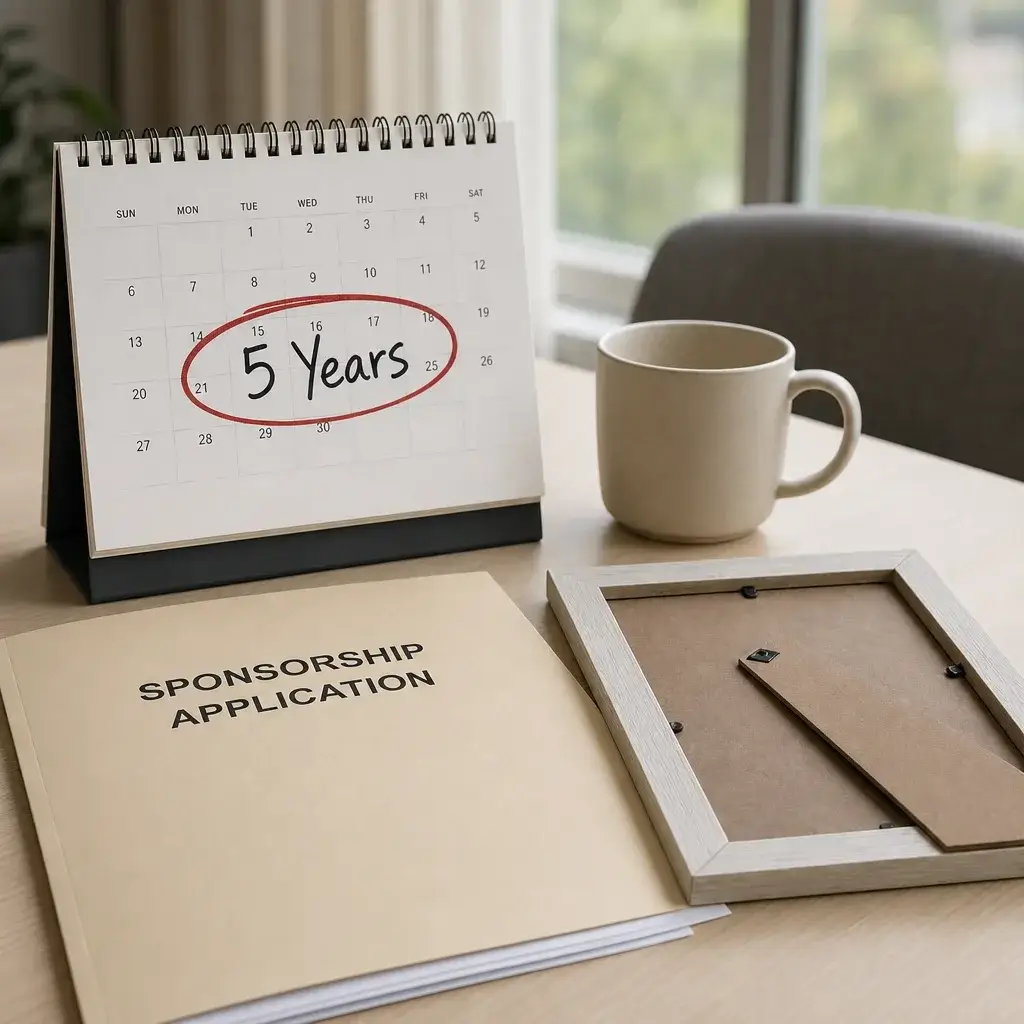
You need to separate two different situations here. A person who previously sponsored a spouse may still be dealing with an undertaking, while a person who was themselves sponsored has a separate set of future sponsorship rules.
A previously sponsored spouse cannot sponsor a new spouse or partner until 5 years have passed since the day they became a permanent resident. That is one of the most important fixed rules in this area.
A sponsor who divorced someone they previously sponsored may still be bound by the earlier undertaking even if they are otherwise eligible to try to sponsor again. That is why questions like “how long after divorce can you sponsor someone in Canada” cannot be answered by divorce timing alone.
Your actual eligibility to sponsor another spouse after divorce can also depend on issues like social assistance, prior sponsorship defaults, misrepresentation findings, and current family composition. This is general information, not a recommendation for your own application strategy.
Annulment vs divorce for immigration purposes
Annulment and divorce are different legal concepts, but neither one has a simple automatic immigration effect on its own. The real legal question is still the stage of the immigration file and whether the marriage was legally valid and genuine when the application relied on it.
Annulment can raise extra questions because it may suggest there was a problem with the legal validity of the marriage from the start. That does not mean the immigration outcome is automatically negative, but it does mean the file usually needs closer legal review.
Foreign divorces in Canada: when they are recognized and what documents may be needed
A foreign divorce recognition in Canada analysis is often necessary before remarriage, a new sponsorship, or some family-law steps. You should not assume every divorce granted abroad will automatically be accepted for Canadian immigration or family-law purposes.
Canadian law commonly recognizes a foreign divorce where one former spouse was ordinarily resident in that foreign country for at least 1 year immediately before the divorce proceeding, although other legal bases may also exist in some cases.
Practical documents often include the divorce certificate or judgment, certified translation if the document is not in English or French, identity documents, marriage records, and evidence of residence or connection to the foreign jurisdiction where that issue matters.
If the record is inconsistent, incomplete, or from more than one country, get tailored advice before filing a new sponsorship or remarriage-related paperwork. Recognition problems are much easier to fix early than after a new application is submitted.
Canada-only myth busting
Myth: My spouse can cancel my PR after divorce. Reality: A spouse cannot simply revoke valid permanent residence by reporting a breakup alone. The real legal risk is usually misrepresentation, not divorce itself.
Myth: You must stay married for three years to keep PR in Canada. Reality: There is no general rule requiring you to stay married for 3 years to keep valid Canadian PR after landing.
Myth: Long separation automatically means divorce. Reality: Separation and divorce are different. Divorce is a court process, and at least 1 year of separation is commonly used for a no-fault divorce, but the divorce is not automatic.
Myth: A breakup always proves marriage fraud. Reality: Real relationships can end. IRCC looks at genuineness and truthfulness, not just whether the couple stayed together.
Myth: U.S. green card or K-1 visa divorce rules apply to Canadian PR. Reality: They do not. Canada has its own immigration framework, and U.S. waiting periods or forms are not Canadian rules.
What to do now: a practical checklist after separation or divorce
Start by identifying your current status category: already landed PR, approved but not yet landed, sponsorship still in process, temporary resident, or sponsor. That single step determines which risks are real and which are not.
Gather your immigration file numbers, UCI, passport, current permits, PR card details if applicable, and every active application record. A clean file set saves time if IRCC asks questions later.
Confirm whether you already landed as a permanent resident. People mix up approval and landing all the time, and that mistake changes the legal answer completely.
Preserve documents showing the relationship was genuine while it existed. Keep copies outside the home if safety or access is a concern.
Update your address and contact information where required, and assess whether IRCC needs to be told about the separation or divorce in an active file. Do not rely on the other party to do that correctly for you.
Review every expiry date on permits, visitor records, passports, and PR cards. Even where divorce does not cancel PR, a separate document problem can still create avoidable stress.
Create a child and travel plan if children are involved, especially if passports, consent, school records, or international travel may become issues. Family-law advice may be needed alongside immigration advice.
Get legal help quickly if there is abuse, a fraud allegation, a foreign divorce question, a temporary-status expiry, or pressure to sign statements written by the other side. If you want a calm second look, you can request a free assessment to confirm the next procedural step.
This article is general information, not legal advice for your situation. The safest next move is to get advice on your exact stage, your documents, and what IRCC currently needs from your file.