

A lot of people search IRCC timings when they really mean three different things: processing times, call centre hours, and how long a status update takes to appear. Those are not the same thing. IRCC timelines also change regularly, so this page gives you the framework to check the right official source and decide when a delay is routine and when it deserves follow-up.
What “IRCC Timings” Usually Means
IRCC timings usually refers to published processing estimates, live support hours, and the pace of updates in your online account or application status tracker. IRCC is Immigration, Refugees and Citizenship Canada, and it separates estimated processing tools from account access and from phone service.
Published processing times are estimates for an application category, not a promise for your individual file. Your actual timeline depends on the program, where you applied, whether biometrics or medicals are needed, background checks, document quality, and whether IRCC or a visa office needs more information.
Call hours and online access are also different things. An IRCC login or status portal may be available outside business hours, subject to maintenance, while live agent access depends on the official IRCC working hours for the contact channel you are using.
Current IRCC Processing Times: How to Check the Right Number
There is no single current IRCC processing time for all applications. IRCC publishes different estimates by program, stream, and sometimes where the applicant is applying from or whether the person is applying inside or outside Canada.
The safest way to use the IRCC processing time calculator is to match your exact category before you compare your case to any posted number. A permanent residence file, a work permit, a visitor visa, a citizenship grant, and a sponsorship application can all move on different clocks.
Use this step-by-step process to check the right official estimate.
- Go to IRCC’s official processing times tool.
- Pick the correct application type, such as permanent residence, citizenship, work permit, study permit, visitor visa, or family sponsorship.
- Choose the right stream or subcategory if IRCC asks for it.
- Confirm whether the application is inside Canada or outside Canada if that distinction appears.
- Compare the posted estimate to your submission date, not to the date you first started preparing the application.
- Check your own account messages next, because a posted estimate does not show whether IRCC asked you for documents.
If you want to check PR processing time, match the exact permanent residence pathway first. Express Entry, family class, provincial nominee, humanitarian files, and paper-based applications may be measured differently or shown on different pages.
Searches like IRCC processing time 2026 can be misleading because IRCC does not treat a year as a fixed promise. The published figure is a snapshot that can move up or down as application volumes, staffing, and file complexity change.
How IRCC Calculates Processing Times and Why Your Case May Take Longer

IRCC processing times are best read as estimates based on prior or current processing patterns, not guarantees. Two applicants in the same program can finish at different times because one file may be complete and straightforward while the other needs extra review.
A delay can come from missing forms, inconsistent answers, biometrics, medical exams, police certificates, background screening, interview requests, or checks with other offices in Canada or abroad. Those are concrete workflow steps, not just vague backlog problems.
The term IRCC backlog usually means more applications are waiting than the system can finalize within its target pace. A backlog can slow some categories more than others, but it does not mean your file is refused or forgotten.
Being outside normal processing time means your file has passed the published estimate for that category or the relevant service standard, not that something has definitely gone wrong. The next step is to confirm you are comparing the right program and stream before you escalate.
Typical Timing Differences by Application Type
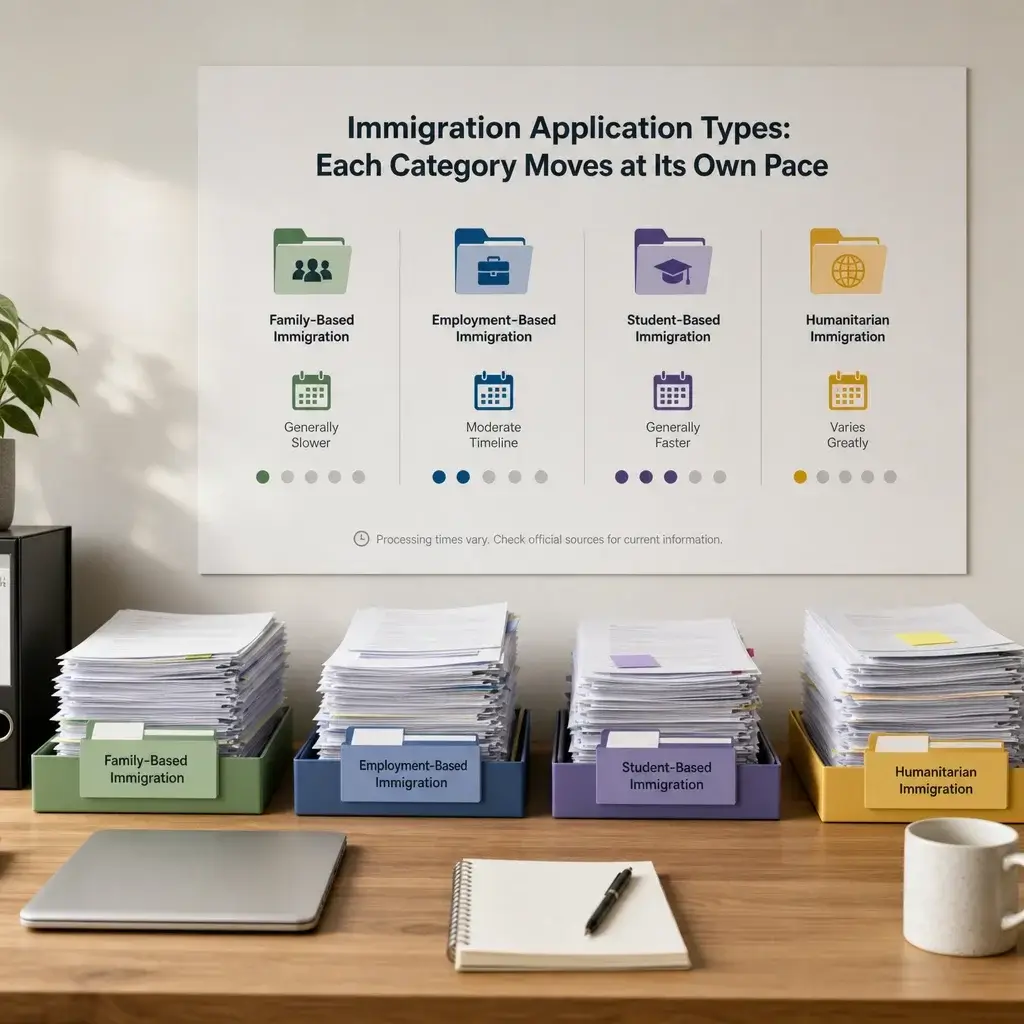
Different application types move differently because the evidence, admissibility checks, and decision steps are different. Spousal sponsorship, permanent residence, work permits, visitor visas, study permits, and citizenship each have their own official estimate and their own common delay points.
| Application type | What the official time usually depends on | Common reasons it takes longer |
|---|---|---|
| Spouse or common-law sponsorship | Inland or outside-Canada stream, document completeness, relationship evidence | Missing relationship proof, background checks, interview requests |
| Permanent residence | Program stream, medicals, biometrics, security screening | Missing documents, verification issues, office workload |
| Work permit | Permit category, country of application, employer or LMIA details if required | Incomplete employer documents, biometrics, admissibility review |
| Visitor visa | Country-specific volume, travel history, financial evidence | Weak supporting evidence, security review, document requests |
| Study permit | Country, school documents, finances, provincial attestation where required | Incomplete proof of funds, missing school documents, biometrics |
| Citizenship | Eligibility review, physical presence, test or interview where required, oath scheduling | Residence calculation issues, police certificate issues, hearing or interview steps |
The IRCC processing time for spouse visa or spousal sponsorship is never just one number you can borrow from another couple’s file. Sponsorship cases often turn on whether the forms are complete, whether the relationship record is consistent, and whether IRCC wants more proof before finalizing.
Best Time to Call IRCC and How to Reach a Real Person
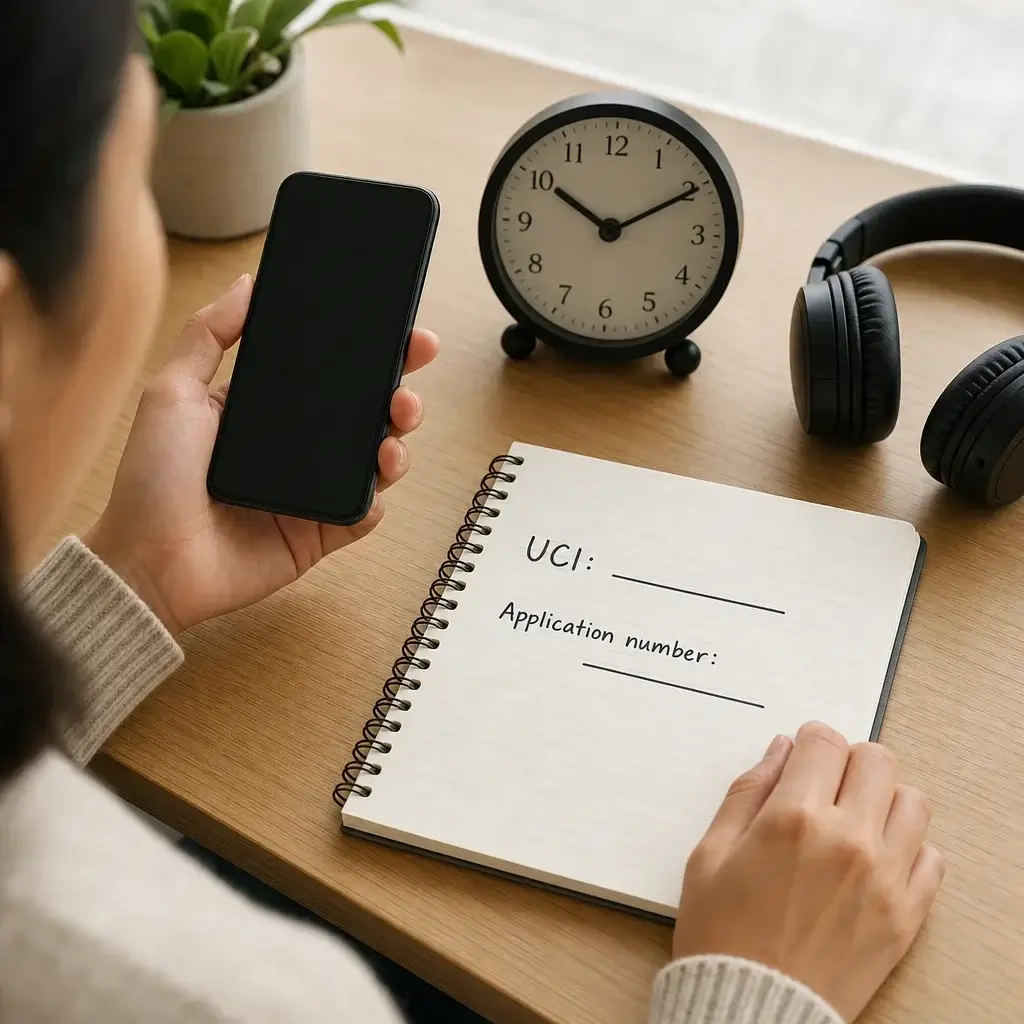
The best time to call IRCC is usually when hold times are lower, not when approval chances are better. A phone call does not speed a file by itself, and it usually works best when you already checked the processing tool and your online account first.
Have your UCI, application number, full name, date of birth, application category, submission date, and any recent IRCC message in front of you before you call. Those details help the agent locate the file and reduce wasted time on identity verification.
The practical answer to how to talk to IRCC directly is to use the official contact channel for your program and have the correct identifiers ready. If phone support is available for your situation, you still may be told to use an online webform or account message route for case-specific follow-up.
The best time to call IRCC is often close to the start of posted phone hours, but that is a practical tip, not a guarantee of short waits. Official hours and routing options can change, so verify the current contact page before dialing.
The IRCC time zone for call centre hours must be checked on the official contact page because hours are published for the service channel, not for every caller’s local clock. If you are outside the GTA or outside Canada, convert the posted time before you call.
Does IRCC Work 24/7, on Weekends, or on Saturday?
IRCC online tools may be accessible outside normal business hours, but live support is not the same as portal access. That is why people looking for IRCC timings to call should separate web access from real-person availability.
The safest answer to does IRCC work 24 hours is no for live public phone support unless the official contact page says otherwise for a specific channel. Online account access can continue after hours, but that does not mean agents are available 24/7.
The same logic applies to does IRCC work on weekends, do IRCC open on Saturday, and can I call IRCC every day. Treat weekend or Saturday calling as official-hours dependent and verify it before you try, because service channels can have different schedules.
Internal application processing can still continue even when the phone line is closed. A file can move forward, receive internal review, or wait for external checks without any weekend access for the public.
How to Check Application Status: IRCC Login, UCI, and Application Number
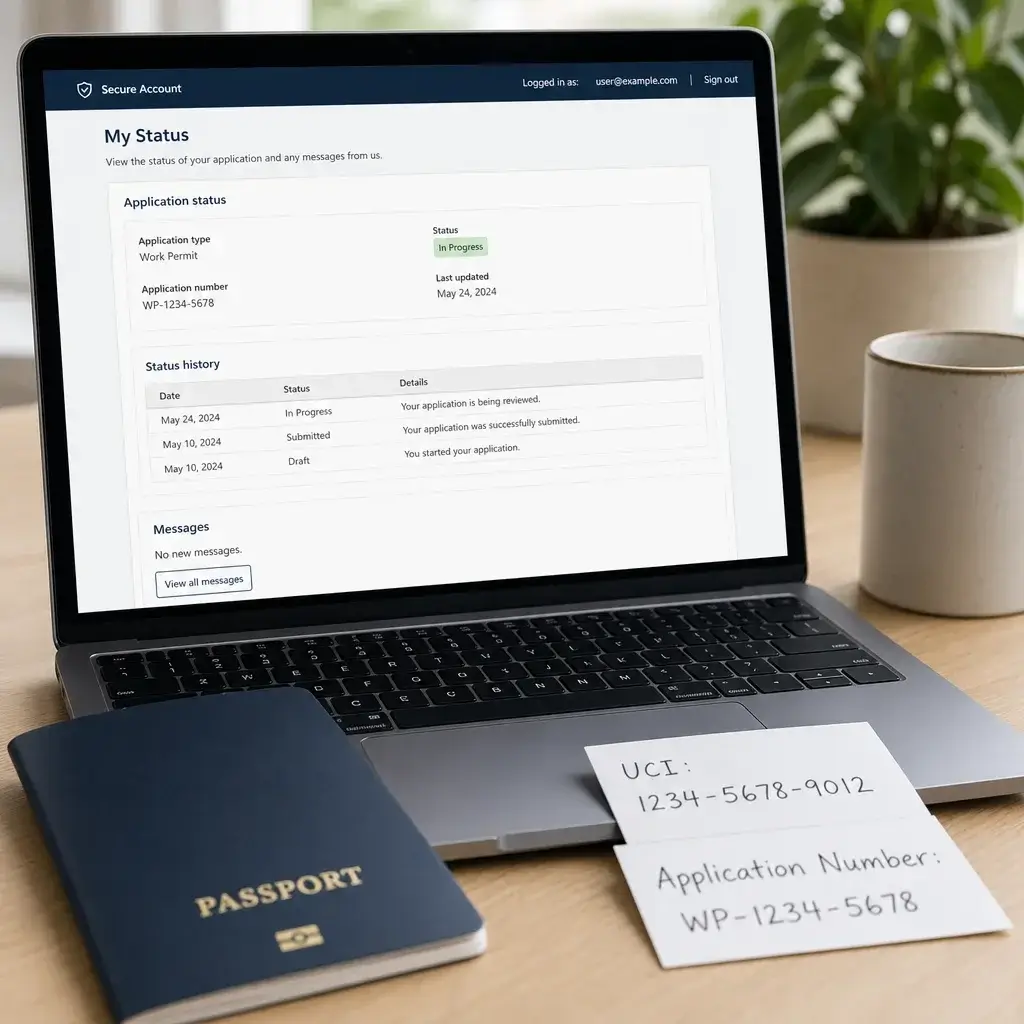
Checking a posted processing estimate is not the same as checking your specific file. The processing tool gives a category estimate, while your IRCC login or application status tracker shows messages, document requests, and status updates tied to your case.
A UCI is your Unique Client Identifier, and the application number is the number tied to the specific file you submitted. You may need one or both to link, view, or discuss your application, depending on the portal or contact channel.
Status updates can lag behind internal action on a file. That means an officer may have reviewed or moved the application before the portal shows a visible change, which is one reason account silence does not always equal a real delay.
If you cannot see your file, start by checking that the name, date of birth, passport details, UCI, and application number match exactly what was submitted. Login problems, mismatched data, or portal maintenance can block access even when the application is active.
How to Avoid Delays Before and After You Apply
You usually cannot force IRCC to process a routine application faster, but you can reduce avoidable delay risk with a complete and accurate filing. No lawyer should promise to speed up every case, because processing also depends on government workload and screening steps outside the applicant’s control.
Before you submit, make sure the forms are the right version, every question is answered, dates are consistent, signatures are complete, fees are paid correctly, and supporting evidence matches the application category. Incomplete forms and inconsistent timelines are common delay triggers.
After you submit, monitor your account, respond quickly to requests, keep your passport valid, and report changes to your address, contact details, marital status, family composition, or other material facts through the proper IRCC channel. Unreported changes can create avoidable confusion or rework.
Honesty and full disclosure matter more than speed tricks. Misrepresentation concerns can lead to far more serious problems than delay, including refusal and future inadmissibility issues, so this is general information and not a legal recommendation for your facts.
Delay-avoidance checklist
- Use the correct forms and the current document checklist.
- Keep names and dates consistent across forms, passports, and civil documents.
- Upload clear, complete scans with no cropped edges or missing pages.
- Include translations that meet current IRCC rules for non-English or non-French documents.
- Watch your account and email for requests and deadlines.
- Report family, address, and contact changes promptly.
- Keep copies of everything submitted.
Documents That Commonly Slow Applications Down
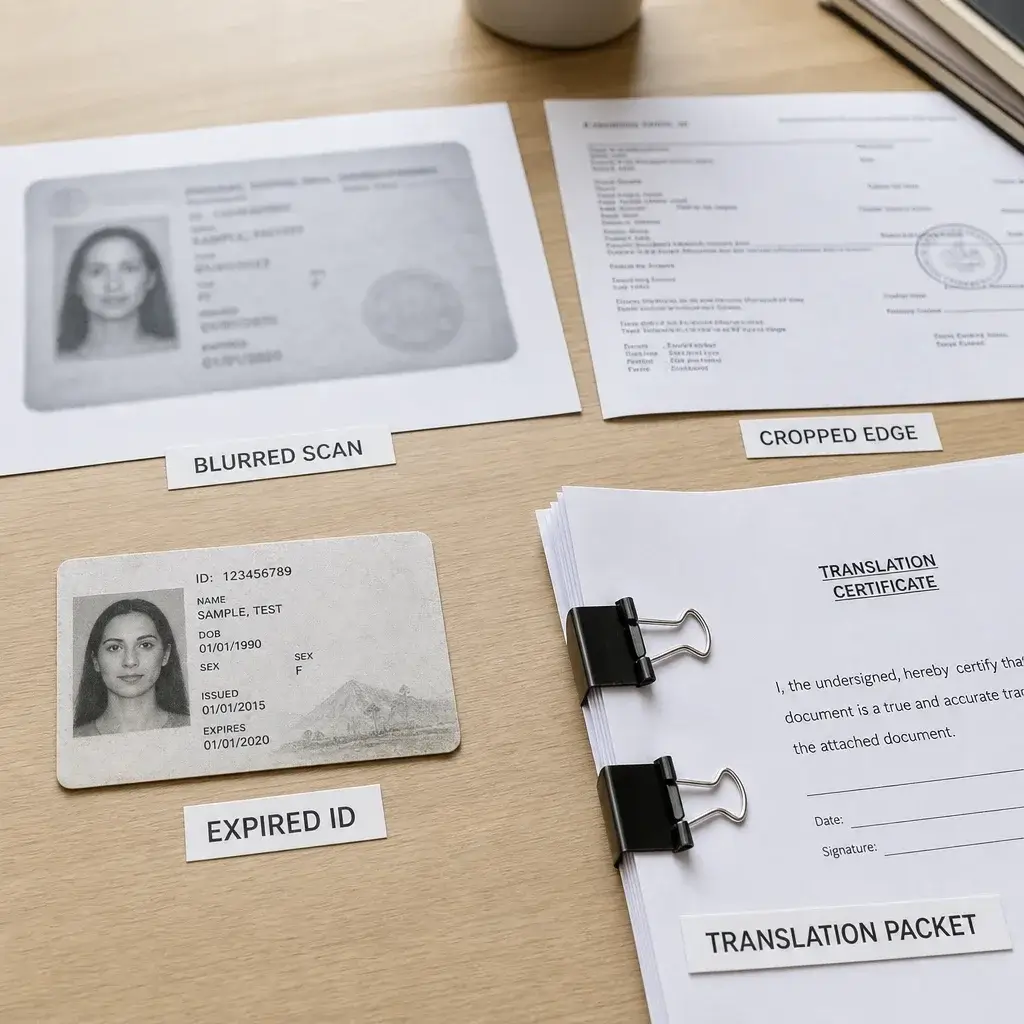
Blurry scans, cropped pages, missing backs of documents, unreadable stamps, expired IDs, inconsistent spellings, and missing pages can all slow an application because IRCC may need replacement uploads or more explanation. A poor upload can turn a simple file into a document chase.
Documents that are not in English or French may require certified translations or another translation format that matches current IRCC rules. Because the rules can differ by document type and where the translation was done, verify the exact requirement on the IRCC page for your application before you upload.
A useful document-readiness check is simple: every page is legible, every document is complete, every date is consistent, and every translation package includes the items IRCC asks for. That kind of review does not guarantee speed, but it can prevent a delay that lasts weeks or months.
Security, Criminality, Medical, and Family Issues That Can Extend Timelines

Criminality, security, and background checks can extend timelines because they may involve outside agencies, overseas verification, or review of prior immigration history. That is one reason two files with the same submission date can move very differently.
Medical issues, police certificate questions, prior refusals, identity concerns, and possible misrepresentation can also add complexity. The result depends on the facts, the program, and how the issue is documented and answered.
Family situations can slow a file when there is divorce, separation, custody, adoption, non-accompanying dependants, or inconsistent family information across forms and records. These are not small technical points because family composition affects eligibility and disclosure duties.
If IRCC must consult another office in Canada or abroad, the file can pause while that step is completed. That kind of inter-office consultation is a real timing factor and not something a generic online estimate can show.
Urgent Processing and Expedite Requests: What Is Realistic
Urgent processing exists in limited situations, but wanting a faster answer is not the same as qualifying for urgent handling. IRCC will usually expect a specific reason and evidence that fits the policy or process for that application type.
A credible expedite request is usually focused, documented, and tied to a real hardship or time-sensitive consequence, not a general statement that the delay is stressful. Repeated generic requests can add noise without improving the file.
The right route for an urgent request depends on the application type and the official instructions available for that category. Check the current IRCC page or get legal advice on your file before assuming urgent processing applies to your situation.
What to Do If Your Application Is Outside Normal Processing Time

Start by confirming that you checked the correct official category and stream. A permanent residence estimate for one pathway does not help if your file was submitted under another pathway or through a different office structure.
Next, read every account message carefully and confirm that no biometric, medical, passport, or document request was missed. A file can look delayed when it is really paused because IRCC is waiting for the applicant.
Then review your application status tracker or online account and compare the posted estimate to your actual submission date. If your file is truly outside normal processing time, use the official follow-up channel for that program, which may be a webform, account message route, or contact centre process.
Include your full name, date of birth, UCI, application number, category, submission date, and a short summary of why you believe the file is outside the published timeframe. A focused message is easier to review than a long emotional history.
Yes, IRCC is still processing applications. The better question is whether your category is moving within the current estimate, whether your file is waiting on a required step, and whether there is a specific issue that needs a legal response.
Legal help can make sense when the delay is paired with a missed request, repeated unanswered follow-ups, family separation, work or status risk, prior refusals, admissibility concerns, or a possible fairness issue. If you need a strategic review, Sutton Law can assess the file and the timeline through a free assessment.
Citizenship Timing Questions: Physical Presence, Calculator, and Police Certificates
Citizenship timing has two parts: when you become eligible to apply and how long the application takes after filing. Those are separate questions, and the eligibility part is where the physical presence calculator matters.
The current physical presence rule for most adult grants of citizenship is 1,095 days in the five years before the application date. The calculator helps you count past time in Canada; it does not tell you a guaranteed future approval date.
The calculator uses a five-year lookback period tied to the date you sign the citizenship application. If you are not yet eligible, it can help you estimate when you may become eligible, but you still need to verify your history carefully before filing.
For citizenship police certificates, the common rule is tied to spending 183 days or more in a row in another country during the relevant period if IRCC requires that certificate for the application. Because citizenship rules can change and fact patterns differ, verify the current IRCC instruction guide before you rely on that threshold.
Protected persons and people with refugee or PRRA history can have special counting rules for pre-PR time in Canada. Those cases need careful review against the current citizenship guide because counting credit can differ from a straightforward permanent resident timeline.
Common Myths About IRCC Timings
Myth: A backlog means your application will be refused. Reality: A backlog means more files are waiting than the system can finalize at its target pace. Delay and refusal are not the same thing.
Myth: Calling IRCC every day will speed up the file. Reality: Repeated calls do not usually move routine processing, and agents still rely on the information available in the system.
Myth: IRCC works 24/7 for live calls. Reality: Online tools may be available after hours, but live support depends on official service hours for the channel.
Myth: Canada is rejecting 80% of visa applications across the board. Reality: Broad refusal-rate claims without program, country, and date context are unreliable. Refusal patterns vary by application type and facts, so do not treat viral numbers as universal truth.
When to Get Legal Help With IRCC Delays
Many delays are routine, but some delays point to a deeper issue in the application, the evidence, or the legal position. That can include missing proof, family composition errors, inadmissibility concerns, prior refusals, or a procedural fairness problem.
A lawyer is most useful when the file needs strategy, not just patience. That can mean preparing a stronger response to an IRCC request, reviewing a weak sponsorship package, dealing with work permit or PR complications, or deciding how to follow up on a file that has genuinely stalled.
For people in Toronto and the GTA, local legal help can also make the process easier to manage when family separation, status expiry, or urgent employer issues are in play. The right step is not always escalation. Sometimes it is fixing the document record before the next submission or response.
Compare the official estimate to your exact program first. Then compare your file to the checklist in this guide. If the timeline still does not make sense, get a careful review before you assume the system is simply slow.
FAQ
What is the current IRCC processing time?
There is no single processing time for all applications. IRCC posts different estimates by program, stream, and sometimes by where the application is made, so you need to check the official tool for your exact category.
What is the best time to call IRCC?
Usually close to the start of posted phone hours, but that is only a practical hold-time tip. Verify current official hours before calling.
How can I talk to IRCC directly?
Use the official contact method for your program and have your UCI, application number, date of birth, and recent correspondence ready. In some cases, IRCC will direct you to a webform or online account instead of giving case details by phone.
Does IRCC work 24 hours?
Not for live public support unless the official contact page says a specific channel does. Online accounts may be accessible outside business hours.
Do IRCC work on weekends?
Do not assume weekend phone access. Check the official support page for the channel you want to use, because public service hours can differ from online portal availability.
What time zone is IRCC call centre hours?
Use the time zone shown on the current official IRCC contact page and convert it if you are calling from another province or country.
How do I check PR processing time?
Use IRCC’s processing times tool and select the exact permanent residence pathway. PR is not one single stream, so picking the right category matters.
What is IRCC processing time for spouse sponsorship?
It depends on the sponsorship stream and the specifics of the file. The official estimate is the only useful starting point, and relationship evidence quality can affect whether IRCC asks for more documents.
What does “outside normal processing time” mean?
It means your file has passed the posted estimate or relevant standard for that category. It does not automatically mean refusal or error.
Can IRCC speed up my application?
Routine applications usually cannot be sped up just because the wait is stressful. Urgent processing may exist for limited situations and normally requires evidence.
Is IRCC still processing applications?
Yes. Applications continue to be processed, but workloads and timelines vary by program and file complexity.
What is IRCC backlog?
It is the volume of pending files waiting to be processed beyond the system’s target pace. A backlog can slow timelines, but it does not mean a file will be refused.
How do I check my application status with my UCI or application number?
Use the correct IRCC portal or tracker for your program. Your UCI identifies you as a client, and your application number identifies the specific file.
Do I need certified translations for IRCC documents?
Often, yes, if the document is not in English or French and the program instructions require a translation that meets IRCC rules. Check the instructions for your application type before submitting.
Is Canada rejecting 80% of visa applications?
Do not rely on that claim without official, program-specific data and context. Refusal rates vary by stream, country, evidence, and time period.