
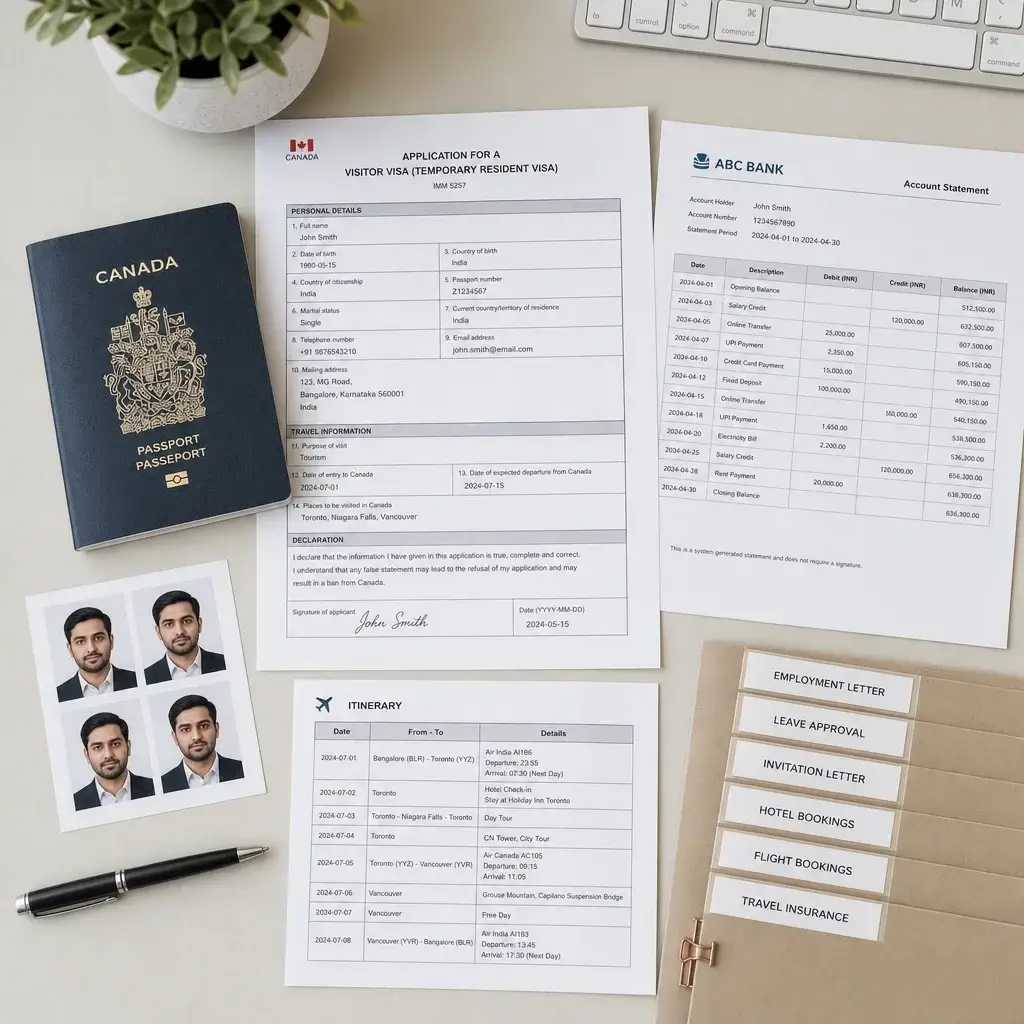
I see the same problem in immigration files that I see in family court. People submit the bare minimum, then act surprised when the decision-maker says the evidence does not add up. This guide explains the visitor visa document checklist in plain English, including how IMM 5484, IMM 5257, and the online portal fit together. Official IRCC instructions control if they differ from this guide.
Canadian visitor visa documents at a glance
The core documents usually include a valid passport or travel document, the required application forms, a digital photo, proof of funds, evidence of the purpose of travel, and documents showing ties outside Canada. If any document is not in English or French, you generally need a translation with the required certification steps.
The exact checklist for visitor visa applications changes based on where you apply, your nationality, your travel history, and whether you apply from inside or outside Canada. The online system often creates a personalized document list after you answer eligibility questions, but that list only helps if your answers are accurate.
Printable quick checklist
| Document | Usually required | Why it matters |
|---|---|---|
| Passport or travel document | Yes | Confirms identity and travel validity |
| Application for Temporary Resident Visa | Usually yes | Main TRV application form |
| Document checklist | Often part of the package or instructions | Tells you what to include |
| Digital photo | Usually yes | Identity and visa processing |
| Proof of funds | Usually yes | Shows you can pay for the trip |
| Purpose of travel documents | Usually yes | Shows why you are coming |
| Ties to home country | Strongly recommended | Helps prove you will leave Canada |
| Invitation letter | If visiting someone | Supports family or friend visit purpose |
| Civil status documents | If relevant | Explains family relationships |
| Translation documents | If needed | Makes foreign-language records usable |
What is IMM 5484, and how is it different from IMM 5257 and other forms?
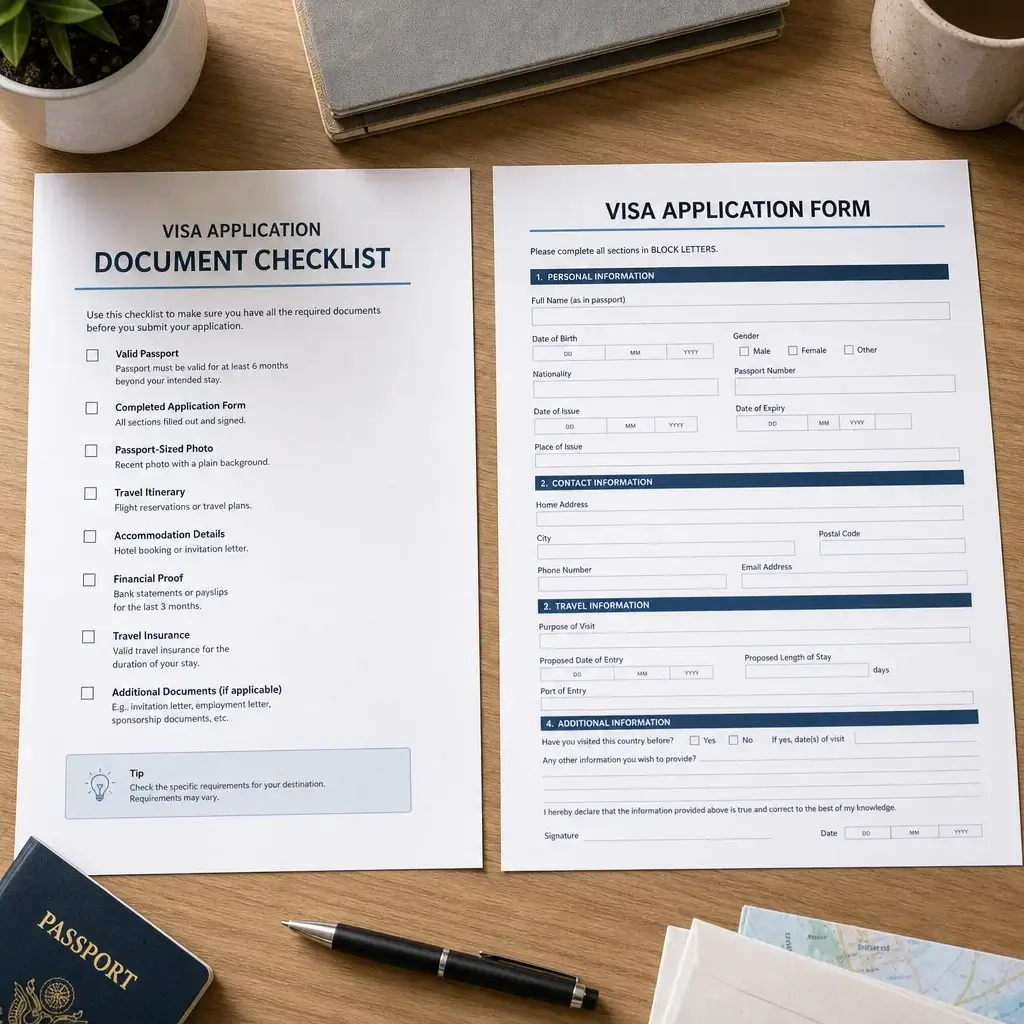
IMM 5484 is a document checklist, while IMM 5257 is the main application form for a temporary resident visa. That distinction matters because a checklist tells you what to submit, but it is not the form that asks for your travel, identity, address, and background details.
The Temporary Resident Visa document checklist is commonly tied to outside-Canada visitor visa applications, while the Application for Temporary Resident Visa IMM 5257 is the form applicants complete as part of the filing. People often search for document checklist IMM 5484, IMM 5484 checklist, imm 5484 f, imm 5484 2021, or imm 5484 latest, but the safe approach is simple: use the current version directly from IRCC, not a random PDF from another site.
Some files also require related forms, but only in certain situations. A family information form, a use of representative form, or a consent form may apply depending on your nationality, family situation, or whether someone is acting for you. I would not dump every form number into your file just to feel thorough. That usually creates confusion, not strength.
Forms table: what each form does
| Form | What it is | Who usually needs it | Always required? |
|---|---|---|---|
| IMM 5257 | Application for Temporary Resident Visa | Most TRV applicants | Usually yes |
| IMM 5484 | Visitor visa / TRV document checklist | Commonly outside-Canada applicants | Checklist/instruction dependent |
| Family information form | Family details form used in some cases | Depends on case and nationality | Sometimes |
| Use of representative form | Authorizes a representative | Applicants using counsel or another representative | Only if applicable |
| Consent or custody documents | Supports a minor’s file | Minor children or custody situations | Only if applicable |
Do you need a visitor visa, an eTA, or something else?
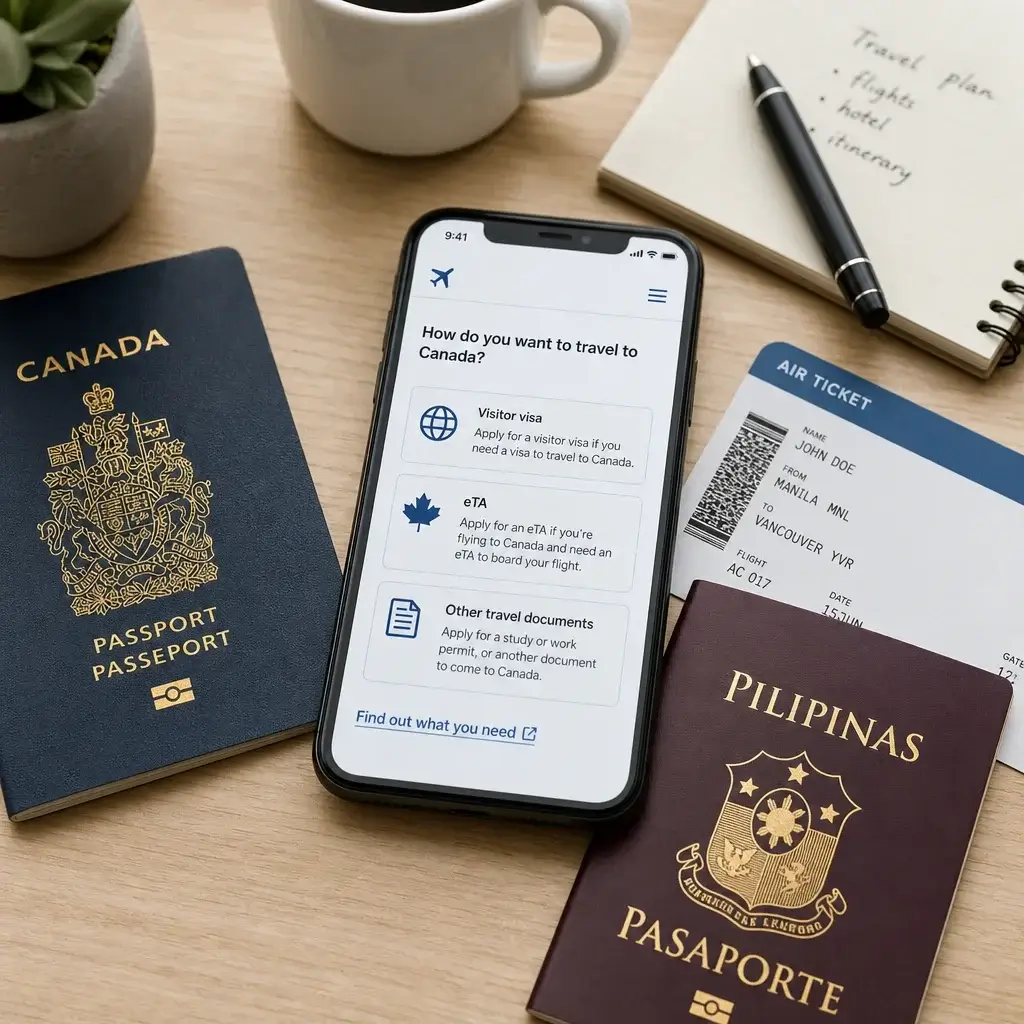
A visitor visa, also called a temporary resident visa or TRV, is different from an eTA and different again from a temporary resident permit. A TRV is a visa placed in or linked to your travel document for people from visa-required countries, while an eTA is an electronic travel authorization for some visa-exempt travellers flying to Canada. A temporary resident permit is a separate discretionary document used in special inadmissibility situations, not a normal visitor visa substitute.
What you need depends on your nationality, the passport you hold, how you plan to travel, and sometimes your current status in Canada. If you are from a visa-required country, the temporary resident visa checklist matters. If you are visa-exempt and flying, an eTA may be the right path instead. I would not rely on forum advice for edge cases because IRCC rules can change.
If you are already in Canada as a worker or student and need a new visa counterfoil to return after travel, you may be looking at an in-Canada TRV process rather than a first-time outside-Canada visitor visa file. That is one reason the same search term can lead people to the wrong document list.
Required vs optional vs recommended: how to build a stronger visitor visa file
Required documents get your file accepted for processing, but strengthening documents are often what make it credible. In refusal cases, the real problem is often not a missing form. It is weak evidence about funds, travel purpose, or ties outside Canada.
A good checklist for visitor visa cases separates documents into three buckets: required, situation-specific, and strengthening. That is how I would build the file if I wanted the officer to understand it fast.
Required vs optional vs strengthening documents
| Category | Examples | Why they matter |
|---|---|---|
| Required documents | Passport, main forms, photo, fees, basic identity records | Needed to file a complete application |
| Situation-specific documents | Invitation letter, host status proof, minor consent, business invitation, in-Canada status documents | Apply only if your facts call for them |
| Strengthening documents | Employment letter, pay slips, tax records, travel history, property proof, detailed itinerary, explanation letter | Help prove the visit is genuine and temporary |
More documents are not always better. Irrelevant screenshots, unreadable scans, duplicate uploads, and inconsistent records can hurt more than help. I have seen strong files undermined by one sloppy contradiction between the form, the invitation letter, and the bank records.
Full checklist: documents commonly required for a Canadian visitor visa
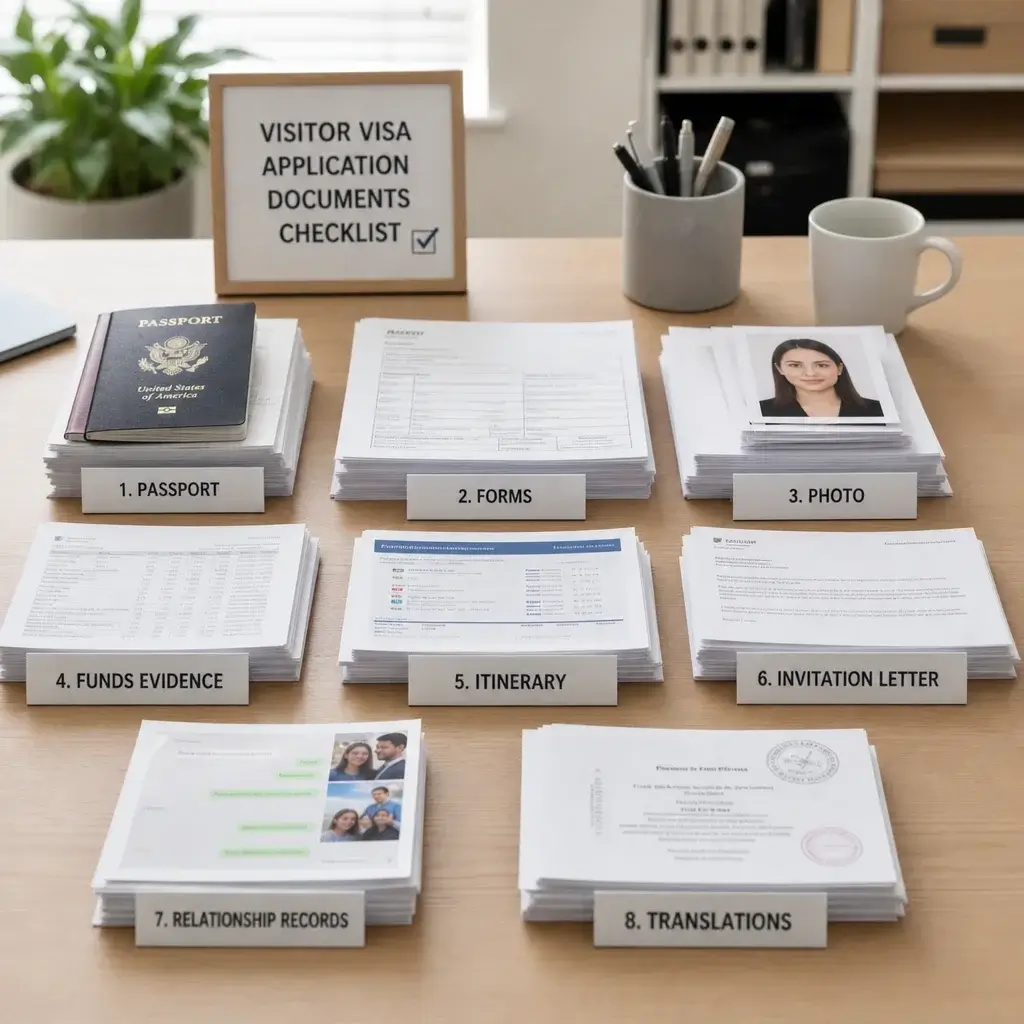
A complete Canada tourist visa documents checklist usually starts with your passport or travel document, and the passport must be clear, readable, and usable for travel. The visa validity you receive can be affected by passport validity, so renewing a near-expiry passport before applying can make practical sense in some files.
Your forms must match your supporting documents exactly, including names, dates of birth, marital status, employment details, and travel history. The imm 5257 checklist issue I see most often is not the form itself. It is answers that do not line up with letters, bank records, or prior applications.
Your photo must meet current IRCC specifications, and those technical requirements should be checked on the IRCC page before upload. I would not trust an old sample image online because photo rejection is a very avoidable delay.
Your proof of funds should show not just a balance, but a believable financial picture. Bank statements, pay records, tax filings, business records, pension records, or sponsor support can all help depending on the case.
Your purpose of travel documents should explain why you are coming, where you plan to stay, and how the trip will be paid for. That may include hotel bookings, a rough itinerary, a business conference letter, a family invitation, or proof of an event.
Your ties outside Canada should show what pulls you home after the visit. Employment, business ownership, school enrollment, dependent family members, lease documents, property records, and prior compliant travel are common examples.
Your civil status and family relationship documents may be important if your application involves a spouse, children, parents, or a host in Canada. Marriage certificates, birth certificates, and household records can help explain relationships that the forms mention.
Your translations must follow IRCC requirements if records are not in English or French. A plain informal translation from a friend is often not enough. If your file depends on foreign-language employment, banking, or civil records, get the translation piece right the first time.
Applicant-type examples
An employed applicant usually strengthens the file with an employer letter, recent pay evidence, approved leave details, and recent bank records. That package helps show both income and a reason to return to work.
A self-employed applicant usually needs business registration records, tax filings, business bank statements, invoices, or proof the business is active. Self-employment files fail when the business exists only on paper.
A student usually strengthens the file with school enrollment proof, a transcript or timetable, and evidence of who is funding the trip. The officer wants to see the student is expected back.
A retiree usually relies more on pension income, savings, assets, family ties, and the travel plan itself. Retired applicants can succeed, but the source of funds must still be clear.
An unemployed applicant usually needs a better explanation than just a bank balance. Sponsor support, family ties, prior travel compliance, assets, and a direct letter of explanation can matter more in that kind of file.
A minor child usually needs identity records plus consent and custody-related documents if one or both parents are not travelling. For minors, family law documents can become immigration documents very quickly.
Proof of funds: bank statements, balances, and what IRCC looks for

There is no universal fixed minimum bank balance published for every Canadian visitor visa application. Adequacy depends on trip length, airfare, accommodation, who is paying, how many travellers are involved, and whether the financial story matches the rest of the file.
Recent bank statements covering about 3 to 6 months are commonly used to support a TRV application. A 3 month bank statement can be enough in some cases, but only if it shows stable funds, an understandable source of money, and a balance that fits the proposed trip.
IRCC can and does review financial records for credibility. What causes trouble is not just a low balance. It is a mismatch between claimed income, spending, trip cost, and sudden deposits with no explanation.
A strong funds package often combines bank statements with pay slips, tax records, employment letters, business documents, pension records, or sponsor support documents. If a parent, child, or host in Canada is paying, the sponsor’s documents should show both ability and a real relationship to the applicant.
I tell clients the same thing here that I tell family law clients about financial disclosure. Clean records beat dramatic stories. If your account got a large recent deposit, explain it and prove it.
Purpose of travel and ties to home country: the evidence that often decides the case
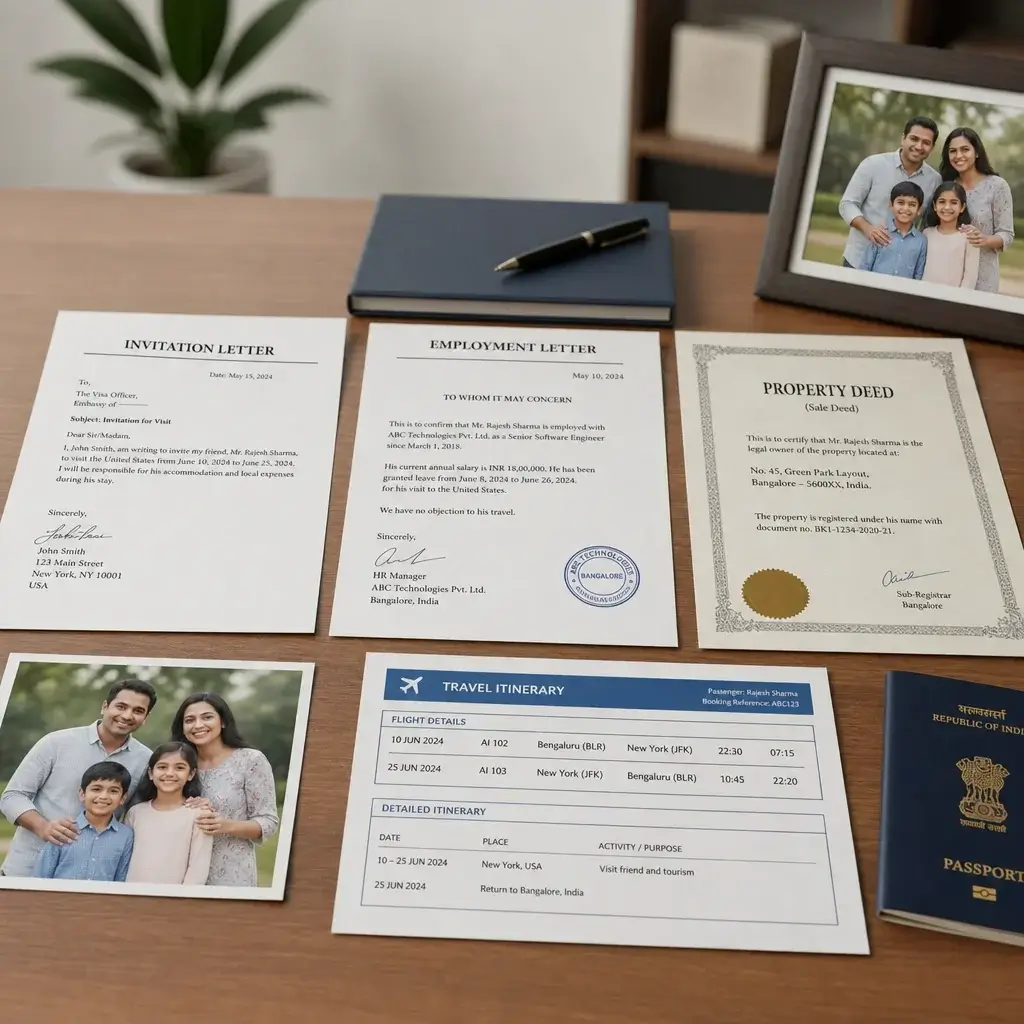
The decision often turns on whether the officer believes the visit is genuine, temporary, and financially supported. That is why a thin invitation letter and a few bank pages are rarely enough in a borderline file.
Good purpose-of-travel evidence is specific. A family visit file should show who you are visiting, where they live, what the relationship is, how long the stay will be, and who is covering costs. A tourism file should show a rough travel plan, not just a generic statement that you want to see Canada.
Good ties-to-home-country evidence is also specific. Employment letters should confirm the job, salary, and approved leave. Business records should show the business is real and active. Family ties should be documented, not just described.
A good invitation letter usually includes the host’s identity, status in Canada, address, relationship to the visitor, purpose of visit, expected length of stay, and who will pay for what. A weak invitation letter is vague, short, and unsupported by the host’s status documents or proof of relationship.
A short letter of explanation can help when the facts are unusual, but it should connect evidence rather than argue emotionally. The best explanation letters are often 1 to 2 pages long and deal directly with obvious concerns.
Customized visitor visa checklists by applicant type
Different applicants need different supporting records, even when they use the same Canadian visa document checklist. That is why generic online advice fails.
A tourist usually needs identity documents, proof of funds, a rough itinerary, accommodation details if available, and ties outside Canada. The file should make the trip look realistic.
A family visitor usually needs an invitation letter, proof of the host’s status in Canada, proof of the relationship, funds evidence, and travel timing details. If the host is paying, include the host’s financial records too.
Parents or grandparents visiting family often need stronger relationship proof, host status proof, invitation details, and clear funding evidence. For Canada visitor visa documents checklist for parents searches, remember that a regular visitor visa is not the same as a super visa. Super visa files have their own rules and should be handled separately.
A business visitor usually needs a business invitation, employer confirmation, trip purpose details, and evidence the trip is temporary and work-authorized if required. Business travel files fail when they sound like disguised employment.
A minor child usually needs a birth certificate, passport, travel purpose evidence, and consent or custody documents if one parent is not travelling. If there is a court order or separation agreement, it may need to be included.
An applicant inside Canada usually needs proof of current valid status in Canada, such as a permit or visitor record, plus passport, photo, and travel purpose evidence if applying for a TRV from inside Canada to re-enter after travel.
How to apply: online questionnaire, portal steps, and when paper applications may apply
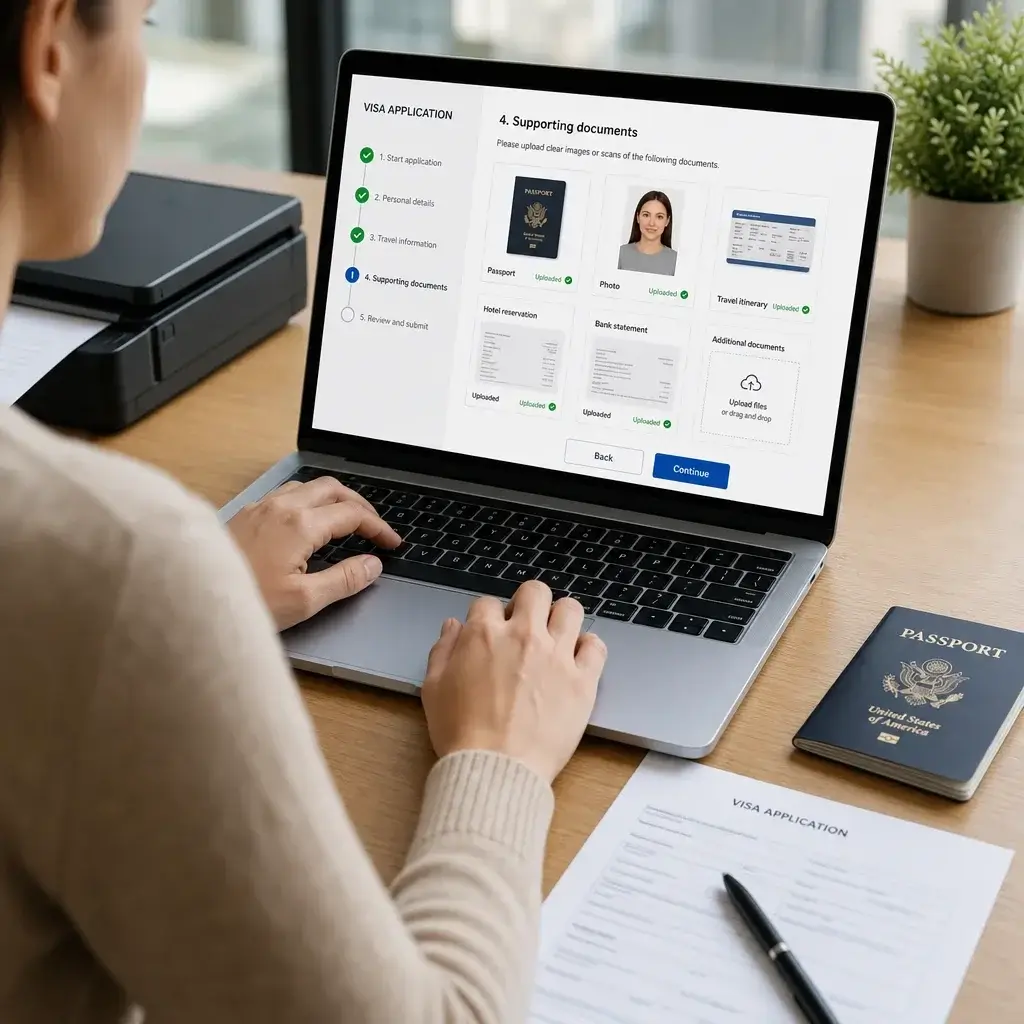
The Canadian visa application process usually starts with an online eligibility questionnaire that generates your document checklist. If you answer those questions badly, you can end up with the wrong stream, the wrong forms, or the wrong upload slots.
The basic steps are usually fivefold: determine the right travel document path, answer the online questions, complete the forms, upload supporting documents, and pay and submit the application. After that, the file may move to biometrics, further review, and a final decision.
The online upload stage is where a lot of good files go sideways. Use clear file names, combine related PDFs logically, make every page readable, and keep answers consistent across forms and evidence. Barcode pages, signatures, and validated forms should be checked carefully against current IRCC instructions.
Paper applications may exist only in limited or special circumstances, and I would verify current IRCC instructions before choosing that route. Most people searching about the Canadian visa process are better served by understanding the online system first.
Forms checklist: which forms may apply in a visitor visa application
The main form in most TRV files is the Application for temporary Resident visa IMM 5257. That form captures identity, travel details, background questions, and immigration history. The person applying for the visa usually completes it, not the host in Canada.
IMM 5484 is best understood as the companion checklist or instruction document, not the application itself. If you search for document checklist temporary resident visa visitor visa outside of canada imm 5484 or Canada visitor visa Checklist PDF, you are really looking for the document list that goes with the application stream.
Other forms may apply only when triggered by your facts. Family information forms can be requested in some cases. Representative forms apply if you use counsel or another authorized representative. Minor consent and custody documents apply when a child is involved.
The safest source for all forms is IRCC. Do not download old versions from unofficial sites, even if the filename says imm 5484 latest. Outdated forms are a very common avoidable mistake.
Fees, biometrics, and processing times
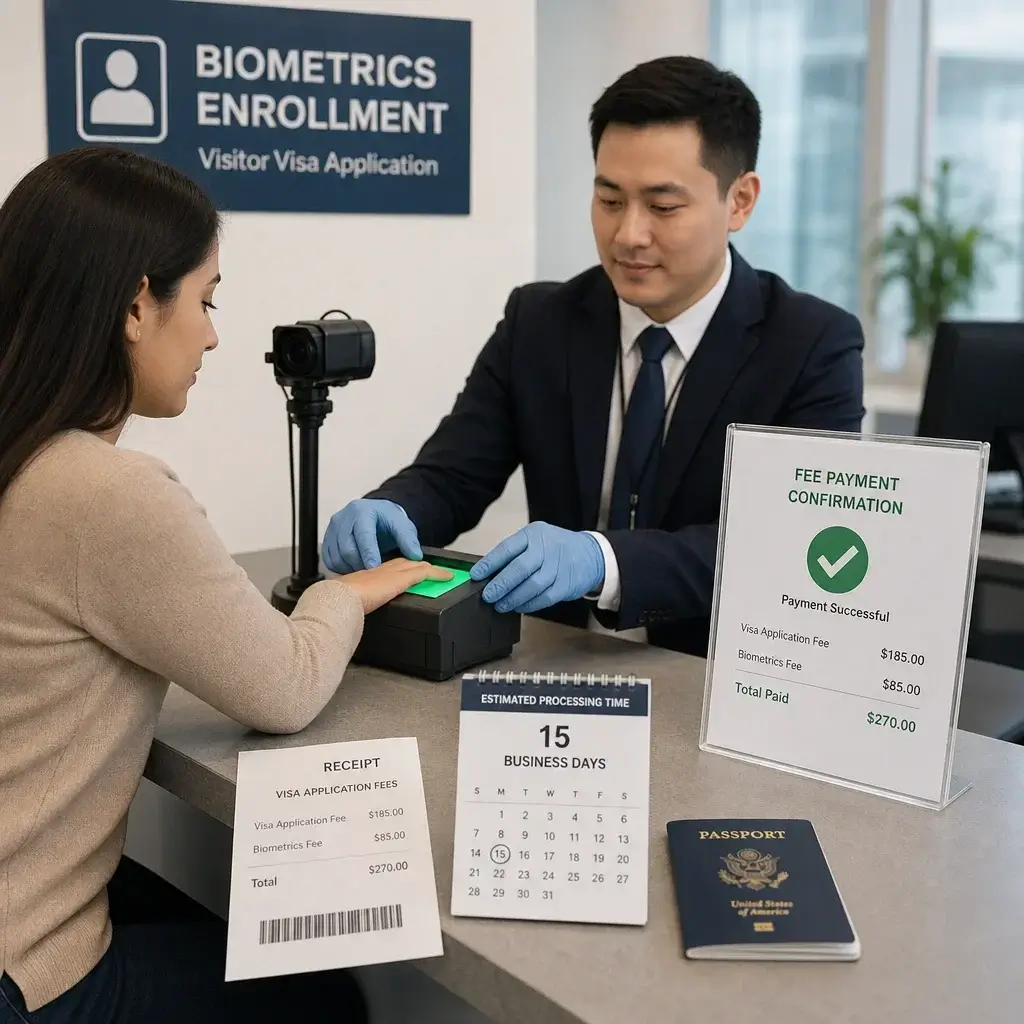
The visitor visa application fee is about $100 CAD, and the biometrics fee is about $85 CAD for one person. Those figures can change, and IRCC is the place to confirm current amounts before you submit.
Your real total cost is usually higher than the government fee alone because translation, document certification, courier costs, passport transmission, and in limited cases a medical exam can add to the file. In practice, supporting-document costs can range from modest to significant depending on how many foreign-language records you need translated.
Processing times vary by country, season, application volume, biometrics timing, and whether the officer asks for more documents. Canada visitor visa processing time after biometrics is not a fixed number because biometrics is just one stage of the review.
A visitor is often allowed to stay for up to 6 months on entry, but the border officer can set a shorter or longer authorized period in the specific case. A visa’s validity and the period you are allowed to remain in Canada are not the same thing.
A visa can still be refused after biometrics. Biometrics helps identity and security screening. It is not an approval signal.
What happens after you submit your application
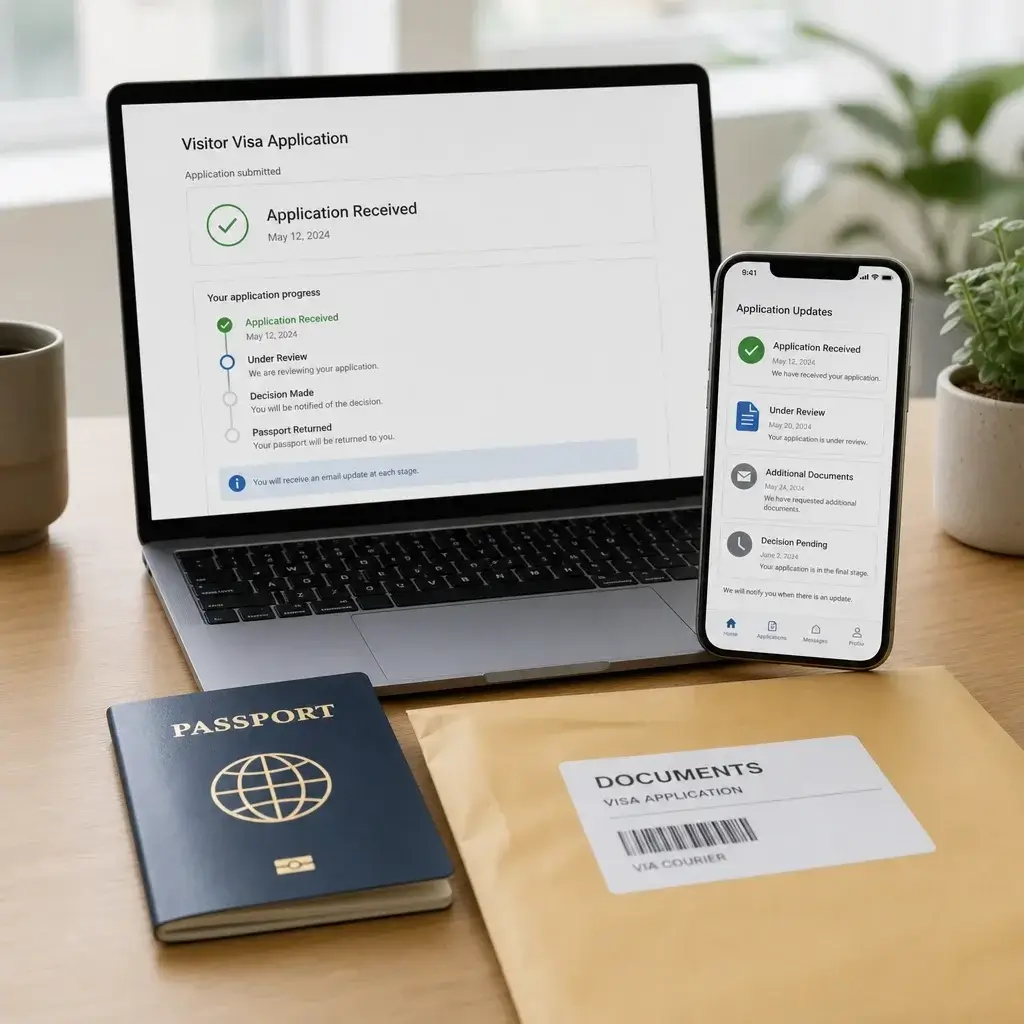
After submission, you usually receive confirmation that the application was filed, followed by biometrics instructions if biometrics are required in your case. Some applicants then receive an additional document request, while others move straight to review and decision.
The common stages are submission, biometrics collection, background and eligibility review, decision, and passport request if a counterfoil must be issued. The exact order and speed can differ by region and case complexity.
Status updates are often limited. A quiet file is not automatically a bad file, and repeated portal checking does not speed anything up. The practical thing is to watch for real requests and answer them accurately and on time.
Passport submission steps vary by country and visa office procedures. I would not assume the courier process in one country applies in another.
Common mistakes that cause delays or refusal
The most common refusal triggers are inconsistent information, weak proof of funds, weak ties outside Canada, vague travel purpose, missing translations, unreadable scans, and outdated forms. Those are preventable problems in a large share of files.
Form mistakes matter more than people think. Missing signatures, wrong date formats, omitted family members, missing travel history, and uploading the wrong document under the wrong slot can all damage credibility or delay review.
Evidence mistakes also matter. A sudden large deposit with no explanation, an invitation letter that conflicts with the travel plan, or employment records that do not match the form can make the whole file look unreliable.
Disclosure mistakes are especially serious. If you fail to disclose prior refusals, family members, or past immigration history, the issue can become credibility rather than simple incompleteness.
Pre-submission mistake check
- Confirm every name and date matches the passport and forms.
- Confirm your travel purpose is specific and supported.
- Confirm your bank records make sense for the trip.
- Confirm every non-English or non-French document is properly translated.
- Confirm no required page is cut off, blurred, or upside down.
- Confirm you used the current forms from IRCC.
- Confirm the host’s invitation letter matches the rest of the file.
- Confirm you disclosed prior refusals and material family details.
If your file has a previous refusal, self-employment issues, weak home-country ties, or urgent family travel, it can help to have a lawyer review the package before submission. At Sutton Law, we help people spot refusal risks, clean up evidence, and build a clearer record before IRCC sees the file.
Applying from inside Canada: TRV document checklist for temporary residents already in Canada
Some temporary residents already in Canada can apply for a TRV from inside Canada when they need a new visa to return after travelling. This is not the same thing as extending visitor status inside Canada, and it is not the same thing as a first outside-Canada visitor visa file.
The Trv document checklist inside canada usually focuses on your current legal status in Canada, your passport, a photo, the relevant forms, and proof supporting the need for the visa. Workers and students often need to include their valid permit documents.
Apply for a visitor visa from inside Canada searches often come from people mixing up two different processes: getting a visa counterfoil for travel and extending the time they are allowed to stay. Those are separate steps with separate rules. If your status is expiring, do not assume a TRV application fixes that problem.
Current in-Canada eligibility and document instructions can change, so verify that route directly with IRCC before filing. If you are unsure which process fits your facts, get specific advice. I cannot tell you that without seeing your status documents and travel plans.
FAQ: quick answers on IMM 5484, bank statements, parents’ visas, processing, and refusal concerns
What is IMM 5484?
IMM 5484 is the visitor visa or temporary resident visa document checklist used with the application process, commonly for outside-Canada files. It is not the same as IMM 5257, which is the main visa application form.
What documents do I need for a Canadian visitor visa?
Most applicants need a passport, forms, photo, proof of funds, purpose-of-travel evidence, and documents showing ties outside Canada. Some also need invitation letters, host documents, civil records, or translations.
Is a 3 month bank statement enough for a Canada tourist visa?
It can be enough in some cases, but only if it shows a stable and believable financial picture. Recent statements covering about 3 to 6 months are commonly used. Source of funds matters as much as balance.
How much bank balance is required for a visitor visa to Canada?
There is no single fixed balance that works for every applicant. The officer looks at trip cost, length of stay, who is paying, number of travellers, and whether the financial evidence is credible.
Does IRCC check bank balance?
IRCC reviews financial documents for adequacy and credibility. The issue is not only how much money you show. It is whether the records make sense in the context of the whole file.
What is the form IMM 5257 used for?
IMM 5257 is the Application for Temporary Resident Visa. It is the main form used by the applicant to provide personal details, travel details, background answers, and immigration history.
Do I need a visitor visa or an eTA to enter Canada?
That depends mainly on your nationality, passport, and how you are travelling. People from visa-required countries usually need a TRV, while some visa-exempt travellers flying to Canada need an eTA instead.
What documents are required for a parents’ visitor visa?
Parents usually need their identity documents, proof of funds, purpose-of-travel evidence, proof of relationship to the child in Canada, and the host’s invitation and status documents. If the child is paying, include the child’s financial records too.
Can a visa get rejected after biometrics?
Yes. Biometrics is just one step in processing. An officer can still refuse the file after reviewing purpose of travel, funds, ties, travel history, or credibility issues.
How long does a Canadian visitor visa take to process?
There is no single reliable range that fits every country and season, and IRCC processing times should be checked at the time you apply. The real drivers are location, volume, completeness, biometrics timing, and any extra document requests.
What are common reasons for Canada visa refusal?
Common reasons include weak ties outside Canada, weak proof of funds, unclear purpose of travel, inconsistent records, missing translations, and credibility problems caused by omissions or contradictions.
Can I extend my stay in Canada as a visitor?
Yes, in some cases a visitor can apply to extend status from inside Canada, but that is different from applying for a TRV counterfoil. One concerns your legal stay in Canada. The other concerns travel back to Canada after leaving.
When to get legal help with a visitor visa application
Legal help makes the most sense when the file has a previous refusal, weak home-country ties, self-employment income, complicated family facts, urgent travel, or evidence that does not tell a clear story on its own. Those are the cases where a polished checklist alone is usually not enough.
A lawyer can help you decide which documents are required, which are optional, and which ones actually strengthen the file. That matters because the Canadian visa process rewards clear, consistent evidence more than volume.
If you want someone to review your visitor visa document checklist, supporting evidence, or refusal risk before you submit, you can request a free assessment with Sutton Law. We help with document-heavy, time-sensitive, and previously refused visitor visa files.
The next step is simple. Pull your passport, your travel purpose records, and your last 3 to 6 months of financial documents. Then compare them against the right checklist for your situation, not someone else’s.