

I will keep this plain. Group of Five private sponsorship is one stream under Canada’s private sponsorship of refugees program. The hard part today is not only eligibility. It is whether the stream is open for new intake at the moment you act.
> Direct answer summary > > – A g5 sponsorship application is a private refugee sponsorship file made by five eligible individual sponsors. > – Group of Five is part of the private sponsorship of refugees program. > – Public reporting and program notices have indicated a federal pause affecting new Group of Five private sponsorship intake, but you should verify the latest IRCC updates on group five Private sponsorship before submitting anything. > – A pause on new files does not automatically mean older, already-submitted files stop moving. > – If your package was ready but not filed, preserve every document and assess alternatives now. > – If your case is urgent or fact-heavy, legal advice helps because the right path may no longer be G5.
What the G5 sponsorship application is and what the current pause means
A G5 file is a refugee sponsorship application made by five private individuals who commit to support a refugee or refugee family after arrival. The program sits inside Canada’s private sponsorship of refugees program, alongside other routes such as Community Sponsors and Sponsorship Agreement Holders.
A pause means the government is not accepting a category for new intake under current operational rules. That is different from a refusal on the merits, and different again from continued processing of files that were already submitted before the intake change.
The safest reading is this: do not assume a package can be filed just because the forms exist online. IRCC operational notices control intake, and those notices can change faster than third-party guides.
If your matter is time-sensitive, act on facts, not forum posts. In practice, that means checking IRCC program updates, checking whether your pathway is federal or Quebec-based, and getting case-specific advice before sending originals, translations, or settlement documents.
Quick decision guide: what to do based on your situation
If you have not started yet, first confirm whether new G5 intake is open before collecting signatures and financial proof. A strong package does not help if the stream is closed, and there is no guaranteed grandfathering for work done but not filed.
If your package is complete but still unsubmitted, freeze the file in good order and preserve dated copies of every document. Keep signed forms, identity records, refugee recognition documents, settlement plans, translations, and proof of sponsor funds in one indexed set, because reopening rules may later depend on version control and dates.
If your application was already submitted, focus on the Group of Five sponsorship application status for that file rather than the intake pause headline. A file already in process may still move through completeness review, sponsor eligibility review, overseas processing, medical checks, security screening, and travel steps.
If you are in Quebec, do not assume the federal answer controls your case. Quebec private sponsorship runs through its own provincial framework, so you need to confirm the current Quebec category, intake position, and forms before you do anything else.
If G5 is unavailable, the practical next step is to assess whether a SAH, a Constituent Group under a SAH, or another refugee sponsorship route fits the facts better. That review should look at refugee recognition, sponsor capacity, province of settlement, and whether an organization can lawfully carry the case.
If the sponsored person faces urgent risk, document the urgency carefully but do not assume urgency creates an exception. Unless the government states a formal exception in writing, urgency alone is not a guaranteed door through a paused stream.
If you want a fact-specific review of options, Sutton Law offers a free assessment to help clarify whether G5 is possible, whether a pending file is affected, and whether another route may fit your timeline and documents.
Who can sponsor under G5 and who may not qualify
A Group of Five case requires five individual sponsors, not one person with four names added for form. Each member must meet the current legal requirements for status, residence, and capacity under the applicable federal rules, and those points should be verified against the current IRCC guide before filing.
Sponsor eligibility is not just a citizenship or permanent residence issue. Officers also look at whether the group can realistically settle the newcomer in the intended community, which means the settlement plan, addresses, support roles, and financial evidence must line up.
Weak proof of funds is a common reason a file looks fragile even before the refugee-side evidence is reviewed. Group 5 sponsorship financial requirements are usually tested through available support and a credible settlement plan, not just a simple statement that the group intends to help.
A sponsor may fail on practical readiness even if basic legal status looks fine. I would check for inconsistent addresses, thin banking records, unclear division of duties, and support promises that depend on third parties who never signed anything.
A person who cannot show the required status, cannot prove real participation, or cannot support the settlement plan may not belong in the five. In a program like this, a weak fifth sponsor can damage the credibility of the whole package.
Sponsor-side eligibility checklist
- Five real individual sponsors are required for a G5 file.
- Each sponsor should verify current legal status and residence rules from IRCC.
- The group should show a concrete settlement plan for the intended community.
- The file should include credible proof of available financial support.
- Names, addresses, and support roles should match across all forms and letters.
Who can be included in the refugee sponsorship application
The refugee-side rules are separate from sponsor-side rules, and both must work at the same time. In plain language, the sponsored person must fit the private refugee sponsorship framework that applies to G5, including the current recognition and documentation rules for that stream.
For G5 and Community Sponsor cases, one of the biggest legal checkpoints is refugee recognition. Because that rule has changed over time and is pathway-specific, you should verify from current federal guidance whether the refugee needs UNHCR or state recognition for the stream you plan to use.
Eligible family members and dependants must be declared consistently from the start. Family composition should match identity records, civil status documents, and any refugee recognition papers, because contradictions on spouse or child details can create credibility problems later.
Identity gaps do not always kill a case, but unexplained gaps are dangerous. If names, dates of birth, marital status, or custody details differ across documents, the package needs a clear explanation and supporting records.
Medical, criminal, and security admissibility still matter even in a strong sponsorship file. A well-funded sponsorship group cannot override inadmissibility concerns, which is why some cases need legal review before the forms are signed.
How the pause affects new, prepared, and in-process applications
A new unfiled application is usually the most exposed when intake is paused. If IRCC is not accepting new submissions in the stream, a prepared package generally has no filing value until the rules reopen or the sponsors shift to another lawful pathway.
A prepared but unsubmitted package still has practical value if it is organized properly. Keep the signed versions, proof of sponsor identity, financial evidence, refugee recognition records, translations, and all correspondence in one dated file, because that record can save weeks later if the intake reopens or a SAH agrees to review the case.
An already-submitted file is in a different position from a draft. Group of Five sponsorship application status for a pending file depends on where it sits in the system, whether it passed completeness review, and whether IRCC issued any pathway-specific instructions for pending cases.
Do not assume being “almost filed” gives you priority after a suspension lifts. Unless the government creates an express transition rule, a ready package in your office is still not the same as a received application in the government queue.
Canada group 5 processing time 2026 is not something I would state as a firm number without a current official source. Processing depends on intake controls, overseas file volume, medical and security screening, interview needs, and travel logistics, so public estimates may not reflect any one file.
The right move during a pause is boring but important: preserve evidence, monitor official notices, and avoid submitting outdated forms. Form versions, operational instructions, and intake limits can change before the stream reopens.
G5 vs Community Sponsor vs SAH vs Quebec pathways
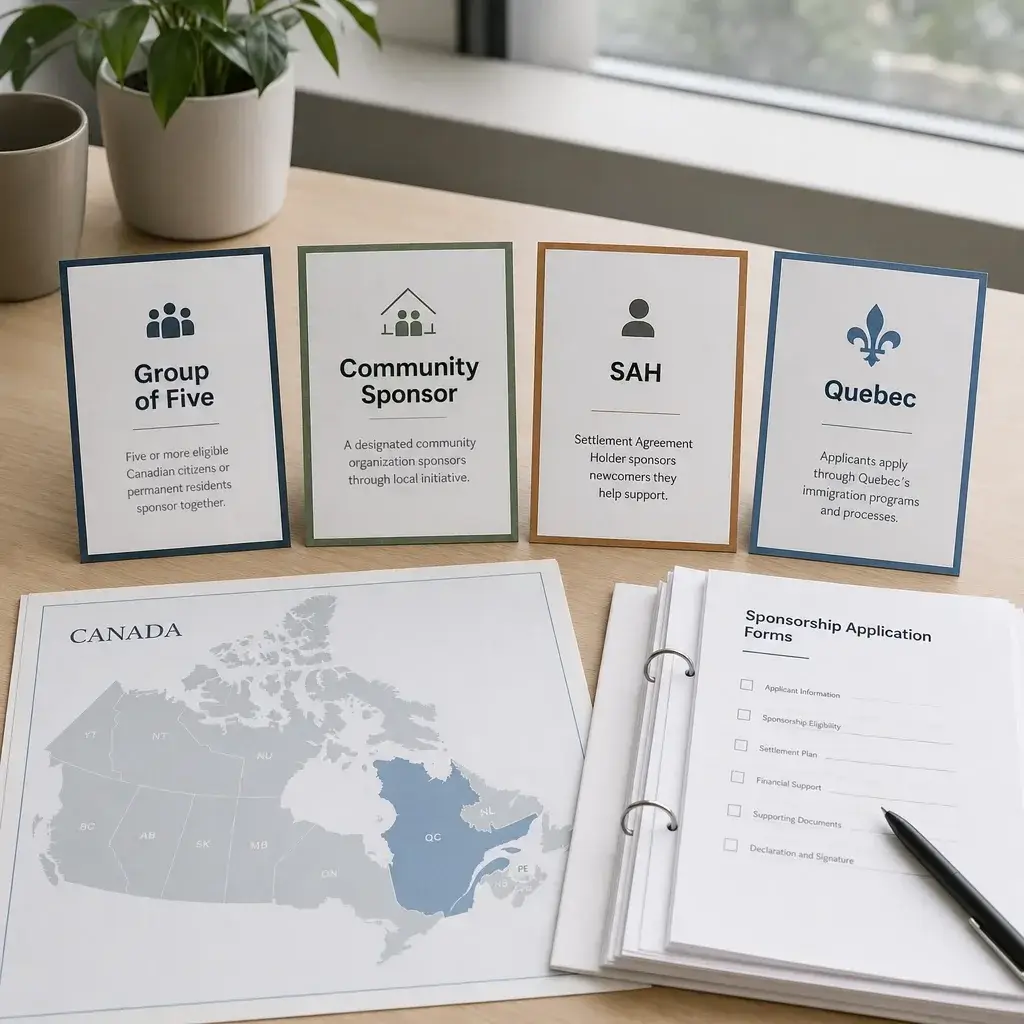
The key difference is who is legally carrying the sponsorship and under which rules. Group of Five private sponsorship is built around five individual sponsors, while Community Sponsors and Sponsorship Agreement Holders use different legal structures and often different operational realities.
A Sponsorship Agreement Holder is an incorporated organization that has a formal agreement with the federal government to sponsor refugees. A Constituent Group is a local group that works under a SAH’s umbrella, which can matter when G5 is paused but a SAH route remains available.
Community Sponsors are organizations, associations, or corporations that sponsor without being SAHs, but they still must meet the rules of the private sponsorship of refugees program that apply to that stream. Their availability can also be affected by intake controls, so do not assume Community Sponsors stay open just because they are not G5.
Quebec private sponsorship is different because Quebec administers its own refugee sponsorship system. That means federal G5 guidance does not automatically answer what a Quebec-based sponsor can do.
| Pathway | Who can sponsor | Intake status | Recognition requirement | Settlement responsibility | Best fit if G5 is unavailable |
|---|---|---|---|---|---|
| Group of Five | Five eligible individuals | Verify current IRCC notice before acting | Verify current G5 rule from IRCC | Private sponsors support settlement | Best if intake is open and five individuals can carry the case |
| Community Sponsors | Eligible organizations or associations | Verify current IRCC notice before acting | Verify pathway-specific rule | Sponsoring organization supports settlement | Best if an organization can lead but no SAH is involved |
| Sponsorship Agreement Holders | Organizations with federal SAH agreements | Depends on SAH capacity and current rules | Verify pathway-specific rule | SAH or its Constituent Group manages support | Best when a recognized organization can structure the file |
| Quebec pathways | Sponsors under Quebec rules | Verify current Quebec intake and category | Verify Quebec program rules | Quebec program obligations apply | Best for Quebec-based cases that fall under provincial administration |
Quebec rules: what is different and what to do if you are in Quebec
Quebec has its own administration, forms, and intake rules for refugee sponsorship. If you are in Quebec, start with the current provincial ministry page and current category rules, not with a federal checklist copied from another province.
The federal G5 pause may not answer the Quebec question in a simple yes-or-no way because Quebec private sponsorship is structurally distinct. You need to confirm current Quebec intake status, who can sponsor, and which document package applies under provincial instructions.
Your practical checklist in Quebec is short and strict. Confirm the current ministry page, confirm the open category if any, confirm the required forms, and then test whether your case belongs in a Quebec stream or another route.
Do not generalize federal timing or federal forms to Quebec. That mistake wastes time and can leave sponsors holding the wrong package when intake opens.
Forms, documents, and application checklist
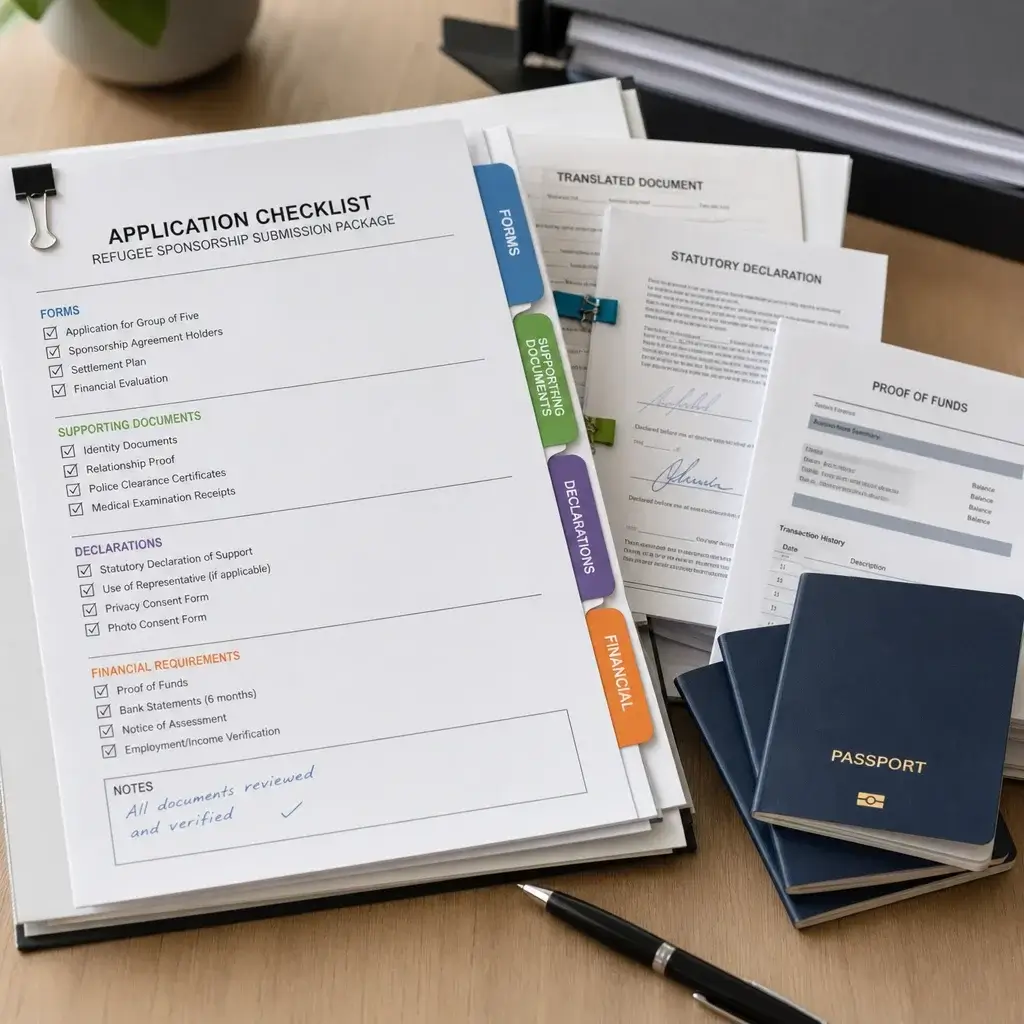
The right place to find Canada refugee sponsorship application forms is the official government source for the pathway you are using. For a federal file, use IRCC pages and guides; for a Quebec file, use the current Quebec government page; for practice help, the Refugee Sponsorship Training Program and the Canadian Council for Refugees are useful secondary resources.
Yes, there is often a sponsorship application form pdf format involved in private sponsorship work, but version control matters more than the file type. Always download the latest Sponsorship application form pdf and guide from the official source right before you prepare a final package.
A complete document set usually includes sponsor identity and status proof, sponsor financial evidence, a settlement plan, refugee recognition evidence where required, family identity and civil documents, declarations, and translations. Missing any one category can turn a strong case into an avoidable delay.
Translations should be complete and professionally prepared according to the rules of the filing authority. I would not rely on informal family translations for a refugee sponsorship file unless the official instructions clearly allow it.
Practical documents checklist
- Current official forms for the exact pathway
- Sponsor identity and immigration status proof
- Proof of address and community ties where relevant
- Financial records supporting the settlement plan
- Refugee recognition documents if required for the stream
- Passports or other identity documents
- Marriage, birth, divorce, or custody records if applicable
- Signed declarations and supporting letters
- Certified translations where the authority requires them
- A copy set with dates and version notes for your records
Official resource starting points
- IRCC private sponsorship of refugees pages
- IRCC program guides and document checklists
- Quebec government refugee sponsorship pages
- Refugee Sponsorship Training Program resources
- Canadian Council for Refugees guidance materials
Costs, funding, and sponsor responsibilities
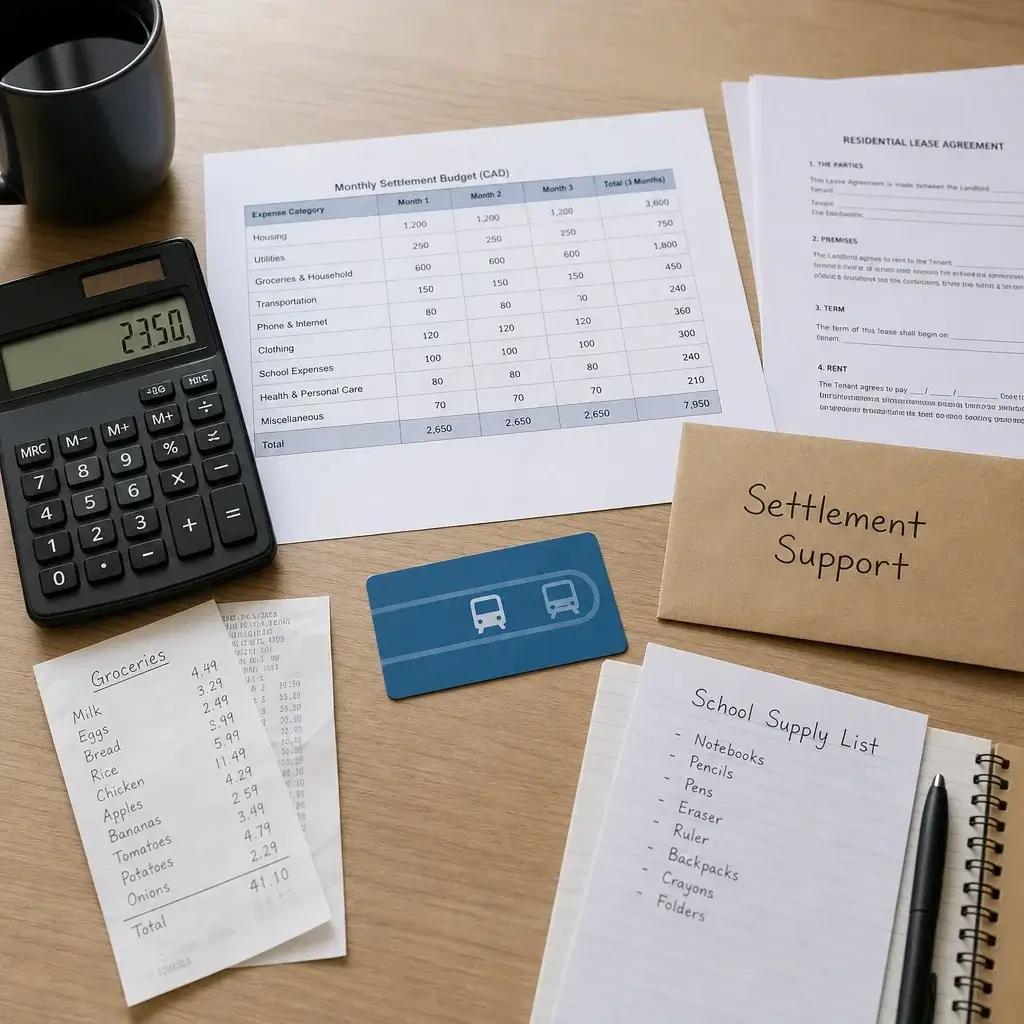
The cost question in G5 cases is usually about settlement capacity, not just filing fees. Sponsors often search for a Group of 5 sponsorship cost table or a Sponsorship cost table 2026, but the core issue is whether the group can credibly support the newcomer after arrival under current program expectations.
I would divide costs into three buckets. First, possible government processing charges if the pathway has any. Second, mandatory settlement support the sponsors must show. Third, incidental costs such as translations, document procurement, communication, local transportation, and start-up household items.
The support categories are concrete even when the exact dollar figure must be checked from current official tables. Group 5 sponsorship financial requirements usually tie to housing, food, clothing, local transportation, basic household goods, school start-up needs for children, and day-to-day settlement help in the community.
If an official cost table exists for the pathway at the time you file, use that exact source and date instead of relying on an old blog chart. I would not print a fixed amount here without a current government or authorized program source.
The sponsorship obligation usually means private support after arrival for the program period set by the applicable rules, often described in practice as settlement support for up to the first year, but the exact duration should be confirmed from the current guide for the pathway you use.
Cost and responsibility checklist
| Category | What to budget or prove |
|---|---|
| Housing | Rent, deposits if needed, utilities, basic furnishings |
| Food | Regular groceries and basic household supplies |
| Clothing | Seasonal clothing and essential footwear |
| Transportation | Local transit and essential travel in the settlement community |
| Household items | Bedding, cookware, hygiene items, basic electronics if needed |
| School start-up | Supplies, clothing, and local start-up needs for children |
| Settlement support | Orientation, appointments, forms, school and health system navigation |
| Documents and admin | Translations, copies, certifications, record retrieval |
Processing times, status updates, interviews, travel, and after-arrival steps

A refugee sponsorship file moves in stages, not in one block. The broad sequence is completeness review, sponsor-side review, overseas processing, admissibility checks, travel coordination, arrival in Canada, and post-arrival settlement support.
A pending file can take a long time even without a pause because overseas processing depends on visa office workload, security screening, medical results, identity verification, and interview needs. That is why Canada group 5 processing time 2026 should be treated as a live operational issue, not a fixed promise.
Group of Five sponsorship application status updates may be limited depending on the pathway and the tools available for that file. Some sponsors get little visibility between major steps, which makes it important to keep all correspondence and file numbers organized from day one.
Interviews are not automatic in every case, but they can happen when officers need to test identity, eligibility, family composition, or credibility. A request for more documents or an interview does not equal refusal, but it does mean the record needs to be consistent.
Privately sponsored refugees generally land in Canada as permanent residents when the case is approved and travel is completed, but the exact travel and PR card steps should be confirmed from current IRCC guidance for the specific pathway. I would check the official instructions before advising a family on travel timing or post-arrival documents.
After arrival, the legal file may feel finished, but the sponsor duty begins in real life. Settlement support means helping with housing, health care registration, school enrollment, income management, and local orientation during the sponsorship period.
What to do if G5 is unavailable: practical alternatives
The strongest alternative is often to work with a Sponsorship Agreement Holder if one is willing and able to carry the case. A SAH can sometimes provide a lawful structure that individual sponsors cannot access on their own during a G5 pause.
A Constituent Group under a SAH may also help if a local community is ready to support the newcomer but lacks a direct sponsorship route. In practice, that can be the bridge between a prepared grassroots case and an organization that can submit under its agreement.
Community Sponsors may be another route, but only if current intake is open and the sponsoring organization fits the legal requirements of that stream. Do not assume this option is available without checking the latest intake notice.
Some families should spend the pause period preparing rather than waiting passively. That means cleaning up identity records, fixing family composition issues, collecting recognition documents, and building a credible settlement plan that could work under more than one pathway.
Some cases need a broader strategy review because the best answer may not be refugee private sponsorship at all. Where facts are unusual, a lawyer can help compare refugee sponsorship with other immigration or humanitarian options without promising a result that the law does not support.
How to advocate for change: MP outreach, media, and community mobilization
If you want to push for policy change, start with your Member of Parliament and keep the message factual. State that you are a constituent, explain how the pause affects a real sponsorship effort in your riding, and ask for a written position or meeting on the future of the private sponsorship of refugees program.
A simple MP email structure works well because it forces clarity. Use four parts: who you are, what the problem is, what local impact it has, and what action you want the MP to take.
MP outreach framework
- Identify yourself as a constituent with your postal code
- Name the affected stream, such as Group of Five private sponsorship
- Explain the practical impact on a real case or local sponsorship effort
- Ask for a meeting or written response
- Request follow-up on IRCC updates on group five Private sponsorship
If you speak to media, stay specific and protect privacy. Use local facts, avoid exaggeration, and never disclose a refugee’s confidential identity details without clear consent.
Community mobilization works best when roles are split. One group tracks government notices, one group handles MP contact, one group speaks with local faith or settlement organizations, and one group preserves sponsor and applicant documents in case the pathway reopens.
When legal help makes sense for a Group of Five case
Legal help is most useful when the facts are not clean. That includes unclear eligibility, missing recognition documents, prior refusals, family composition conflicts, inadmissibility concerns, and cases that sit between federal and Quebec rules.
A lawyer also helps when the strategic question is bigger than one form. If G5 is paused, the real task may be choosing between waiting, moving to a SAH-linked route, restructuring the sponsor group, or preserving the file for later without creating new inconsistencies.
Sutton Law is a Toronto immigration law firm that assists with complex and time-sensitive immigration matters. For a potential g5 sponsorship application, the value is not a promise of approval. The value is a clear review of eligibility, document gaps, timeline risks, and realistic next steps.
If you need that kind of review, you can request a free assessment. It is a practical way to sort out whether your case should wait, pivot, or move under a different lawful pathway.
FAQ
What is a g5 sponsorship application in Canada?
It is a private refugee sponsorship file made by five eligible individual sponsors under the private sponsorship of refugees program.
Is the Group of Five sponsorship program paused in Canada?
Current public notices have indicated a pause affecting new intake, but you should verify the latest IRCC notice before acting because operational rules can change.
What happens to Group of Five applications already submitted?
Pending files may continue to be processed according to their stage, subject to current IRCC operational instructions.
Can I submit a G5 application if my documents are already ready?
Not safely unless the stream is open for intake. A ready package is not the same as an accepted filing channel.
What is the difference between G5 and a Sponsorship Agreement Holder?
G5 uses five individual sponsors. A SAH is an organization with a formal sponsorship agreement with the federal government.
Do Group of Five cases require UNHCR recognition?
That point must be checked against the current pathway rules because recognition requirements are stream-specific and have changed over time.
How much money do Group of Five sponsors need?
The amount should be checked against current official guidance or cost tables, but sponsors must show credible capacity to cover settlement support such as housing, food, clothing, transportation, and start-up needs.
How long does a Group of Five sponsorship application take?
There is no reliable single answer without a current official source because timelines depend on backlog, overseas processing, admissibility checks, and intake controls.
Does the G5 pause apply in Quebec?
Do not assume so without checking Quebec’s own rules. Quebec private sponsorship operates under a distinct provincial framework.
What are the alternatives if Group of Five is unavailable?
The main alternatives are SAH-linked sponsorship, a possible Community Sponsor route if open, or another immigration strategy that fits the facts.
I would verify the official notice on the day you act. Then I would decide the pathway, not the other way around.