
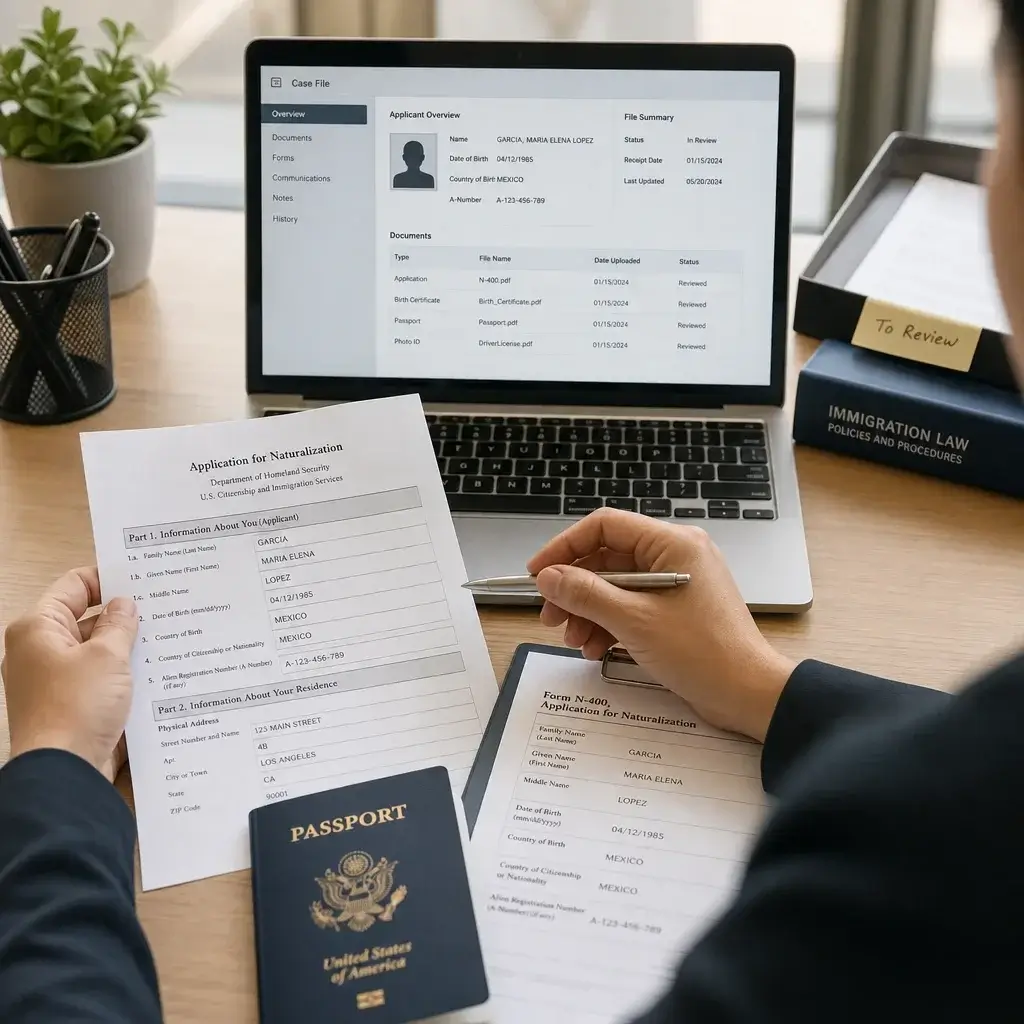
Many applicants fear a background check for citizenship more than the test. I understand that. In Canada, the process is usually routine, but it is real, and IRCC can pause your file if identity, criminality, or past records do not line up.
> Plain-English answer > Yes, IRCC does a background check for citizenship in Canada. That check can include identity verification, criminality review, immigration history review, and, in some cases, security-related screening. Not every applicant gets the same request. Not every applicant needs fingerprints or police certificates. A completed background verification stage does not mean citizenship is already approved.
What a background check for citizenship means in Canada
A Canadian citizenship background check is IRCC’s review of whether the person applying is who they say they are and whether anything in their criminal, immigration, or security history could affect the application. IRCC is Immigration, Refugees and Citizenship Canada, the federal department that processes citizenship applications.
A background check for citizenship Canada is not the same as every other immigration screening process. Citizenship files are assessed under the Citizenship Act, while permanent residence, work permits, study permits, visas, and eTA matters are often focused more directly on admissibility under immigration law.
An IRCC citizenship background check does not always look identical from one file to the next. The exact path can change based on identity matches, travel history, previous immigration records, criminal history disclosures, and whether IRCC needs more proof.
What IRCC checks during a citizenship background check
IRCC checks identity first. That means it compares your application details, supporting documents, and records already on file to confirm that your name, date of birth, status history, and other identifiers are consistent.
IRCC checks criminality next. Criminality screening means looking for charges, convictions, court outcomes, or other law-enforcement information that could trigger a citizenship prohibition or require more review.
IRCC may also review immigration compliance history. That includes prior applications, previous statements, status history in Canada, and any signs of undisclosed refusals, removals, or misrepresentation concerns.
Security screening is a separate concept from criminality screening. In plain English, criminality deals with offences and police or court records, while security screening deals with concerns such as espionage, terrorism, violence-related threats, or membership in organizations linked to security concerns.
IRCC can rely on internal records and partner-agency information during screening. In practical terms, applicants may see IRCC involved directly, the RCMP involved for fingerprint-based criminal record checks, CBSA involved where immigration history is relevant, and possibly CSIS where security screening issues arise.
Name check vs fingerprints vs biometrics vs police certificate
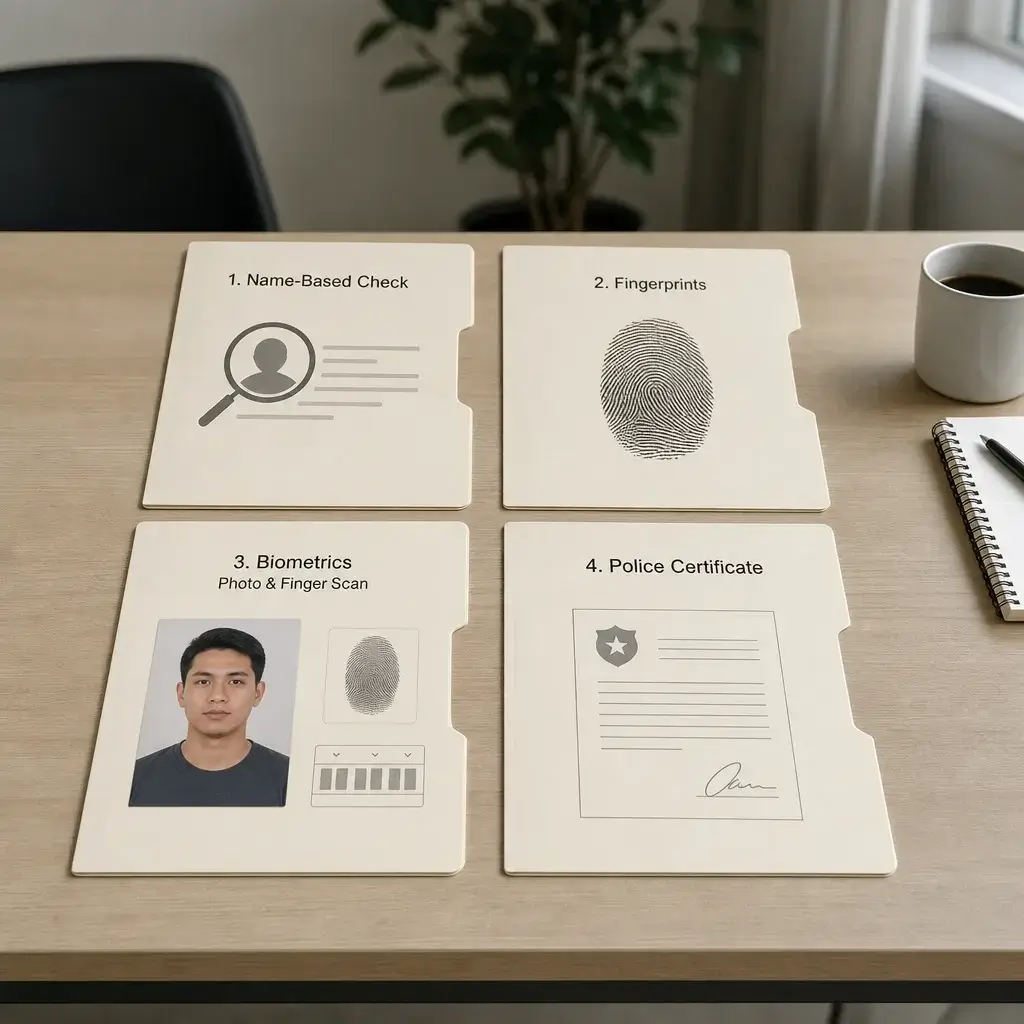
These four tools do different jobs. Mixing them up causes needless panic.
| Tool | Main purpose | Who issues or runs it | When IRCC may use or request it | What it does not prove |
|---|---|---|---|---|
| Name-based check | Searches records using identifying details such as name and date of birth | Government systems and partner records | Often used as an initial screening step | It does not conclusively resolve every identity match |
| Fingerprints for Canadian citizenship | Confirms identity against criminal record databases when name details alone are not enough | RCMP fingerprinting through authorized collection channels | When IRCC specifically asks for fingerprints | It is not the same as a foreign police certificate |
| Biometrics | Identity tool used widely in immigration streams, usually photo and fingerprints collected for immigration processing | IRCC through biometrics collection systems | More common in visas, permits, and PR streams than in citizenship processing | Prior biometrics do not guarantee no citizenship fingerprint request later |
| Police certificate for Canadian citizenship-related requests | Shows whether a person has a police record in a specific country or jurisdiction | Foreign police authority or authorized local agency | Usually only if IRCC asks, based on the facts of the file | It is not the same as an RCMP fingerprint result in Canada |
A name-based check is usually the lighter tool. It uses personal identifiers already in the file. If that check returns a possible match, IRCC may ask for fingerprints to sort out whether the record belongs to the applicant or to someone with a similar name.
RCMP fingerprinting for IRCC is different from biometrics. Biometrics are part of broader immigration identity systems. A citizenship fingerprint request is a targeted follow-up step used to confirm or rule out a criminal record match or identity issue.
A police certificate and a criminal record check are also not the same thing. A police certificate usually comes from a country where you lived and speaks to records in that jurisdiction, while an RCMP fingerprint check is a Canadian criminal record verification tool tied to fingerprints.
Criminality screening vs security screening
Applicants mix these two terms together. That leads to bad assumptions.
| Screening type | What it looks at | Common trigger examples | Practical meaning for applicants |
|---|---|---|---|
| Criminality screening | Charges, convictions, court outcomes, police records | Name match, disclosed offence, court history, fingerprint request | May affect eligibility or trigger a citizenship prohibition review |
| Security screening | National security concerns, including certain violence-related or intelligence-related concerns | Specific record flags or partner-agency concerns | Not every applicant goes through intensive security screening |
Criminality screening vs security screening matters because a delay in one does not mean the other is in issue. If your file is waiting on fingerprints, that usually points to identity or criminality confirmation, not proof that a serious security concern exists.
Do you need fingerprints for a Canadian citizenship application?
No, fingerprints are not automatic for every citizenship applicant. IRCC may request them, but only an official request tells you that fingerprints are required in your file.
IRCC often relies on a name-based check first. If that result is not enough to confirm identity or clear a possible record match, IRCC can send a fingerprint request letter with instructions and a deadline.
Common triggers for fingerprints for Canadian citizenship include a name and date-of-birth match in police databases, unresolved identity questions, prior criminal record concerns, or a need to confirm that a record does not belong to you. The point is confirmation, not punishment.
Previous biometrics from a visa, permit, or permanent residence case do not automatically end all future identity screening. A canadian citizenship background check can still generate a new fingerprint request if IRCC needs a fingerprint-based criminal record result for the citizenship file.
Step by step: what happens after IRCC asks for fingerprints
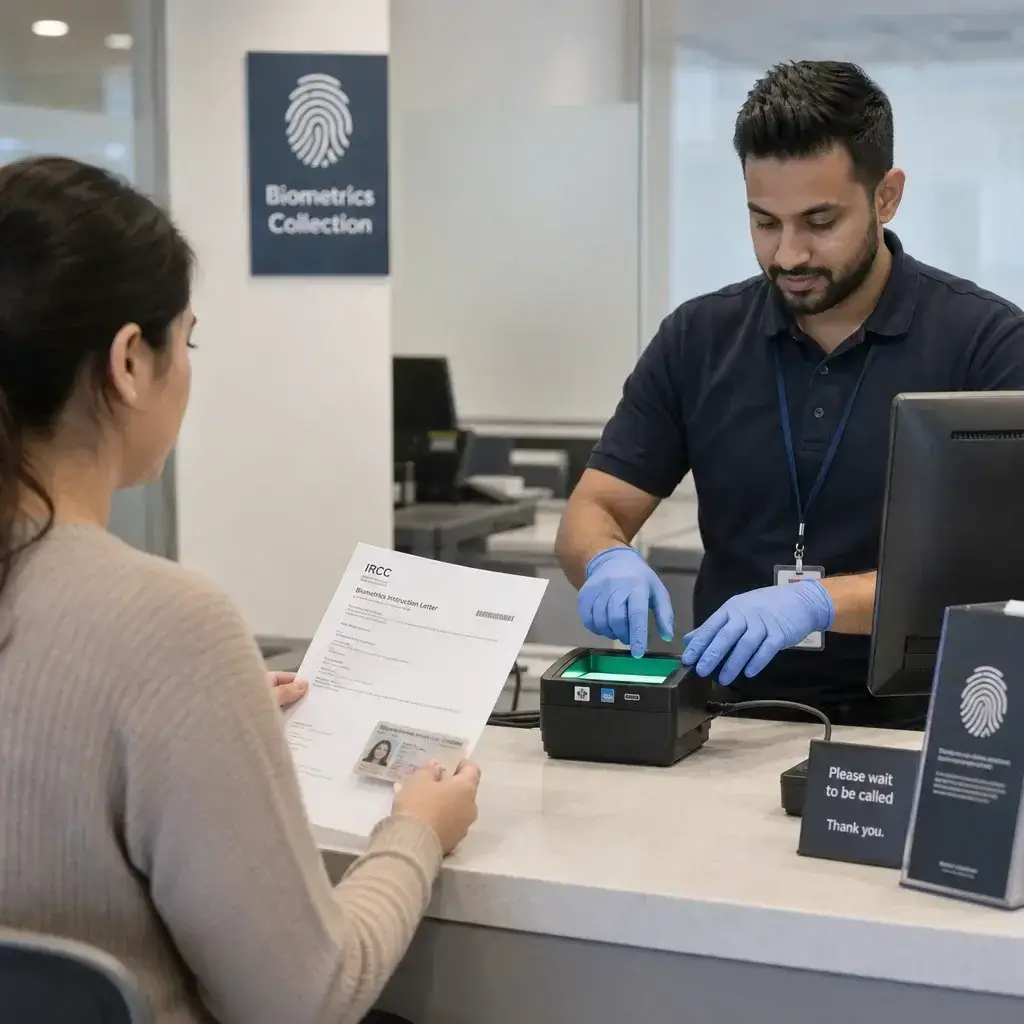
The first step is to read the IRCC request letter carefully and follow that letter, not advice from forums. The request normally tells you what IRCC needs, where the result must go, and the deadline to meet.
The second step is to book fingerprint collection through a channel accepted for IRCC-requested fingerprint submissions. Because collection methods and provider rules can change, I will not invent a route here; use the instructions in the request letter and confirm current accepted channels before you book.
The third step is to bring the documents the collection agency requires. In practice, that usually means the IRCC request letter, valid identification, and your personal details exactly as shown in the application and request.
The fourth step is to complete the fingerprints and confirm how the result will be sent. Before you leave, verify whether the result goes directly to the RCMP, to IRCC, or through the accredited provider workflow named in your request.
The fifth step is to keep proof of completion. Save the receipt, transaction record, appointment confirmation, and a copy of the IRCC request letter in one place.
The sixth step is to monitor your file and respond fast if IRCC asks for more. If you cannot meet the deadline, ask for more time as soon as the problem appears and keep written proof of why compliance was not possible.
Fingerprint request checklist
- IRCC fingerprint request letter
- Valid government-issued identification
- Personal details matching your application
- Payment method if the provider charges a fee
- Proof of appointment or submission
- Any prior correspondence about identity or record issues
If you are in Toronto or the GTA, local booking logistics may be easier, but the legal point stays the same across Canada. Follow the request exactly. Do not guess. Do not send random documents that IRCC did not ask for.
How long a citizenship background check takes
There is no reliable public countdown for the background check stage alone. Citizenship background check how long depends on your identity history, travel history, prior immigration records, possible name matches, and whether IRCC asks for fingerprints or extra documents.
The overall citizenship application has an official processing timeline published by IRCC, but that is not the same as the background verification portion. One applicant can clear background review early and still wait on later steps, while another can move quickly everywhere else and stall on fingerprints or document verification.
Delays are more likely when IRCC is waiting for fingerprint results, reviewing police certificates from more than one country, checking inconsistent personal history entries, or assessing charges, convictions, or prior immigration discrepancies. Missed deadlines also slow files down because they create a new problem on top of the original request.
Reddit timelines are weak evidence. I log my apiary work because field notes beat guesswork. Immigration is the same. Another person’s case may share one fact with yours and differ on five others, and those five control the timeline.
What can trigger delays or extra scrutiny
Inconsistent addresses, travel dates, or work history trigger review because they affect identity and credibility. If the dates in your passport stamps, tax history, and application do not line up, IRCC may need clarification before it moves the file.
Undisclosed charges or convictions create bigger problems than disclosed ones. A hidden issue can raise both criminality and misrepresentation concerns, while a disclosed issue can at least be assessed on the actual facts.
Name matches can delay a file even when the applicant has done nothing wrong. A common surname, a similar birth date, or an alternate spelling can force IRCC to ask for fingerprints to separate you from someone else in the record system.
Past immigration trouble can also add review time. Examples include previous refusals, removal history, inconsistent statements across applications, or unresolved status concerns.
An administrative delay is not the same as a legal barrier. A request for fingerprints, a police certificate, or corrected dates may only mean IRCC needs clearer proof, not that your citizenship application will be refused.
What can disqualify or complicate a citizenship application
Citizenship problems usually come from prohibitions, not vague bad impressions. In plain terms, pending charges, certain convictions, imprisonment, probation, parole, misrepresentation, or unresolved immigration status issues can affect whether you are eligible now.
Not eligible now is not always the same as permanently disqualified. That distinction matters. Some issues block a citizenship grant only during a defined legal period, while others require deeper analysis of the record and timing.
Old convictions, record suspensions, discharges, expunged records, and foreign offences need careful review before you file or before you answer IRCC. I will not fake a rule here because the legal effect depends on the exact outcome, date, jurisdiction, and whether the issue creates a current prohibition under the Citizenship Act.
Full disclosure is the safer course. In practice, hidden criminal or immigration history often causes more damage than a properly explained issue with documents attached.
If you have any criminal history, a pending court matter, or a past allegation that still appears in records, this is the stage to get personalized legal advice. A citizenship lawyer or immigration lawyer Toronto applicants trust can help frame the response, gather the right records, and avoid a careless answer that creates a second problem.
Police certificates: when they matter and what to do if you lived in multiple countries
Police certificates are not automatically filed with every citizenship application. IRCC may request them if the facts of your case make foreign police records relevant.
A police certificate for canadian citizenship purposes is jurisdiction-specific. If IRCC asks for one, the issuing authority is usually the police or government body in the country where you lived, not the RCMP in Canada.
Applicants who lived in multiple countries should build a country list before IRCC asks. Write down each country, exact residence dates, every name variation used there, and whether documents will need translation.
Each country has its own process, issue format, and access rules. Some police documents are easy to order online. Others require local agents, fingerprints, or in-person steps. That is why you should use current IRCC country-specific instructions and not rely on one generic checklist.
If a country refuses to issue a certificate or the process is stalled, keep proof of every attempt. Save web confirmations, courier records, appointment notices, emails, and any refusal letter. Those records can matter if IRCC asks why the certificate is missing.
Multi-country police certificate checklist
- Full list of countries where you lived
- Exact entry and exit dates for each country
- All names, aliases, and spelling variations used
- Passport copies covering those periods
- Current country-specific police certificate instructions
- Translation arrangements for non-English or non-French documents
- Proof of application or proof the certificate is unavailable
What happens if fingerprints are unreadable, unclassifiable, or medically difficult
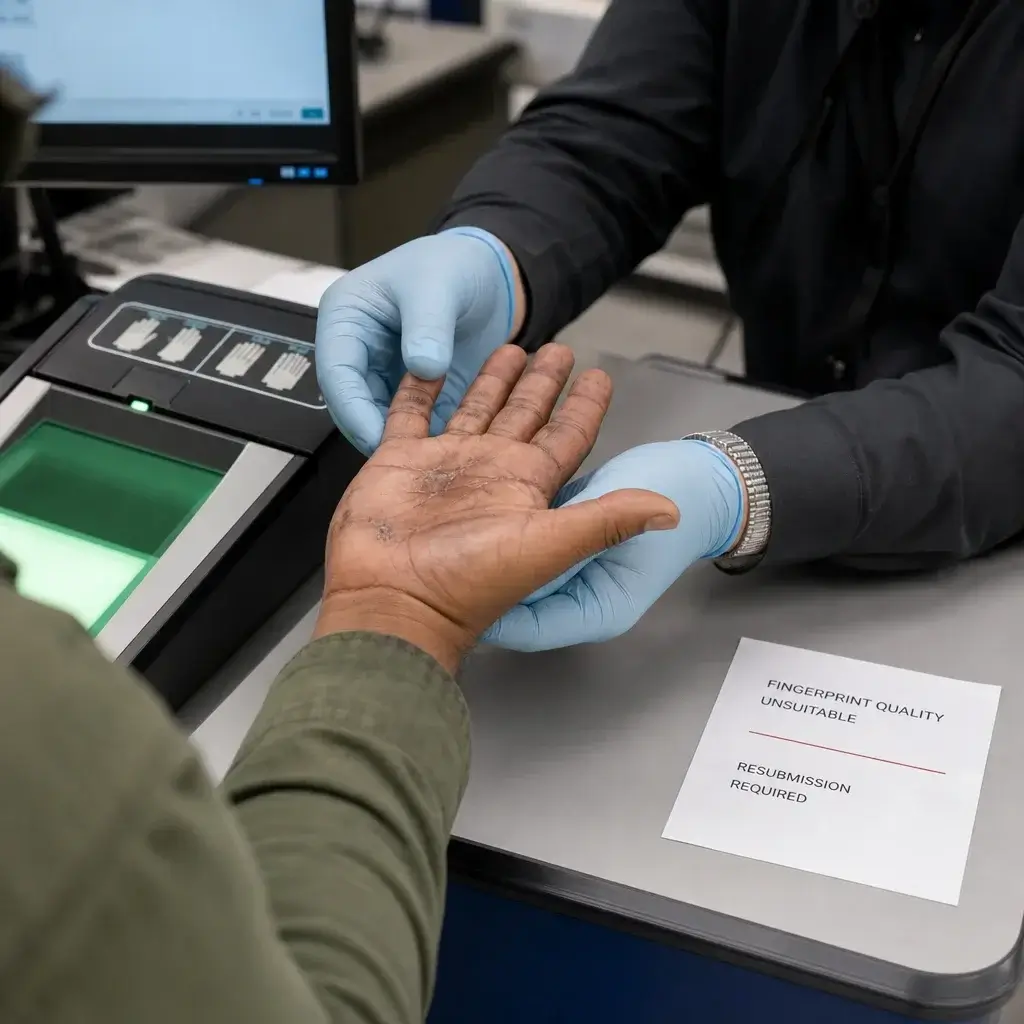
Unreadable fingerprints happen for real reasons, not because the applicant did something wrong. Worn ridges, age, scars, skin conditions, injuries, amputations, and poor image quality can all make fingerprints hard to classify.
If fingerprints are rejected or unclassifiable, follow the instructions from the collection agency and IRCC in writing. The next step may be a re-collection, added notes from the provider, or a request for medical or identity documentation.
Applicants with no fingerprints, missing fingers, severe scarring, or a medical condition affecting prints should tell IRCC promptly and ask for written instructions. Do not assume a waiver exists just because someone online said it did.
A medical accommodation may be possible, but the route depends on current IRCC and collection-agency requirements. The safe move is to provide medical evidence if requested and keep copies of every submission.
Missing a fingerprint appointment without acting fast creates a preventable delay. If the first booking fails or the collection cannot be completed, notify IRCC quickly and ask for guidance or more time with proof.
How to check your status and what “background verification completed” means

Applicants usually see status updates through IRCC’s online tools, but the exact wording can change over time. Always treat the language in your own tracker and letters as the controlling source.
Background verification completed citizenship usually means that this screening stage has been finished or sufficiently resolved for now. It does not mean the oath is scheduled, and it does not guarantee final approval.
If your tracker says background verification status has been updated to completed citizenship, that is generally a positive sign for this specific stage. It still leaves other steps in the file, such as test, language, prohibitions review, interview, or ceremony scheduling, depending on the case.
If the file appears stuck after that update, check first for missing document requests, unread messages, or expired deadlines. Then compare your overall case age with the current official citizenship processing time and consider a case-specific inquiry if the file is clearly outside normal ranges.
Keep a clean record of every upload, letter, courier confirmation, and screenshot. When a file stalls, organized records help faster than memory.
How IRCC, RCMP, CBSA, and possibly CSIS fit into the process
IRCC manages the citizenship application and decides what additional information is needed. It is the department you deal with directly for requests, uploads, deadlines, and final citizenship processing.
The RCMP’s role is tied to criminal record verification, especially when fingerprints are required. In plain terms, RCMP fingerprinting IRCC requests are about confirming whether a possible record match belongs to you.
CBSA may matter where immigration history or compliance records are relevant. That can include past entries, enforcement history, or prior immigration interactions that sit outside the citizenship form itself.
CSIS may be involved only where security screening questions arise. That is not the same as saying every citizenship file gets intensive CSIS review.
Citizenship vs permanent residence, work permits, study permits, visas, and eTA checks
Citizenship screening overlaps with immigration screening, but it is not identical. Citizenship asks whether a permanent resident meets citizenship requirements and whether any prohibition or background issue blocks the grant.
Permanent residence, work permit, study permit, visa, refugee, and eTA checks often rely more routinely on admissibility analysis under immigration law. Biometrics are also more standard in several of those streams than in citizenship processing.
Previous biometrics can still help IRCC confirm identity history, but they do not replace every possible citizenship screening step. That is why an applicant can have biometrics on file and still receive a later fingerprint request for a canadian citizenship background check.
If your bigger issue is status, inadmissibility, or a prior refusal rather than citizenship alone, it may help to review a permanent residence background check, work permit background check, or criminal inadmissibility guide alongside this page.
Common myths about citizenship background checks
The first myth is that everyone must submit fingerprints with the initial citizenship application. That is false. Fingerprints are request-driven, not automatic for every file.
The second myth is that background verification completed means approval is guaranteed. That is false. It usually means one stage is done, not the whole application.
The third myth is that an old issue disappears if you do not mention it. That is dangerous. Non-disclosure can turn one manageable issue into a credibility problem.
The fourth myth is that prior biometrics always satisfy citizenship screening. That is not reliable. Biometrics and fingerprint-based criminal record confirmation are different tools.
The fifth myth is that a delay means refusal is coming. That is wrong. Some delays are legal issues, but many are administrative, identity-related, or document-related.
The sixth myth is that one forum timeline predicts your result. It does not. In beekeeping, one hive tells you little about the yard. Immigration files behave the same way.
When to speak with a citizenship lawyer
Legal help is most useful when the file has real friction, not just routine waiting. Examples include prior charges or convictions, a pending court matter, a fingerprint request tied to a possible criminal record match, old immigration inconsistencies, past refusals, or police certificate problems across multiple countries.
A lawyer can also help when you miss a deadline, cannot obtain documents on time, or need to explain unreadable fingerprints, record suspensions, discharges, or foreign offences without creating a worse record. The value is often in the framing, timing, and supporting documents.
If you are dealing with those issues, ask for an assessment early. A calm review of the request letter, your history, and the response plan can reduce avoidable delay and help you answer IRCC clearly and on time.
FAQ
What is a background check in an IRCC citizenship application?
It is IRCC’s review of your identity, criminality history, immigration history, and any other records relevant to whether your citizenship application can move forward.
Do they do a background check for citizenship in Canada?
Yes. A background check for citizenship Canada is a normal part of processing, though not every applicant gets the same requests.
Do I need fingerprints for Canadian citizenship?
Not automatically. IRCC may ask for fingerprints if a name-based check is not enough or if the file needs fingerprint-based criminal record confirmation.
How long does a citizenship background check take?
There is no fixed public timeline for that stage alone. Timing depends on your history, document requests, possible record matches, and whether IRCC needs fingerprints or police certificates.
What does background verification completed mean for citizenship?
It usually means that stage is done or sufficiently resolved. It does not mean citizenship has already been granted.
What is the difference between a police certificate and an RCMP fingerprint check?
A police certificate usually comes from a country or local police authority and speaks to records there. An RCMP fingerprint check is a Canadian fingerprint-based criminal record verification tool.
What happens if my fingerprints are unreadable or rejected?
Follow the written instructions from the provider and IRCC. You may need a re-collection, added medical or identity documentation, or a documented accommodation request.
Can I still apply for citizenship if I have an old conviction or record suspension?
Sometimes yes, sometimes not yet. The answer depends on the exact offence, date, court outcome, and whether any current citizenship prohibition applies. Get legal advice before filing or before answering IRCC.
Will previous biometrics for PR or a visa count for citizenship?
They may still be part of your identity history, but they do not guarantee that IRCC will never ask for fingerprints in a citizenship file.
What should I do if IRCC asks for fingerprints and I cannot meet the deadline?
Act fast. Keep proof of the problem, request more time promptly, and follow the instructions in the IRCC letter as closely as possible.
If your file involves a criminal record issue, a fingerprint request, a stalled background check, or uncertainty about how to answer IRCC, that is the point to get tailored advice. Next season I may test a new mite treatment on two hives before I trust it across the yard. Immigration is no place for untested guesses either.