

Most people searching for lmia approved employers are looking for a live job board. That is usually the first mistake. The so-called cic lmia list is generally a historical research tool, not proof that a company is hiring you now, and not proof a job offer is genuine.
What the LMIA employer list is, and what it is not
An LMIA employer list usually means a public record showing employers that previously received positive Labour Market Impact Assessments, or positive LMIAs, for certain positions. A positive LMIA is an employer-side decision from ESDC and Service Canada that usually says hiring a foreign worker for that role is likely to have a neutral or positive impact on the Canadian labour market .
An employer appearing on an approved LMIA list does not mean every role at that company is approved forever. It usually means one or more LMIA applications were approved in a past reporting period, for specific jobs, locations, wages, and streams .
The list is not a job board, not a work permit, and not legal proof that a new offer is valid. IRCC handles work permits, while ESDC and Service Canada handle the LMIA side .
The term cic lmia list is common search language, but CIC is an older public label and not the current department name used for immigration processing. Before acting on any list, check the current government source and publication format because immigration pages, datasets, and reporting practices can change without much notice .
How to find LMIA approved employers in Canada step by step

The best way to find a list of LMIA approved companies in Canada is to start with the current federal source, then treat it as a shortlist tool rather than a final answer. After that, match the employer against live job postings, the employer’s careers page, and the role you actually qualify for .
If you already have a company name in mind, search the employer name first and then confirm the city, occupation, and reporting period shown in the record. A positive LMIA history can suggest the employer has hired foreign workers before, but it does not tell you whether they will sponsor a new worker today .
If you are searching by job type instead of employer, use the occupation title and its NOC code together. NOC means National Occupation Classification, which is Canada’s system for grouping jobs by duties and skill requirements, and it helps you avoid missing postings that use different job titles for the same work .
If you want provincial leads, narrow your search by location after you identify the job family. Users often look for an LMIA employer list Ontario, LMIA employer list Alberta, or LMIA employer list BC, but the practical method is the same: find historical employer records, then cross-check those names against live openings in that province .
A simple workflow works better than random searching. First, locate the current government dataset or employer disclosure page. Second, search by employer, job title, NOC, or province if the format allows it. Third, build a shortlist of employers with relevant history. Fourth, check Job Bank and the employer’s own careers page. Fifth, tailor your application to the listed duties and location .
How to tell if an employer is hiring now or only appears on a historical list
A company can appear on an LMIA employer list 2025 or LMIA employer list 2026 search result and still have no active opening today. Historical publication and current hiring are two different things .
The safest way to confirm current hiring is to look for a recent posting date, a matching role on the employer’s own website, a real business address, a named recruiter or hiring contact, a clear wage range, and a specific work location. If those details do not line up, the employer’s old LMIA history is not enough on its own .
A listed employer may not hire now for ordinary business reasons. The role may be filled, demand may have dropped, internal policy may have changed, the location may no longer need that occupation, or the employer may not be pursuing foreign-worker recruitment this season .
A job offer is not LMIA-backed just because the employer’s name appears somewhere online. What matters is the actual offer details, the job duties, the location, and whether the employer truly has a valid LMIA-supported process for that specific position .
How to verify a job offer and avoid fake LMIA scams

A real LMIA-based process does not require the foreign worker to buy the LMIA. The employer applies for the LMIA, and requests for payment for a job offer or for an LMIA itself are a serious warning sign .
The strongest fraud red flags are practical and easy to spot. Watch for generic email addresses instead of a company domain, no interview, pressure to pay quickly, vague job duties, salary far above the local market without explanation, offer letters with spelling mistakes, or contact details that do not match the real company website .
Use a short verification checklist before relying on any offer. Confirm the company exists, compare the posting against the official careers page, verify that the job title and location are real, check whether the employer has a business presence in Canada, and review whether the duties match the NOC the employer appears to be using .
One warning sign alone does not prove fraud, but several together should stop you from sending money or personal documents too quickly. If the documents are unclear, a lawyer can review the offer, explain the work permit path, and flag problems before you act; Sutton Law offers free assessments for immigration matters, and document review support may be available depending on the case .
Quick fraud red flags checklist
- Payment requested for a job or LMIA
- Email from Gmail, Yahoo, or another generic account
- No real interview or screening
- Salary that looks unrealistic for the role and city
- Duties copied from unrelated jobs
- Offer letter missing company details or signatures
- Contact person not found on the company website or LinkedIn
- Pressure to decide immediately
LMIA vs work permit: what job seekers need to know

An LMIA and a work permit are not the same thing. The LMIA is usually the employer’s labour market approval step, while the work permit is the worker’s authorization to work in Canada .
A positive LMIA can support an employer-specific work permit in many cases, but it does not by itself let the worker enter Canada or start work. The worker still has to meet the permit rules, submit the right application, and satisfy immigration requirements for their own file .
An employer-specific work permit, often called a closed work permit, ties the worker to the employer, job, and location listed in the approval documents. An open work permit is different because it generally allows work for more than one employer, subject to the permit conditions .
Foreign workers generally do not apply for the LMIA themselves. The employer applies for the LMIA, and the worker applies for the work permit if the case requires one .
| Item | LMIA | Work permit |
|---|---|---|
| Who applies | Usually the employer | Usually the worker |
| What it does | Assesses labour market impact | Authorizes work in Canada |
| Issued by | ESDC/Service Canada | IRCC or border processing in limited cases |
| Gives the right to work by itself | No | Usually yes, if valid and conditions are met |
| Can a worker apply for it directly | Generally no | Yes, if eligible |
Which employers can apply for an LMIA
An employer usually needs to be a genuine operating business with a real job offer before it can apply for an LMIA. The employer also has to meet the wage, recruitment, and program rules for the stream being used .
Eligibility is not automatic just because a company was on a past list of LMIA approved companies in Canada for foreigners. A prior positive LMIA does not guarantee the same employer will qualify again for a new role, new location, or new period .
The rules can change by stream, occupation, wage level, and province. Job seekers should treat employer eligibility as a file-specific issue, and employers with urgent or complex cases should get advice before filing because mistakes at the recruitment or application stage can affect the whole process .
LMIA process, fees, and timelines in Canada
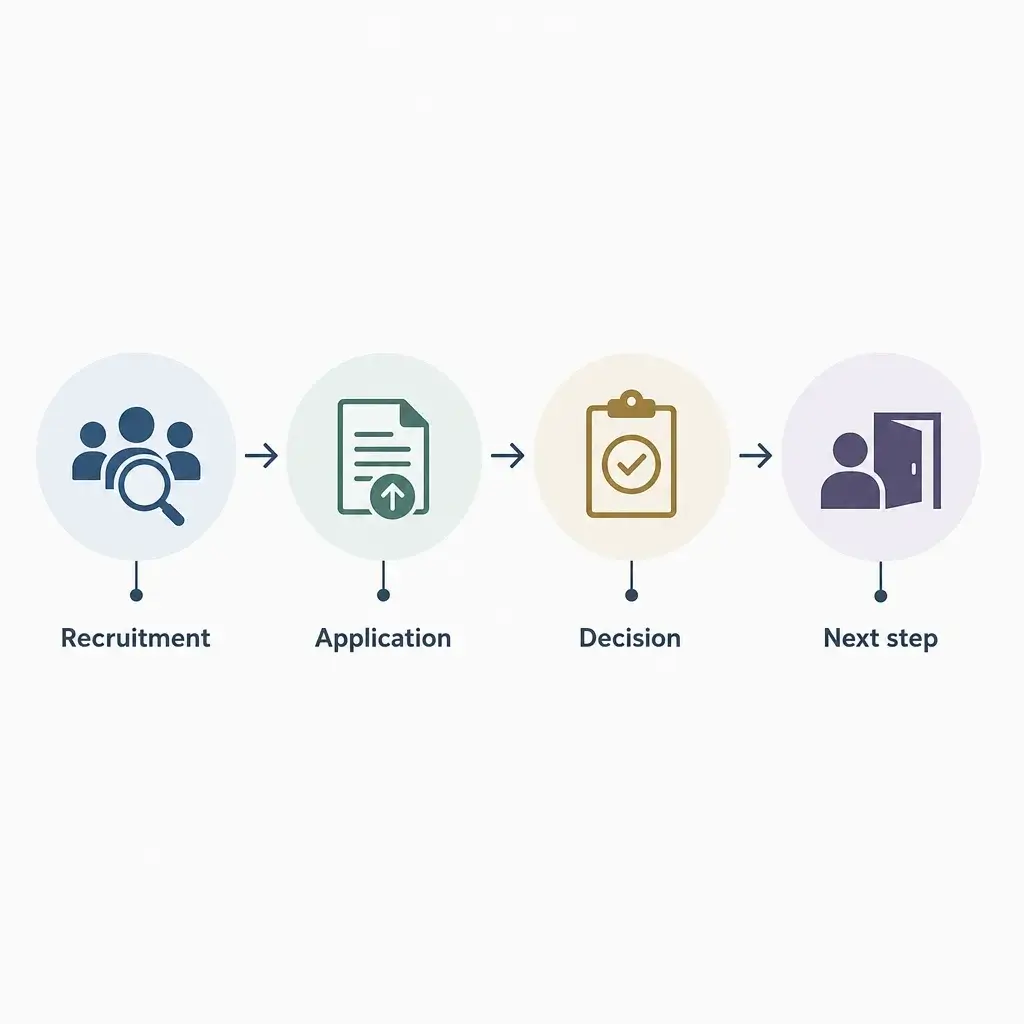
The usual LMIA process starts with employer recruitment and advertising, then moves to the employer’s application, Service Canada assessment, a positive or negative decision, and then the worker’s next immigration step if the LMIA is positive .
The employer application fee is commonly cited as CAD $1,000 per position . Some categories may have different rules or exemptions, so that amount should still be checked against the current government page before filing .
Processing times are not fixed across the system, and I would not rely on any old blog number for your decision. Timelines move by stream, occupation, application quality, current volume, and whether Service Canada needs more information .
The Global Talent Stream is often discussed because service can be faster than standard streams, and a 10 business day service standard is commonly referenced for many cases . That is still a service target, not a guarantee, and readers should verify the current standard on the official page before acting .
High-wage and low-wage LMIA streams are not just labels. They affect which rules the employer must meet, and the classification generally turns on whether the offered wage is at or above the provincial or territorial median wage for that occupation area used by the program at the time .
Which jobs are commonly LMIA-approved

There is no single permanent list of approved LMIA jobs in Canada. What gets approved depends on labour market need, the employer’s recruitment efforts, wage compliance, and the exact stream being used .
The roles most often associated with LMIA use are usually found in sectors with ongoing labour shortages or hard-to-fill shifts. That can include healthcare, agriculture, food services, trucking, skilled trades, hospitality, caregiving, and some technology roles, but none of those sectors is automatically approvable .
The practical way to find likely roles is to combine historical LMIA employer data with live postings and local demand. A high wage alone does not make a role LMIA-approved, and a low-skill title does not automatically rule it out if the employer can meet the program requirements .
| Sector | Example roles | Why LMIA use may appear | What to verify |
|---|---|---|---|
| Healthcare | Support workers, nurses, aides | Staffing shortages and shift coverage | Licensing, location, duties |
| Agriculture | Farm workers, greenhouse staff | Seasonal and labour supply needs | Housing, season length, wages |
| Food services | Cooks, food service supervisors | Turnover and location-specific shortages | Real vacancy, wage realism, schedule |
| Trucking | Transport drivers | Long-haul demand and route coverage | Licence rules, route base, experience |
| Skilled trades | Welders, electricians, carpenters | Project demand and trade shortages | Certification, union context, site location |
| Hospitality | Housekeepers, front-desk or kitchen roles | Seasonal demand in some regions | Seasonality, accommodation, duties |
| Caregiving | Home support roles | Family or community care needs | Genuine need, hours, contract terms |
| Tech | Certain specialized roles | Specialized skill shortages in some cases | NOC fit, duties, stream used |
How to use Job Bank, NOC codes, and province filters more effectively
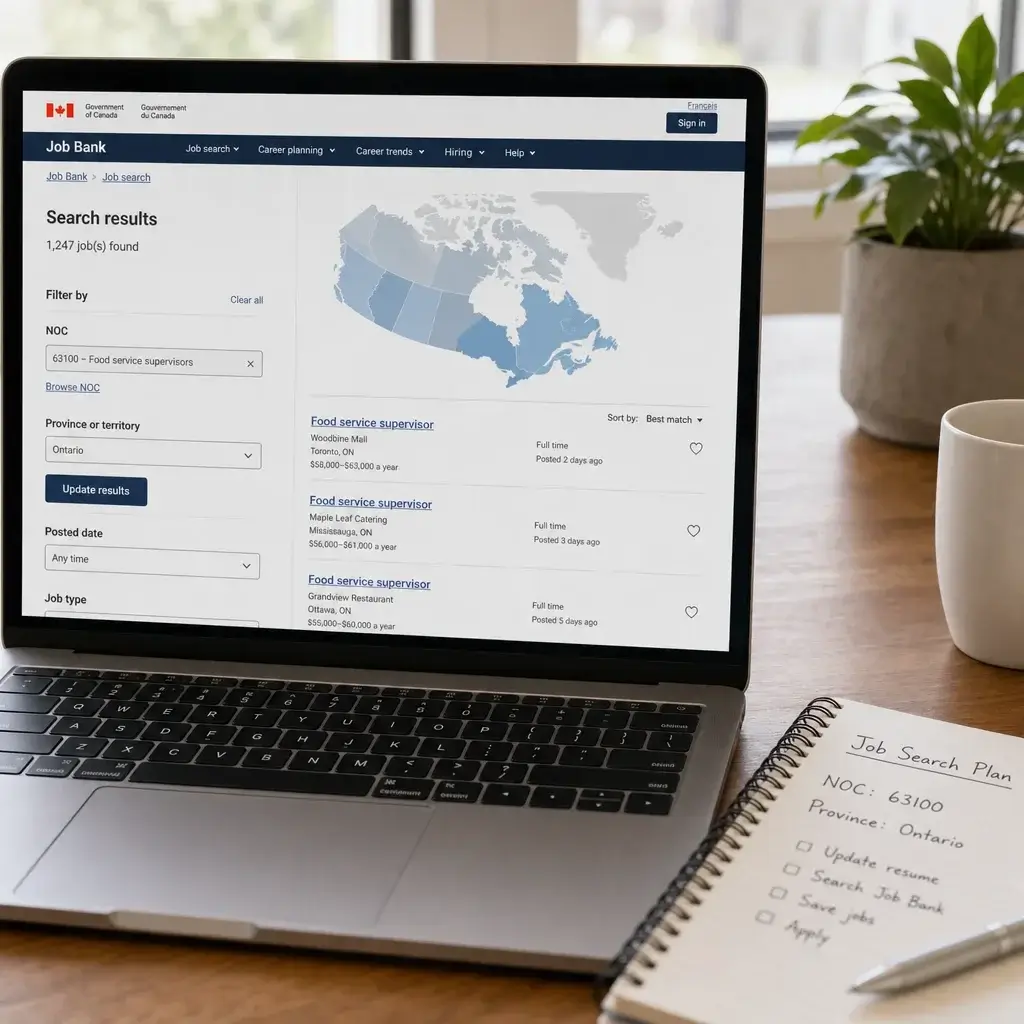
Job title searches alone miss too many matches, so use NOC codes when you can. A NOC code groups jobs by actual duties, which helps you find similar roles even when employers use different titles .
If you want jobs at LMIA approved companies, move between three sources each time. Check the historical employer record, then the Job Bank posting, then the employer’s own careers page, and only trust the lead when those details line up .
Job Bank can help, but it should not be your only tool for finding a job bank Canada for foreigners with LMIA sponsorship path. Use it to identify employers, duties, wages, and locations, then confirm those details independently on the employer side .
Ontario is usually the broadest search market because of scale, especially in the GTA, logistics, healthcare, hospitality, food services, and skilled trades. Alberta can be useful for energy-linked industries, transport, construction, and some service roles, while BC often draws attention for hospitality, agriculture, transport, and coastal or metro service sectors .
Quebec needs separate attention because some LMIA-based hiring can involve distinct provincial steps or additional requirements. Readers should check current Quebec rules directly before relying on a posting there, especially if a CAQ or another province-specific step may apply .
If you do not have a degree, focus on duties, location, shift availability, wage realism, and employer history instead of assuming large brands are your best route. Many foreign workers find stronger leads by targeting real labour needs in specific sectors rather than only searching famous company names .
Quebec-specific LMIA points job seekers should know
Quebec can involve extra steps that do not apply the same way in other provinces. The exact process can change, so job seekers should verify current provincial and federal requirements before accepting a Quebec job offer .
A CAQ may be relevant in some Quebec work permit scenarios, but the requirement depends on the type of case and current provincial rules. That point should always be checked against the latest official Quebec and federal guidance before filing .
Expedited LMIA processing in Quebec can also depend on current occupation lists or program instructions. Because those lists and dates can change, it is safer to confirm the latest version directly than to rely on reposted tables from third-party sites .
Questions about big brands like Tim Hortons or Walmart
A large brand can sometimes support an LMIA-backed hire, but no brand should be treated as always yes or always no. The answer depends on the role, location, business need, stream rules, and whether that specific employer unit is recruiting foreign workers now .
That is the safest answer to searches like Can Tim Hortons give LMIA, Does Tim Hortons do LMIA, or Do Walmart give LMIA. Do not rely on rumours, screenshots, or social posts when the only issue that matters is whether there is a real current opening backed by a genuine employer process .
The proper check is simple. Look for the employer’s historical LMIA presence, match it to a current official posting, confirm it on the corporate or franchise careers page, and verify the contact details before you send documents or money .
Best next steps if you found an employer with LMIA history
Once you identify an employer with LMIA history, the next move is a targeted application, not a mass email blast. Match your resume to the duties in the NOC, write a short message tied to the actual location and role, and show that you understand the job rather than only asking for sponsorship .
A practical sequence works well. Shortlist employers, tailor your resume, send focused outreach, verify the offer, gather identity and work-history documents, and assess the work permit strategy early so you do not lose time after an interview .
Your outreach can stay simple. Mention the role title, the city, two or three duty matches from your experience, your status if relevant, and your readiness to discuss work authorization properly. That gets better results than generic requests for “LMIA sponsorship job” sent to every contact you find .
Legal help becomes more useful when the timeline is urgent or the file is not straightforward. Prior refusals, unclear job-offer documents, Quebec cases, complex work history, or a future permanent residence plan can all change the right strategy, and this is general information, not legal advice for your situation .
FAQ
How do I know if a company is LMIA approved?
The practical test is whether the company appears on a current or recent government disclosure source showing past positive LMIAs, and whether that history matches the type of role you are pursuing. Even then, that only confirms past LMIA activity, not a live opening or a valid offer today .
How to find LMIA approved companies in Canada?
Start with the federal employer disclosure source, search by employer name, occupation, NOC, or province if available, then cross-check the results against Job Bank and the employer’s careers page. That is the safest way to build a real shortlist .
Are LMIA approved employers currently hiring?
Not necessarily. An employer can have past positive LMIA history and still have no vacancy now, or no interest in foreign-worker hiring for that location today .
Can foreign workers apply for an LMIA themselves?
Generally no. The employer applies for the LMIA, and the worker applies for the work permit if needed .
What is the difference between an LMIA and a work permit?
The LMIA is usually the employer’s labour market approval step. The work permit is the worker’s authorization to work in Canada .
How do I know if a job offer is LMIA approved?
Do not rely only on the employer name. Confirm the actual role, location, duties, wage, and whether the employer is running a genuine LMIA-supported process for that specific job .
How can I detect a fake LMIA job offer?
Look for payment requests, generic emails, no interview, unrealistic salary promises, missing company details, and contact information that does not match the real business. Several of those signs together are a strong warning .
Which jobs are commonly LMIA-approved?
LMIA use often appears in sectors with labour shortages, such as healthcare, agriculture, food services, trucking, skilled trades, hospitality, caregiving, and some specialized tech roles. That is still not a guarantee for any job or employer .
Which employer can apply for LMIA?
Usually a legitimate operating employer with a genuine job offer that can meet recruitment, wage, and program rules for the stream involved .
Can I check my LMIA status?
If you are the worker, you usually do not track the LMIA the same way the employer does because the LMIA is the employer’s application. You can ask the employer for the relevant details and then confirm your own work permit steps separately .
Can Job Bank help me find LMIA-sponsored jobs?
Yes, but only as part of a wider check. Use Job Bank with employer history, NOC matching, and the employer’s own careers page rather than treating any single posting as complete proof .
Do large employers like Tim Hortons or Walmart offer LMIA jobs?
Sometimes a large employer may support LMIA hiring for certain roles or locations, but there is no safe blanket answer. Check the specific opening, location, employer contact, and current process instead of relying on brand rumours .
If you are using an LMIA employer list as part of a work permit plan, compare the documents, not just the job title. A historical employer record can be useful, but the real work is in verifying the current offer and building the right immigration strategy around it.